



Cover photo: @lapuertaontheroad
It’s 4:30pm, that floating moment when Paris hesitates between the afternoon stretching on and the evening approaching. It’s teatime, a ritual we too often neglect, rushing as we are from one appointment to the next. Yet taking the time to sit down in front of a good scone, still warm, a financier that’s crisp to the bite, or a lemon madeleine, is a way of offering your day a pause. Paris is full of places where this moment becomes a small, precious parenthesis.
Whether you’re looking for a hidden tea room in the Marais, a coffee shop in the 9th where scones worthy of a London afternoon tea are served, or an artisan pastry shop that reinvents the madeleine, this selection guides you to the best spots for a successful teatime. We’ve combed the arrondissements, tasted, compared. Here’s the result.
💡 Our advice
Favor off-peak hours (before 4pm or after 5:30pm) to fully enjoy the atmosphere and avoid the line at the most popular spots. Teatime is also a matter of timing.
Scones in Paris: a matter of texture and butter
What we look for in a good scone
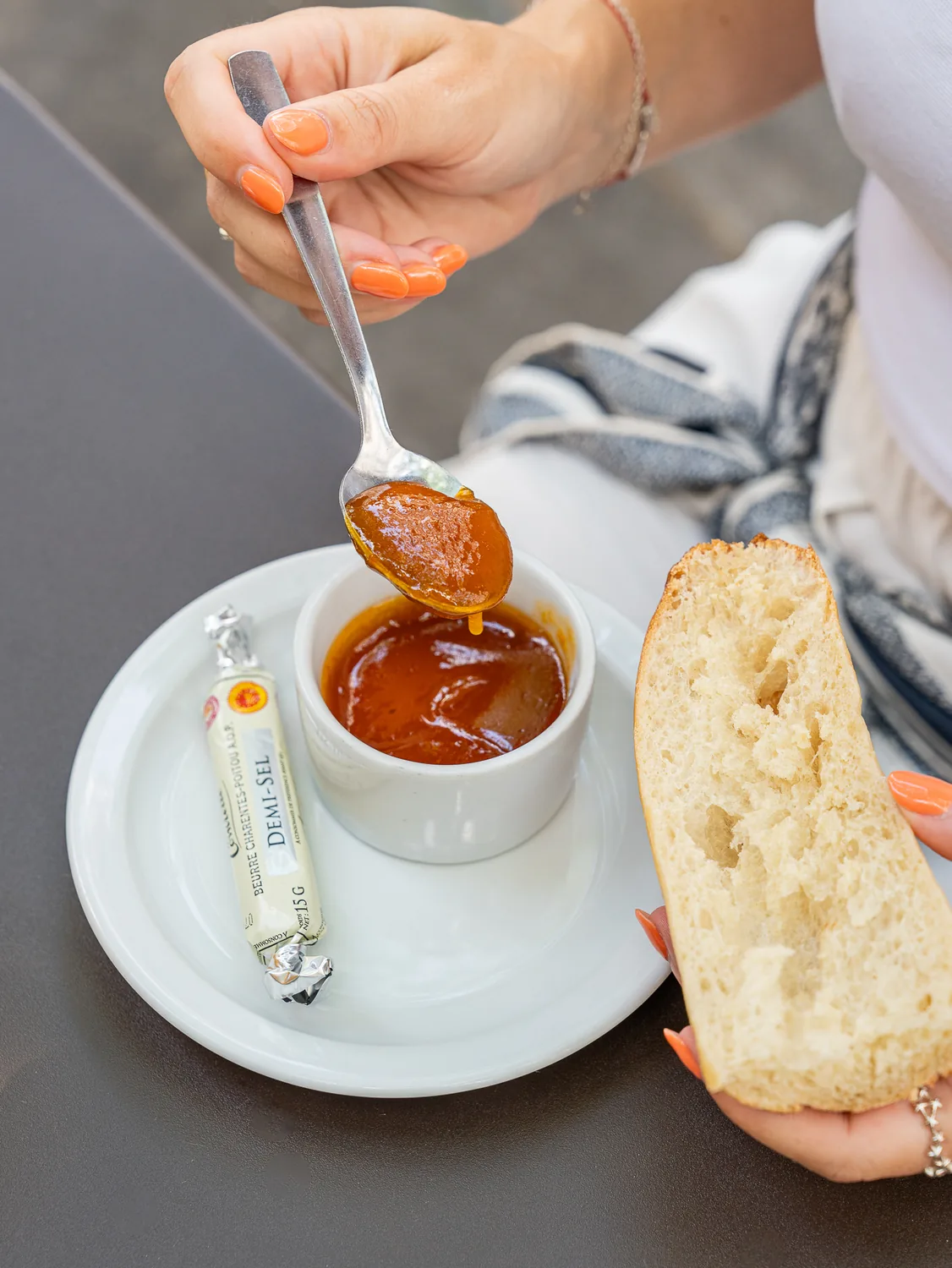
A successful scone is first and foremost a matter of crumb. Not dry like a biscuit forgotten at the back of the cupboard, not dense like a failed muffin. The ideal texture is cloud-like: crumbly on the surface, soft inside, with that slight resistance when you break it in two. Then, the butter. No neutral oil, no margarine: real churned butter, which you can taste from the first bite. Some add chocolate chips, others go for dried fruit or candied orange. But above all, a scone must smell good. That smell of a still-warm oven, of flour that’s taken on its golden color.
The English have their strict codes: clotted cream, strawberry jam, impeccable service. In Paris, we free ourselves a bit from tradition. You’ll find savory scones with cheddar and rosemary, XXL versions filled with chestnut cream, matcha tea variations. What matters is that the result is good. No need to overdo it with three tiers of porcelain china if the scone itself is dry.
Marlette, rue des Martyrs: scones the way we like them
At Marlette, scones are one of the preparations we make ourselves, at the workshop on île de Ré. Two versions: plain (to spread with homemade jam) or savory bacon-and-cheese, for those who prefer a sweet-and-salty teatime snack. The crumb is crumbly without falling apart everywhere, the butter can be tasted without overpowering the rest. We serve them freshly warmed, with a cappuccino or a matcha latte if you lean toward wellness-oriented drinks.
What we particularly appreciate: no fuss. No Instagram-worthy toppings, no decoration that overshadows the taste. Just a good scone, a small plate, a table by the window if you’re lucky. Locals know this, and often stop by in the late afternoon to take away two or three before the oven turns off.
- Address: 51 rue des Martyrs, 75009 Paris
- Also available: 45 rue des Abbesses, 75018 Paris
- Teatime set: scone + hot drink
- No reservations at Marlette, except for groups in the afternoon: just come and see if there’s room
To discover other great addresses to try in the capital, take a look at our favorite restaurants in Paris, where you’ll find spots to extend the day after teatime.
✅ Key takeaway
A good Parisian scone can be recognized by three signs: a crumb that’s neither dry nor heavy, real butter in generous quantity, and controlled baking that gives it that slightly golden crust. At Marlette, we check all three boxes.
Rose Bakery and other safe bets for English scones
Over in the Marais, Rose Bakery (also on rue des Martyrs, or rue de Turenne depending on the mood) remains a reference for those seeking the British cottage spirit transposed to Paris. The scones there are massive, almost intimidating, served with imported clotted cream and artisanal jam. The atmosphere leans toward a chic tea room without being stuffy. You’ll come across as many tourists seeking authenticity as Parisians who have made it their Sunday habit.
Other addresses to try if you’re in the area: Smith & Son (rue de Saintonge), which offers more compact scones, perfect for a light snack without weighing you down, and Claus (rue Jean-Jacques Rousseau), where the scone is part of a generous afternoon tea menu. Be careful though: some establishments serve scones that look more like overbaked muffins. Trust your instinct and don’t hesitate to ask if they’re homemade.
Financiers, madeleines & biscuits: the French stars of teatime
The financier, that little crunchy ingot
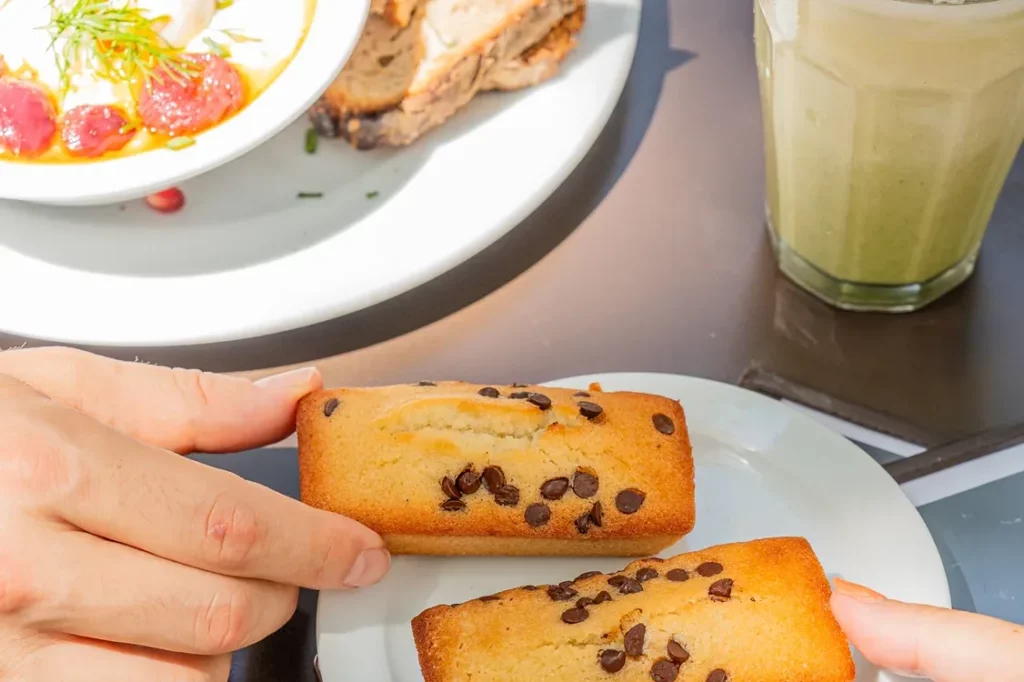
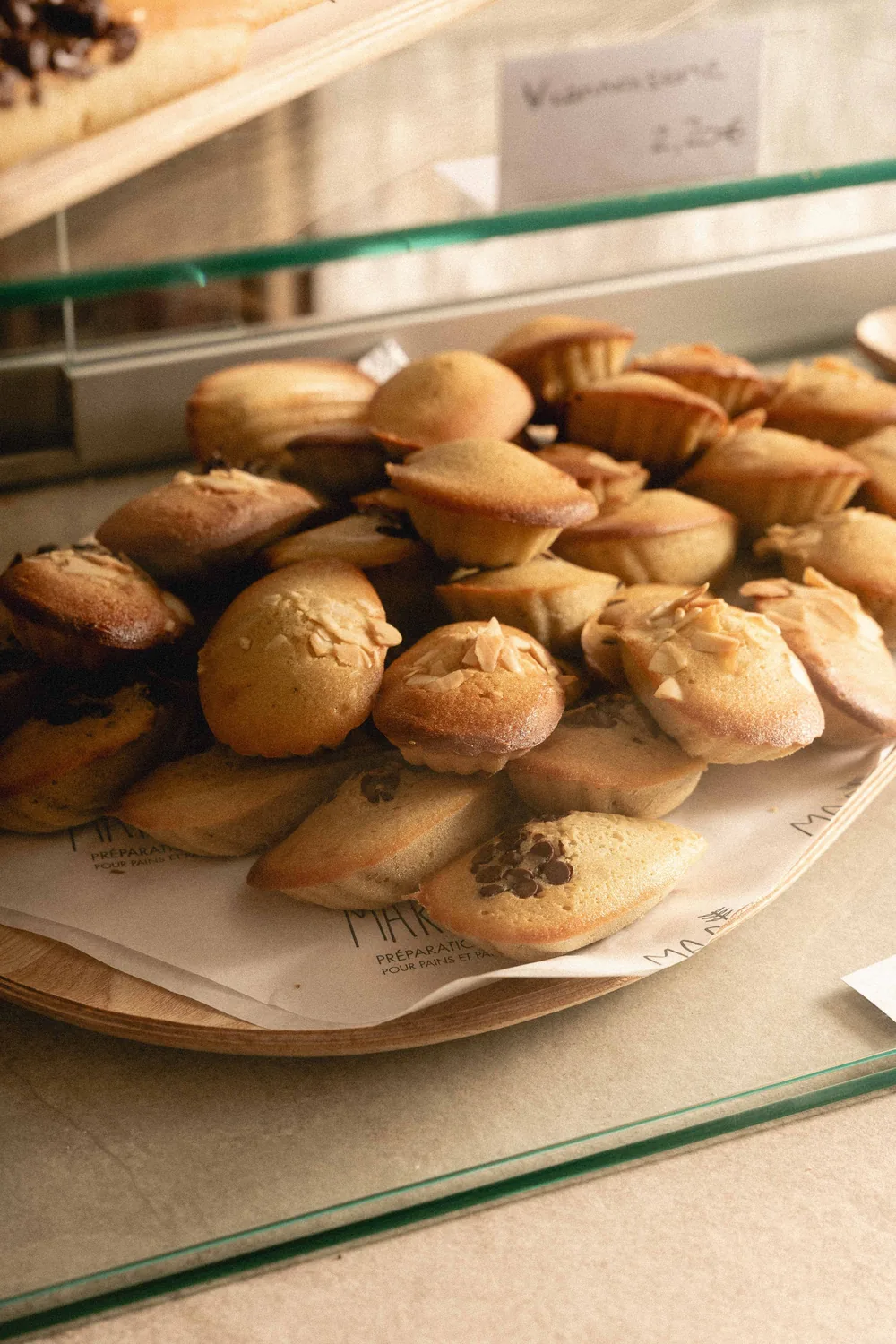
The financier is the opposite of the scone: no crumb, just a golden crust wrapping a soft almond center. When it comes out of the oven, it has that almost caramelized texture on the edges, that brown-butter smell that goes straight to your brain. Too often, you find it industrial, soft, with an aftertaste of low-grade almond powder. The good Parisian financier, the one we’re looking for, is crisp to the bite before melting.
At Sébastien Gaudard (rue des Martyrs, again, this neighborhood really does have it all), the financier is an institution. Classic rectangular shape, AOP butter, roasted almond powder. Nothing to say against it. You can have three without guilt: they’re small, elegant, and disappear in two bites. Their pistachio-raspberry version is a gem if you want some variety.
Another solid address: Fou de Pâtisserie (several locations across Paris), which offers signature financiers created by different chefs. The selection changes regularly, but you’ll always find an impeccable classic version AND, in our coffee shops to try for a well-deserved sweet break.
A financier that’s too pale = undercooked, it will lack character. Too dark = burnt butter, bitterness. The ideal shade: light caramel.
The brown-butter smell should be obvious. If it only smells of sugar, keep walking.
The crust should offer slight resistance to the bite, then give way to a melting interior. Too soft = a miss. Too dry = too old.
The madeleine: nostalgia and lemon
Talking about madeleines without mentioning Proust is almost a crime. But beyond the literary reference, the madeleine remains that comforting cake you dip into your tea, not caring at all about protocol. The classic lemon version dominates, but Paris has seen chocolate, chestnut honey, and orange blossom variations bloom. What makes the difference: a well-defined hump, an airy crumb, and that little hint of zest that lingers on the palate.
At À la Mère de Famille (several historic shops), the madeleines are sold in kraft paper bags, just like in the old days. They’ll never look impressive on Instagram, but they have that soft texture and fresh-butter scent that bring back childhood memories. Perfect to take along for teatime at the office or in a public garden.
Pain de Sucre (rue de Rambuteau) offers a more sophisticated version, with an XXL madeleine filled with hazelnut praline. Less childlike, more indulgent. Perfect if you want to turn teatime into a slightly more festive moment. Warning: one is plenty, they’re generously sized.
Cookies, brownies and other sweet temptations at Marlette
Back to Marlette, because scones aren’t the only stars of teatime there. The cookies (chocolate-sesame chips or chocolate-walnut) have that texture you desperately search for elsewhere: crisp on the edges, soft in the center, with real chips that melt. No overly refined white flour, no sugar that grates on your teeth. Just a good cookie, the way they used to be made before everything became standardized.
The chocolate fondant (careful, it’s a melting center, not a molten one, the difference matters) is also worth a detour: fleur de sel from île de Ré, chocolate that doesn’t play the prima donna, just the right amount of sugar. We often order it with a flat white to balance things out. The pecan brownie, meanwhile, embraces its dense, generous side. One slice is enough for two if you’re not too hungry.
- Organic preparations: all Marlette pastry preparations (cookies, fondants, brownies, scones) are organic. The savory dishes served at the café are not, we keep our feet on the ground.
- Production: île de Ré, where it all began in 2010
- Available at both Parisian cafés: Martyrs and Abbesses
If you want to extend the gourmet stroll, discover the vibe of our coffee shops, where teatime fits into a broader philosophy of urban slowing down.
| ✅ Marlette advantages | ❌ Limitations |
|---|---|
| • Homemade organic preparations • No preservatives or additives • Neighborhood atmosphere, no mass tourism • Wellness-oriented drinks (matcha, chai, ube) |
• No laptops between 11:30am and 2:30pm or on weekends • No reservations at Marlette, except for groups in the afternoon • Pancakes are only available at Abbesses |
Parisian tea rooms: the art of old-fashioned teatime
Angelina, the unbeatable classic (and proud of it)
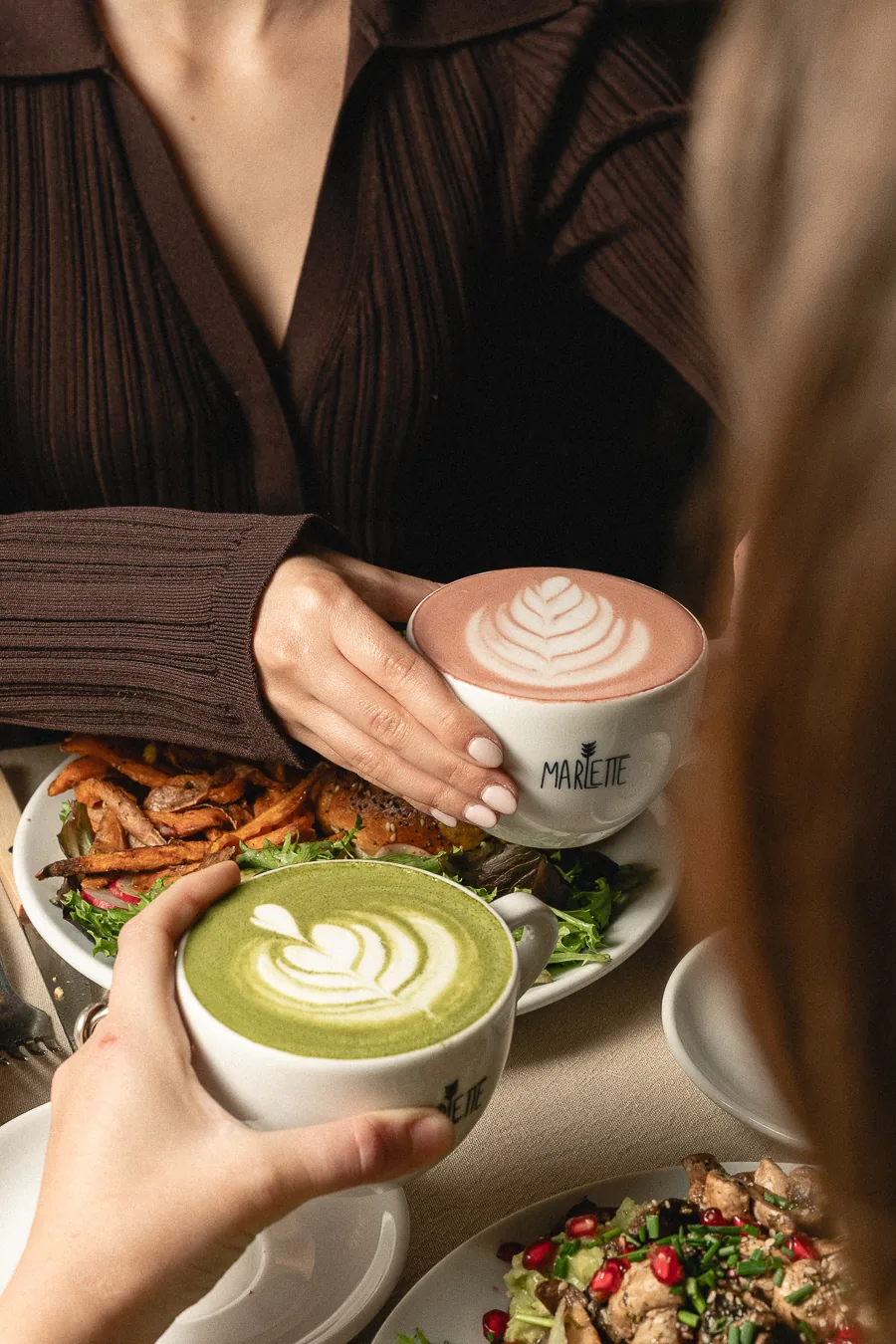
It’s impossible to talk about teatime in Paris without mentioning Angelina, rue de Rivoli. Yes, it’s touristy. Yes, there’s often a line. Yes, the old-fashioned hot chocolate is overpriced. But it remains unbeatable. Thick as cream, served with a mountain of whipped cream, accompanied by the famous mont-blanc that made the house’s reputation. You don’t go there for an intimate atmosphere, you go to check a box and tell yourself you’ve tasted the legend.
If you want to avoid the crowds, try the Grands Magasins annex (at Printemps Haussmann): same menu, fewer people, a stunning view over the Parisian rooftops. Teatime there is almost as good, and you’ll avoid waiting in line for forty minutes.
Carette, place des Vosges: the terrace that changes everything
Carette is the tea room where you come as much for the view as for the pastries. The madeleines are decent, the financiers too, but it’s mainly the terrace on place des Vosges that justifies the trip. Settling in there on a sunny Wednesday afternoon, ordering a coffee and a slice of mille-feuille, watching passersby stroll under the arcades: that’s a Parisian teatime in all its splendor. Service can be a bit slow at times, but you’re not in a hurry. That’s the whole point.
Another Carette worth trying if you’re near Trocadéro: same spirit, same quality, with a view of the Eiffel Tower as a bonus. Here too, you come for the experience as much as for the teatime itself.
Ladurée: between kitsch and excellence
Ladurée is complicated. On one hand, the macarons are impeccable (even if you can argue about the price). On the other hand, the atmosphere leans frankly toward a Barbie-doll-meets-Versailles decor. The gilding, the chandeliers, the embroidered tablecloths: it’s all a bit much. But the financiers are excellent, the madeleines too, and the Marie-Antoinette tea (yes, that’s really its name) remains a must-try if you like floral infusions.
We’d recommend the rue Bonaparte shop (Saint-Germain) rather than the one on the Champs-Élysées, which is much calmer. You can have your teatime there without being jostled by a horde of tourists on the hunt for the perfect macaron for their story.
⚠️ Keep in mind
In very touristy tea rooms, the value for money can quickly go downhill. Teatime for two at Angelina or Ladurée will easily exceed 40 euros. If budget matters, favor neighborhood spots like Marlette, Rose Bakery, or the artisan pastry shops of the Marais.
Neighborhood by neighborhood: where to have teatime depending on your stroll
The 9th arrondissement: Martyrs and its gourmet treasures
Rue des Martyrs is a bit like the backbone of Parisian teatime. Starting from the Notre-Dame-de-Lorette metro and heading up toward Montmartre, you’ll pass about ten addresses worth stopping at. Marlette (at number 51), Rose Bakery (at number 46), Sébastien Gaudard (at number 22), not to mention Popelini for cream puffs and Mesdemoiselles for filled madeleines.
The advantage of the neighborhood: you can spend the whole afternoon there, alternating between vintage shops, independent bookstores, and sweet breaks. Teatime becomes an excuse for strolling, and that’s exactly how it should be.
Montmartre and the 18th: Abbesses, Lepic, and secret terraces
The 18th is the Paris we love: less polished, more alive. At Marlette Abbesses (45 rue des Abbesses), teatime takes on the feel of a neighborhood break. You’ll come across neighbors, regulars who come for their Wednesday scones, couples settling in for a hot chocolate and a slice of fondant. The pancakes (available only at this location, not on rue des Martyrs) also make a great XXL teatime if you skipped lunch.
Heading up toward rue Lepic, stop by Arnaud Delmontel: his pistachio-morello cherry financiers are worth the detour, as are his white chocolate and cranberry cookies. A bit further up, Coquelicot (rue des Abbesses) offers seasonal fruit tarts, perfect for a lighter teatime.
The Marais: between classics and hidden gems
The Marais is the ideal playground for anyone who loves multiplying teatime stops. Start with Café Pinson (rue du Forez) if you’re leaning healthy: spelt flour cookies, gluten-free cakes, plant-based drinks. Continue at Berthillon (île Saint-Louis) for an artisan ice cream, technically not a teatime treat, but who cares. Finish at Carette on place des Vosges for a final coffee.
The Marais is also home to L’Éclair de Génie (several shops), where éclairs become an excuse for every kind of daring flavor: coffee-tonka, yuzu-raspberry, salted butter caramel. Not the most reasonable teatime, but sometimes you just want a stroke of genius.
Left Bank: Saint-Germain, Odéon, and the institutions
On the Left Bank, teatime is often enjoyed on a terrace. Ladurée Bonaparte, Pierre Hermé rue Bonaparte, Café de Flore (overpriced but legendary): all addresses where people come as much to see and be seen as to eat. Pierre Hermé‘s financiers are remarkable, especially the Infiniment Vanille version. His lemon madeleines too.
For a more relaxed experience, head to Odette (rue Galande), a temple of cream puffs. Not a scone, not a financier, but these little crunchy, generously filled puffs make for a perfect teatime. The line can be long on weekends, but it moves quickly.
4:30pm
the ideal time for Parisian teatime, neither too early nor too late
Frequently asked questions
Where to find the best scones in Paris for a real British teatime?
For a scone worthy of the name, head to Marlette (rue des Martyrs or Abbesses), where the plain and savory bacon-and-cheese scones are made by us at the workshop on île de Ré. Rose Bakery (Marais or rue des Martyrs) also remains a safe bet if you’re looking for the English cottage spirit with clotted cream and homemade jam. Smith & Son (rue de Saintonge) offers more compact versions, ideal for a light teatime.
What’s the difference between a financier and a madeleine?
The financier is a small rectangular cake made from almond powder, egg whites, and brown butter. Its texture is crisp on the surface, soft in the center. The madeleine, on the other hand, is made with flour, whole eggs, and melted butter, often flavored with lemon. Its shell shape and characteristic hump make it recognizable among a thousand others. Both are enjoyed at teatime, but the financier is denser and less airy than the madeleine.
Can you reserve a table for teatime at Marlette?
Not for a regular table: our cafés don’t take reservations, morning, noon or afternoon. Just come by, and our team will always do its best to find a table quickly. The only exception is group bookings. We welcome group bookings in the afternoon only, from 3pm to 5pm on weekdays and from 3pm to 6pm on weekends, through our group booking form. Booking requests for a small table or outside these hours can’t be accepted.
Which Parisian neighborhoods have made teatime an institution?
The 9th arrondissement (rue des Martyrs) has an impressive number of great addresses for teatime: Marlette, Rose Bakery, Sébastien Gaudard, Popelini. Montmartre (18th) offers a more intimate atmosphere with Marlette Abbesses, Arnaud Delmontel, and Coquelicot. The Marais (3rd and 4th) charms with its diversity: Café Pinson, Carette on place des Vosges, L’Éclair de Génie. Finally, Saint-Germain (6th) brings together the great institutions: Ladurée, Pierre Hermé, Odette.
Is teatime at Marlette suitable for children?
Yes, Marlette welcomes families in a kid-friendly, laid-back atmosphere. The pastry preparations (cookies, scones, fondants) are organic, free of preservatives and additives, which reassures parents mindful of ingredient quality. The space is intimate but warm, ideal for a family teatime during quiet hours (favor before 4pm or after 5:30pm to avoid crowds). Children especially love the chocolate-walnut chip cookies and the plain scones to spread with jam.
What budget should you plan for teatime in Paris?
The budget varies greatly depending on the address. At Marlette, expect to pay between 8 and 12 euros for a scone or a cookie with a hot drink (cappuccino, matcha latte, chai). At touristy tea rooms like Angelina or Ladurée, teatime for two can easily exceed 40 euros. Neighborhood pastry shops (Arnaud Delmontel, Coquelicot, Odette) offer intermediate prices, around 10 to 15 euros per person. For a takeaway teatime, financiers or madeleines bought at a shop cost between 2 and 4 euros each.
{“@context”:”https://schema.org”,”@type”:”FAQPage”,”mainEntity”:[{“@type”:”Question”,”name”:”Where to find the best scones in Paris for a real British teatime?”,”acceptedAnswer”:{“@type”:”Answer”,”text”:”For a scone worthy of the name, head to Marlette (rue des Martyrs or Abbesses), where the plain and savory bacon-and-cheese scones are made by us at the workshop on île de Ré. Rose Bakery (Marais or rue des Martyrs) also remains a safe bet if you’re looking for the English cottage spirit with clotted cream and homemade jam. Smith & Son (rue de Saintonge) offers more compact versions, ideal for a light teatime.”}},{“@type”:”Question”,”name”:”What’s the difference between a financier and a madeleine?”,”acceptedAnswer”:{“@type”:”Answer”,”text”:”The financier is a small rectangular cake made from almond powder, egg whites, and brown butter. Its texture is crisp on the surface, soft in the center. The madeleine, on the other hand, is made with flour, whole eggs, and melted butter, often flavored with lemon. Its shell shape and characteristic hump make it recognizable among a thousand others. Both are enjoyed at teatime, but the financier is denser and less airy than the madeleine.”}},{“@type”:”Question”,”name”:”Can you reserve a table for teatime at Marlette?”,”acceptedAnswer”:{“@type”:”Answer”,”text”:”Not for a regular table: our cafés don’t take reservations, morning, noon or afternoon. Just come by, and our team will always do its best to find a table quickly. The only exception is group bookings. We welcome group bookings in the afternoon only, from 3pm to 5pm on weekdays and from 3pm to 6pm on weekends, through our group booking form (https://www.marlette.fr/en/group-booking/). Booking requests for a small table or outside these hours can’t be accepted.”}},{“@type”:”Question”,”name”:”Which Parisian neighborhoods have made teatime an institution?”,”acceptedAnswer”:{“@type”:”Answer”,”text”:”The 9th arrondissement (rue des Martyrs) has an impressive number of great addresses for teatime: Marlette, Rose Bakery, Sébastien Gaudard, Popelini. Montmartre (18th) offers a more intimate atmosphere with Marlette Abbesses, Arnaud Delmontel, and Coquelicot. The Marais (3rd and 4th) charms with its diversity: Café Pinson, Carette on place des Vosges, L’Éclair de Génie. Finally, Saint-Germain (6th) brings together the great institutions: Ladurée, Pierre Hermé, Odette.”}},{“@type”:”Question”,”name”:”Is teatime at Marlette suitable for children?”,”acceptedAnswer”:{“@type”:”Answer”,”text”:”Yes, Marlette welcomes families in a kid-friendly, laid-back atmosphere. The pastry preparations (cookies, scones, fondants) are organic, free of preservatives and additives, which reassures parents mindful of ingredient quality. The space is intimate but warm, ideal for a family teatime during quiet hours (favor before 4pm or after 5:30pm to avoid crowds). Children especially love the chocolate-walnut chip cookies and the plain scones to spread with jam.”}},{“@type”:”Question”,”name”:”What budget should you plan for teatime in Paris?”,”acceptedAnswer”:{“@type”:”Answer”,”text”:”The budget varies greatly depending on the address. At Marlette, expect to pay between 8 and 12 euros for a scone or a cookie with a hot drink (cappuccino, matcha latte, chai). At touristy tea rooms like Angelina or Ladurée, teatime for two can easily exceed 40 euros. Neighborhood pastry shops (Arnaud Delmontel, Coquelicot, Odette) offer intermediate prices, around 10 to 15 euros per person. For a takeaway teatime, financiers or madeleines bought at a shop cost between 2 and 4 euros each. { “@context”: “https://schema.org”, “@type”: “FAQPage”, “mainEntity”: [ { “@type”: “Question”, “name”: “Where to find the best scones in Paris for a real British teatime?”, “acceptedAnswer”: { “@type”: “Answer”, “text”: “For a scone worthy of the name, head to Marlette (rue des Martyrs or Abbesses), where the plain and savory bacon-and-cheese scones are made by us at the workshop on île de Ré. Rose Bakery (Marais or rue des Martyrs) also remains a safe bet if you’re looking for the English cottage spirit with clotted cream and homemade jam. Smith & Son (rue de Saintonge) offers more compact versions, ideal for a light teatime.” } }, { “@type”: “Question”, “name”: “What’s the difference between a financier and a madeleine?”, “acceptedAnswer”: { “@type”: “Answer”, “text”: “The financier is a small rectangular cake made from almond powder, egg whites, and brown butter. Its texture is crisp on the surface, soft in the center. The madeleine, on the other hand, is made with flour, whole eggs, and melted butter, often flavored with lemon. Its shell shape and characteristic hump make it recognizable among a thousand others. Both are enjoyed at teatime, but the financier is denser and less airy than the madeleine.” } }, { “@type”: “Question”, “name”: “Can you reserve a table for teatime at Marlette?”, “acceptedAnswer”: { “@type”: “Answer”, “text”: “Not for a regular table: our cafés don’t take reservations, morning, noon or afternoon. Just come by, and our team will always do its best to find a table quickly. The only exception is group bookings. We welcome group bookings in the afternoon only, from 3pm to 5pm on weekdays and from 3pm to 6pm on weekends, through our group booking form (https://www.marlette.fr/en/group-booking/). Booking requests for a small table or outside these hours can’t be accepted.” } }, { “@type”: “Question”, “name”: “Which Parisian neighborhoods have made teatime an institution?”, “acceptedAnswer”: { “@type”: “Answer”, “text”: “The 9th arrondissement (rue des Martyrs) has an impressive number of great addresses for teatime: Marlette, Rose Bakery, Sébastien Gaudard, Popelini. Montmartre (18th) offers a more intimate atmosphere with Marlette Abbesses, Arnaud Delmontel, and Coquelicot. The Marais (3rd and 4th) charms with its diversity: Café Pinson, Carette on place des Vosges, L’Éclair de Génie. Finally, Saint-Germain (6th) brings together the great institutions: Ladurée, Pierre Hermé, Odette.” } }, { “@type”: “Question”, “name”: “Is teatime at Marlette suitable for children?”, “acceptedAnswer”: { “@type”: “Answer”, “text”: “Yes, Marlette welcomes families in a kid-friendly, laid-back atmosphere. The pastry preparations (cookies, scones, fondants) are organic, free of preservatives and additives, which reassures parents mindful of ingredient quality. The space is intimate but warm, ideal for a family teatime during quiet hours (favor before 4pm or after 5:30pm to avoid crowds). Children especially love the chocolate-walnut chip cookies and the plain scones to spread with jam.” } }, { “@type”: “Question”, “name”: “What budget should you plan for teatime in Paris?”, “acceptedAnswer”: { “@type”: “Answer”, “text”: “The budget varies greatly depending on the address. At Marlette, expect to pay between 8 and 12 euros for a scone or a cookie with a hot drink (cappuccino, matcha latte, chai). At touristy tea rooms like Angelina or Ladurée, teatime for two can easily exceed 40 euros. Neighborhood pastry shops (Arnaud Delmontel, Coquelicot, Odette) offer intermediate prices, around 10 to 15 euros per person. For a takeaway teatime, financiers or madeleines bought at a shop cost between 2 and 4 euros each.” } } ] }”}}]}