



Cover photo: @lapuertaontheroad
Walking down rue Houdon in the late afternoon, the sidewalk smells of warm flour. A shop window reveals kouign-amanns that have puffed up under the heat of the bakehouse, a baker closes his oven with a gesture that says he’s done this ten thousand times. Pigalle and the 9th arrondissement are the kind of neighborhoods where a good bakery isn’t optional: it’s a landmark, proof that you live in the right spot.
Between theaters, cafés and Haussmann-style buildings, this corner of Paris brings together a handful of artisans who refuse industrial bread. No chain logic, no croissants pre-baked at 5am. Sourdough that rises for hours, butter that seeps into the puff pastry, hands that knead before dawn. We tested the addresses, tasted the baguettes, examined the crumb. Here are the bakeries we keep coming back to.
Why Pigalle remains a stronghold of artisan bakeries
Pigalle still carries the legacy of the old neighborhood bakehouses. Historically, every street had its bakery, not for show, but because bread was eaten fresh, the same day. This tight network survived better here than elsewhere in Paris. The 9th arrondissement is home to loyal residents, theaters that close late, small hotels whose guests look for a warm croissant at 7am. Demand sustains supply: it’s impossible to sell pre-baked bread here without getting noticed.
The artisans who run shops here know they’re playing in a demanding category. Customers compare, come back if it’s good, move on if it’s lukewarm. As a result, the bakeries of Pigalle and the 9th arrondissement maintain a level of quality you won’t find everywhere. Sourdough bread is the norm here, not the exception. Pastries come out of the oven at regular intervals, not in a single morning batch reheated all day.
💡 Our tip
Stop by mid-morning or early afternoon: the bakehouses run several batches, you’ll get bread fresh out of the oven without the 8am rush queue.
The revival of sourdough and local flours
Over the past decade or so, several bakers in the neighborhood have put sourdough back at the center of their production. Out with industrial yeast, back to a slow fermentation that gives flavor and an airy crumb. This approach requires precise know-how, the sourdough starter needs feeding every day, you have to know it, know when it’s ready. Some have even formed partnerships with millers in the Île-de-France region or Normandy to source organic or local flours, far from the standards of conventional milling.
This return to fundamentals changes the texture of the bread. A crust that crackles under the teeth, a crumb that’s dense yet airy, keeping well for several days without becoming rubbery. Neighborhood regulars know it: a well-made sourdough bread stands out from the very first bite.
The 7 must-visit bakeries in the area
Let’s not beat around the bush: not all shop windows are created equal. Some places make honest bread with no ambition, others push the bar all the way to excellence. Here’s our selection, tested on the ground, baguette after baguette.
Boulangerie Gontran Cherrier, rue Caulaincourt
Gontran Cherrier opened on rue Caulaincourt a few years ago, just steps from Pigalle. The place gets a lot of attention: activated charcoal bread, fleur de sel focaccia, pastries that blend influences. The décor is minimalist, glass storefront, raw wood counter. People come here as much for the bread as for the atmosphere, high tables, specialty coffee, cosmopolitan crowd.
The toasted sandwich bread, served at breakfast with salted butter, is worth the detour. The pastries are generous, well-defined layers, butter that melts. The only downside: the weekend line can be long. If you’re looking for other artisan coffee shops in the area, you’ll find equally tempting alternatives.
Du Pain et des Idées, rue Yves Toudic (edge of the 10th)
Technically on the border of the 10th arrondissement, Du Pain et des Idées has a reputation that spreads across all of northeast Paris, Pigalle included. This bakery cultivates a retro-chic style: period tiling, painted wood display cases, pain des Amis sitting on wrought-iron shelves. The escargots, these rolled brioches with chocolate, pistachio or praline, have become cult favorites. The line often starts before opening.
The pain des Amis, a large naturally leavened loaf, keeps for a week. The crust is thick, the crumb dense and fragrant. People buy the whole loaf, slice it at home, toast it in the morning. Tourists come as pilgrims, but locals remain loyal. A classic that delivers on its promise.
Boulangerie Bo, rue de Douai
Bo is the discreet bakehouse of rue de Douai. No big storefront, no Instagram storytelling: just a baker making his bread. Crispy traditional baguette, dense whole-grain bread, well-layered butter croissants. The staff know regulars by their first name, locals stop by every morning for their still-warm half baguette.
The pastries are classic, lemon tart, coffee éclair, mille-feuille, but well executed. Nothing spectacular, everything is solid. People come here for consistency, quick service, no fuss. A genuine neighborhood bakery.
✅ Key takeaway
The best bakeries in the 9th arrondissement share three things in common: natural sourdough, multiple bakes throughout the day, and a loyal local clientele. Try several, and you’ll end up adopting the one that fits your rhythm.
La Parisienne, rue Condorcet
La Parisienne, on rue Condorcet, focuses on organic products and whole grain flours. Organic country bread, homemade cookies, seasonal fruit tarts. The place attracts customers concerned about traceability, without falling into hollow green marketing. The bakers openly name their suppliers, explain their approach if you ask.
The whole grain seed bread, pumpkin, sunflower, flax, is dense, filling, and pairs well with cheese or avocado. Kids love the individual chocolate rolls, less greasy than industrial versions. On the pastry side, the red fruit tartlets, made in-house, are fresh and not overly sweet.
Boulangerie Vandermeersch, rue de Maubeuge (9th/10th)
Straddling the 9th and 10th arrondissements, Vandermeersch is a family institution. Four generations of bakers, a bakehouse running since the interwar period. Here, they don’t change a recipe that works: classic baguette with a golden crust, soft brioche-style bread, butter croissants that smell wonderful as soon as you push open the door.
The coffee religieuses, as big as a fist, filled with smooth pastry cream, are worth the detour. On weekends, neighborhood residents come to pick up their batch of pastries for brunch. The atmosphere is relaxed, the service friendly, and prices remain affordable despite the quality.
Maison Landemaine, rue Léonie
Maison Landemaine opened a branch on rue Léonie, near Pigalle. This Parisian brand has built a reputation on its sourdough breads and generous pastries. The almond croissant, filled with homemade almond cream, is heavy artillery: impossible to finish without licking your fingers.
The sourdough rye bread, compact and fragrant, pairs perfectly with cheese boards or morning toast. The pastries, Paris-Brest, Saint-Honoré, are elaborate, with carefully crafted textures. The address attracts both food lovers and connoisseurs of fine products. If you’re exploring the area, take a look at our selection of great Parisian addresses to extend your walk.
Boulangerie Utopie, rue des Martyrs
Utopie, on rue des Martyrs, lives up to its name. The project was born from two bakers’ desire to create a transparent bakehouse: you can see the production through a large glass window. Organic bread, stone-ground flours, sourdough they pamper like a pet. The loaves are large, rustic, the crust crackles boldly.
The homemade cookies, chocolate chip, pecan, are soft, additive-free, perfect for a quick snack. The staff encourage customers to bring their own bread bag, and offer loaf sizes suited to smaller households. A consistent approach that appeals to neighborhood residents.
What makes good bread: technical markers
Telling an industrial baguette apart from an artisan loaf takes some know-how. A few clues help sort things out. First, the crust: it should be crispy but not cardboard-like, with uneven golden highlights. A crust that’s too uniform, too smooth, often gives away a pre-baked bread or one that came out of an industrial mold. Then, the crumb: irregular air pockets, a texture slightly moist to the touch, no chemical whiteness. Sourdough bread has a creamy crumb, never dry.
The aroma matters too. Fresh bread smells of wheat, sometimes hazelnut, with a hint of acidity if it’s sourdough. No harsh chemical yeast smell. Finally, keeping quality: good artisan bread lasts three to four days without going fully stale. On day 2, it makes excellent toast. On day 4, it ends up as French toast or homemade breadcrumbs.
Uneven golden highlights, crispy texture without being hard. A smooth, shiny crust is often a sign of industrial pre-baked bread.
Irregular air pockets, slightly moist creamy crumb. Sourdough gives an ivory color, never a chemical white.
Aroma of wheat, hazelnut, gentle sourdough acidity. No harsh industrial yeast smell.
Natural sourdough vs yeast: what really changes
Natural sourdough is a culture of wild bacteria and yeasts that’s regularly fed with flour and water. It rises slowly, over several hours, sometimes an entire night. This long process develops complex aromas, hazelnut, caramel, tangy notes, and improves the digestibility of the bread. The crumb becomes denser, and keeping quality lasts longer.
Baker’s yeast, on the other hand, is a standardized industrial product. It rises quickly, in an hour or two, which speeds up production but flattens the flavor. The result: bland bread, a white, soft crumb that goes stale within twenty-four hours. Artisan bakers in the 9th arrondissement favor sourdough for this reason: they’re after flavor, not productivity at all costs.
Pastries: how to spot real butter puff pastry
A croissant worthy of the name should have some weight in your hand. Not heavy like a brick, but dense, with structure. If it’s light and airy like polystyrene, that means the dough was puffed up with yeast and margarine. Real butter puff pastry, on the other hand, can be spotted by eye: visible layers, crispy on top, soft inside.
Pain au chocolat, or chocolatine depending on where you’re from, should leave butter marks on your fingers. That’s normal, it’s even a good sign. The chocolate bars inside should be melted but not runny, with a clear cocoa flavor, not the bland sweetness of industrial products. Artisan pastry dough is prepared the day before, folded and refolded several times to create the layers of puff pastry. It takes time, it requires skill, but it changes everything.
| 🥐 Artisan pastry | 🏭 Industrial pastry |
|---|---|
| Crispy puff pastry, visible layers, butter that melts on your fingers. Buttery smell as soon as you open the bag. Keeps for 24 hours, then softens. | Rubbery texture, soft crust. Neutral or chemical smell. Stays the same for several days without changing, a bad sign. |
Specialty breads: a focus on standout recipes
Beyond the traditional baguette, several bakeries in the neighborhood offer specialty breads worth lingering over. Multigrain bread, a mix of sunflower, sesame, and flax seeds, adds crunch and fiber. Ideal for a balanced sandwich or avocado toast. Rye bread, denser, with a bold flavor, pairs perfectly with smoked fish or aged cheeses.
Some artisans embrace originality: activated charcoal bread (as black as coal, gray crumb, neutral taste but visually striking), sweet potato bread (soft, lightly sweet), olive oil and rosemary focaccia (somewhere between bread and savory pastry). These recipes appeal to curious customers ready to venture off the beaten path.
Where to have brunch after buying your bread
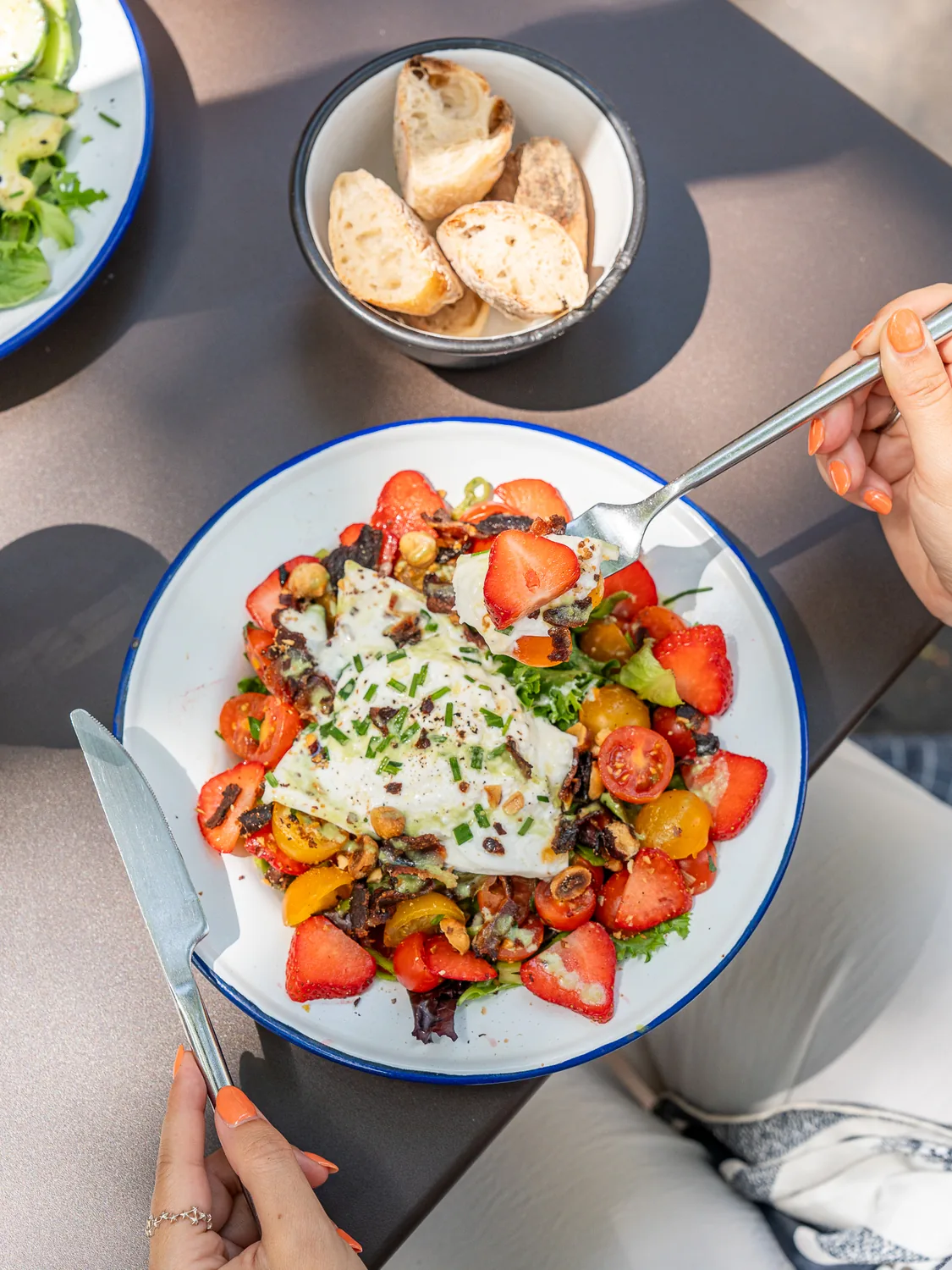
Once you’ve got your baguette or pastries in hand, all that’s left is finding somewhere pleasant to enjoy them. Pigalle and the 9th arrondissement are full of small cafés where you can set down your bag, order a coffee, and spread jam on your croissant without anyone giving you a funny look. The local coffee shops have figured out the equation well: fresh bread from the bakery next door plus good coffee equals a happy customer.
On rue des Martyrs, several spots welcome morning food lovers. Raw wood tables, natural light, a terrace as soon as the weather turns nice. You’ll find regulars reading their newspaper while dunking their toast in coffee, groups of friends stretching out the weekend, mothers with little ones nibbling on a piece of brioche. The atmosphere is relaxed, no one rushes you out the door.
💡 Our tip
Places that explicitly allow you to bring in outside pastries often display a small discreet sign near the register. Otherwise, just ask politely, most independent cafés are happy to oblige.
Locals’ favorite spots for a full breakfast
Some cafés go further and build proper breakfasts around artisan bread. Scrambled eggs, mashed avocado, fresh cheese, homemade jams: everything is designed to complement a beautiful slice of toasted bread. Freshly squeezed juices, blood orange, apple-ginger, carrot-turmeric, complete the plate.
On rue des Abbesses, just steps from Pigalle, several spots embrace this slow food spirit. Toasted bread is served in a small wicker basket, salted butter comes in individual portions, jams sit in glass jars. No plastic packets, no industrial portions. Service takes its time, no one rushes you. The kind of place where a Sunday morning can stretch until noon without you even noticing.
Pastries worth a second look
Beyond bread and viennoiseries, Pigalle’s bakeries often offer a pastry counter worth slowing down for. Coffee éclairs, seasonal fruit tarts, Saint-Honoré with whipped cream, chocolate opera cakes: the range is wide, the techniques varied.
The best artisans make their pastries on site, in the same bakehouse as the bread. No delivery from a centralized lab, no thawing of products made elsewhere. The pastry cream is made in the morning, tartlets filled in the afternoon. You can see it in the texture: a smooth cream, never grainy, a crispy tart shell, never soggy.
| ✅ Signs of a homemade pastry | ❌ Signs of an industrial pastry |
|---|---|
| • Smooth pastry cream, no grains • Crispy, dry tart shell • Seasonal fruit, no exotic fruit out of season • Slightly irregular sizes and shapes |
• Set cream, gelatinous look • Soft, greasy tart shell • Uniform decorations, overly bright colors • Neutral or artificial smell |
The mille-feuille, the ultimate test of pastry skill
Pastry chefs agree on one point: the mille-feuille is a relentless indicator. Three layers of crispy puff pastry, two layers of vanilla pastry cream, a smooth glaze on top. Simple in appearance, tricky in execution. If the pastry is soggy, if the cream is starchy, if the glaze sticks to your teeth, it’s a failure.
The best bakeries in the 9th arrondissement pull off this classic with flair. The pastry crackles under the fork, the cream melts on the tongue, the powdered sugar adds just the right amount of sweetness. A well-made mille-feuille is eaten standing up, on the sidewalk, with no comment other than the satisfied silence of the food lover.
Frequently asked questions
What is the best time to buy fresh bread in Pigalle?
Neighborhood bakeries run several batches throughout the day. Stop by between 10am and 11am to avoid the morning line and enjoy a recent bake, or in the early afternoon if you prefer things quieter. On weekends, plan to arrive before 9am for the most sought-after pastries.
How do you recognize a genuine butter croissant?
An artisan croissant has some weight in your hand, shows visible layers with distinct lines, and leaves butter marks on your fingers. Its crust is golden and crispy, the inside soft without being dry. If it’s as light as polystyrene and has no smell, it’s probably an industrial product made with margarine.
Do Pigalle bakeries offer organic bread?
Several addresses in the 9th arrondissement work with organic flours and natural sourdough. Boulangerie Utopie, on rue des Martyrs, and La Parisienne, on rue Condorcet, clearly display their approach and their suppliers. Organic bread can be recognized by its denser crumb, thick crust and pronounced grain flavor.
Can you buy bread on Sundays in the neighborhood?
Yes, most artisan bakeries in Pigalle are open Sunday mornings until early afternoon. Some even do a second bake to meet brunch demand. Check each address’s specific hours, as a few close on Mondays to make up for it.
What’s the difference between a “baguette tradition” and a classic baguette?
The “baguette tradition” is regulated by French law: it cannot contain additives, preservatives, or high doses of industrial yeast. It relies on slow fermentation and quality flours. The result? A thicker crust, a creamy crumb with irregular air pockets, and better keeping quality. The classic baguette, less strictly regulated, often uses industrial methods and goes stale faster.
Do bakeries in the 9th arrondissement accept contactless payment?
Yes, almost all artisan bakeries in the neighborhood accept bank cards and contactless payment, even for small amounts. A few older establishments still prefer cash for purchases under a few euros, but that’s increasingly rare. If in doubt, ask at the register before ordering.
{“@context”:”https://schema.org”,”@type”:”FAQPage”,”mainEntity”:[{“@type”:”Question”,”name”:”What is the best time to buy fresh bread in Pigalle?”,”acceptedAnswer”:{“@type”:”Answer”,”text”:”Neighborhood bakeries run several batches throughout the day. Stop by between 10am and 11am to avoid the morning line and enjoy a recent bake, or in the early afternoon if you prefer things quieter. On weekends, plan to arrive before 9am for the most sought-after pastries.”}},{“@type”:”Question”,”name”:”How do you recognize a genuine butter croissant?”,”acceptedAnswer”:{“@type”:”Answer”,”text”:”An artisan croissant has some weight in your hand, shows visible layers with distinct lines, and leaves butter marks on your fingers. Its crust is golden and crispy, the inside soft without being dry. If it’s as light as polystyrene and has no smell, it’s probably an industrial product made with margarine.”}},{“@type”:”Question”,”name”:”Do Pigalle bakeries offer organic bread?”,”acceptedAnswer”:{“@type”:”Answer”,”text”:”Several addresses in the 9th arrondissement work with organic flours and natural sourdough. Boulangerie Utopie, on rue des Martyrs, and La Parisienne, on rue Condorcet, clearly display their approach and their suppliers. Organic bread can be recognized by its denser crumb, thick crust and pronounced grain flavor.”}},{“@type”:”Question”,”name”:”Can you buy bread on Sundays in the neighborhood?”,”acceptedAnswer”:{“@type”:”Answer”,”text”:”Yes, most artisan bakeries in Pigalle are open Sunday mornings until early afternoon. Some even do a second bake to meet brunch demand. Check each address’s specific hours, as a few close on Mondays to make up for it.”}},{“@type”:”Question”,”name”:”What’s the difference between a “baguette tradition” and a classic baguette?”,”acceptedAnswer”:{“@type”:”Answer”,”text”:”The “baguette tradition” is regulated by French law: it cannot contain additives, preservatives, or high doses of industrial yeast. It relies on slow fermentation and quality flours. The result? A thicker crust, a creamy crumb with irregular air pockets, and better keeping quality. The classic baguette, less strictly regulated, often uses industrial methods and goes stale faster.”}},{“@type”:”Question”,”name”:”Do bakeries in the 9th arrondissement accept contactless payment?”,”acceptedAnswer”:{“@type”:”Answer”,”text”:”Yes, almost all artisan bakeries in the neighborhood accept bank cards and contactless payment, even for small amounts. A few older establishments still prefer cash for purchases under a few euros, but that’s increasingly rare. If in doubt, ask at the register before ordering. { “@context”: “https://schema.org”, “@type”: “FAQPage”, “mainEntity”: [ { “@type”: “Question”, “name”: “What is the best time to buy fresh bread in Pigalle?”, “acceptedAnswer”: { “@type”: “Answer”, “text”: “Neighborhood bakeries run several batches throughout the day. Stop by between 10am and 11am to avoid the morning line and enjoy a recent bake, or in the early afternoon if you prefer things quieter. On weekends, plan to arrive before 9am for the most sought-after pastries.” } }, { “@type”: “Question”, “name”: “How do you recognize a genuine butter croissant?”, “acceptedAnswer”: { “@type”: “Answer”, “text”: “An artisan croissant has some weight in your hand, shows visible layers with distinct lines, and leaves butter marks on your fingers. Its crust is golden and crispy, the inside soft without being dry. If it’s as light as polystyrene and has no smell, it’s probably an industrial product made with margarine.” } }, { “@type”: “Question”, “name”: “Do Pigalle bakeries offer organic bread?”, “acceptedAnswer”: { “@type”: “Answer”, “text”: “Several addresses in the 9th arrondissement work with organic flours and natural sourdough. Boulangerie Utopie, on rue des Martyrs, and La Parisienne, on rue Condorcet, clearly display their approach and their suppliers. Organic bread can be recognized by its denser crumb, thick crust and pronounced grain flavor.” } }, { “@type”: “Question”, “name”: “Can you buy bread on Sundays in the neighborhood?”, “acceptedAnswer”: { “@type”: “Answer”, “text”: “Yes, most artisan bakeries in Pigalle are open Sunday mornings until early afternoon. Some even do a second bake to meet brunch demand. Check each address’s specific hours, as a few close on Mondays to make up for it.” } }, { “@type”: “Question”, “name”: “What’s the difference between a \”baguette tradition\” and a classic baguette?”, “acceptedAnswer”: { “@type”: “Answer”, “text”: “The \”baguette tradition\” is regulated by French law: it cannot contain additives, preservatives, or high doses of industrial yeast. It relies on slow fermentation and quality flours. The result? A thicker crust, a creamy crumb with irregular air pockets, and better keeping quality. The classic baguette, less strictly regulated, often uses industrial methods and goes stale faster.” } }, { “@type”: “Question”, “name”: “Do bakeries in the 9th arrondissement accept contactless payment?”, “acceptedAnswer”: { “@type”: “Answer”, “text”: “Yes, almost all artisan bakeries in the neighborhood accept bank cards and contactless payment, even for small amounts. A few older establishments still prefer cash for purchases under a few euros, but that’s increasingly rare. If in doubt, ask at the register before ordering.” } } ] }”}}]}