



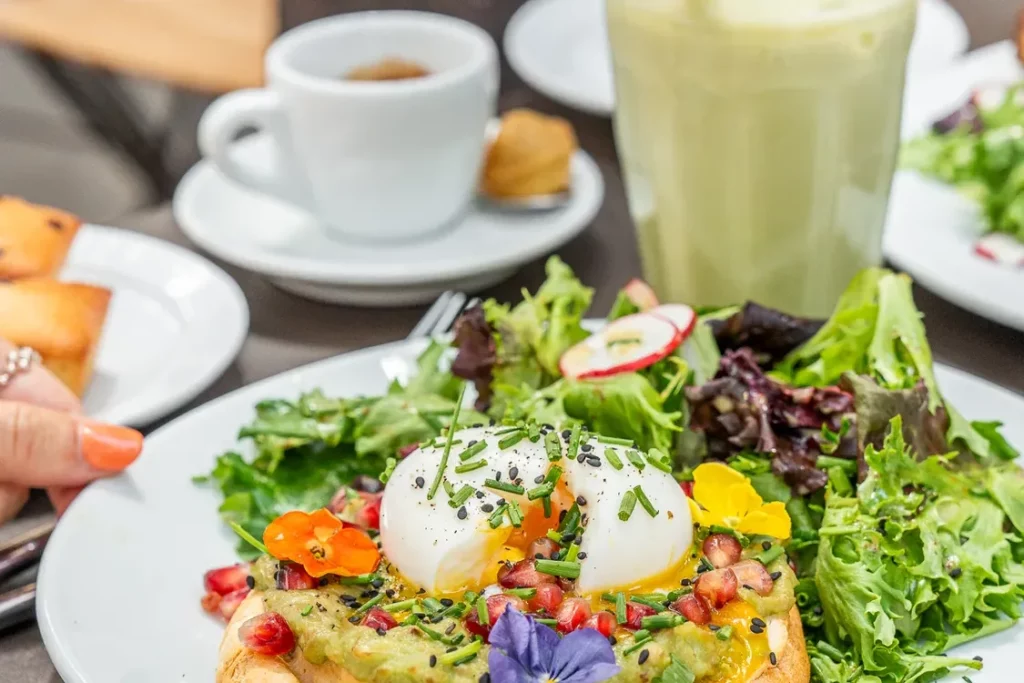
Cover photo: @lapuertaontheroad
We push open the door around 10:30 on a Saturday morning. The smell of melted butter rises from the kitchen. At the neighbouring table, two poached eggs rest on a slice of toasted bread, draped in a silky hollandaise that slowly drips onto the plate. That’s the moment we’re after: when the egg is cooked just right, when the yolk stays runny without being raw, when the texture makes all the difference between an ordinary brunch and a true moment of pleasure.
In Paris, the addresses that master the art of the brunch egg are few. Not only because the recipe is technical (poaching an egg without failing takes skill), but above all because the egg reveals everything: the freshness of the ingredients, the attention paid to the cooking, the care given to the plate. Here are our go-to spots for the best scrambled, poached or Benedict eggs in the capital, neighbourhood by neighbourhood.
🍳 Poached and Benedict eggs: technique and Parisian addresses
What makes a good poached egg
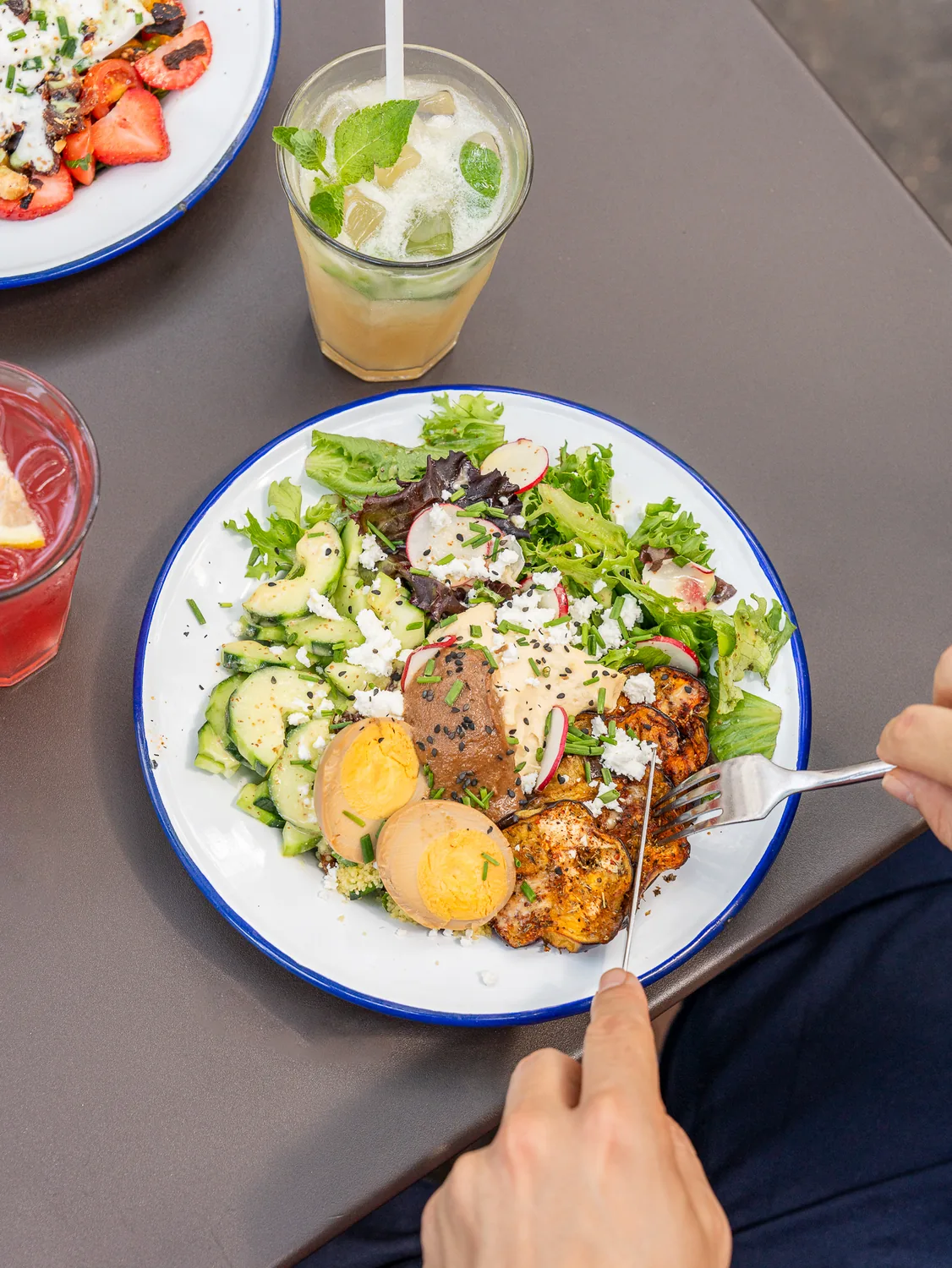
A well-made poached egg meets three criteria. The white must be set and opaque, with no stray strands floating on the plate. The yolk stays liquid at its core, almost syrupy. The overall shape is compact, not scattered. This cooking method requires simmering water, never boiling, and a very fresh egg whose white tightens immediately on contact with the water.
In Paris, few kitchens poach eggs to order. Many use silicone rings or prepare the eggs in advance, then reheat them in hot water at service time. The result shows: a rubbery white, a yolk that sets solid. The best establishments poach in front of you, or within a tight timeframe that guarantees freshness.
💡 Our tip
Look at the white: if it’s translucent in places, the egg isn’t cooked enough. If it’s as hard as a golf ball, it’s overcooked. A properly poached egg trembles slightly when you tap the plate.
Where to find Eggs Benedict worthy of the name
Eggs Benedict, two poached eggs, ham or bacon, English muffin, hollandaise sauce, has become the emblem of Parisian brunch. But hollandaise is temperamental: too hot and it splits; too cold and it sets; poorly balanced and it overpowers everything else. The places that get it right whisk it over a bain-marie, serve it warm, never scalding, with just enough lemon to balance the richness.
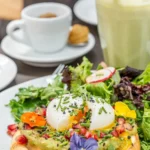
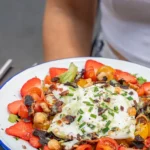
In the 9th arrondissement, Marlette rue des Martyrs serves poached eggs on toasted bread, paired with a seasonal salad. No hollandaise here, but carefully controlled cooking and freshly prepared ingredients. The place bets on simplicity: a perfect poached egg doesn’t need a sauce to shine. The warm setting and unhurried service make it an ideal spot for a relaxed brunch with friends or as a couple. You’ll also find coffee shops here that cultivate the art of slowing down, far from the bustle of the big brasseries.
In the Montmartre area, several addresses compete for the title of best Benedict. You’ll find open kitchens where you can watch the hollandaise being whisked, muffins toasted to order, crispy bacon that smells of smoke. A good Benedict is recognised by its temperature: everything must arrive hot at the same time, the runny yolk should warm the muffin without soaking it through.
Common mistakes to spot
- Hollandaise reheated in the microwave, which separates into a greasy layer and a watery layer
- Poached eggs prepared the day before and reheated, recognisable by their spongy white
- English muffin swapped for toasted sandwich bread, which goes soft instantly
- Cold bacon placed on a hot egg, a sign of a rushed assembly
- Industrial sauce straight from a tube, with its characteristic metallic taste
We steer clear of places serving Eggs Benedict for under 14 euros: at that price, it’s impossible to work with fresh eggs, a real homemade hollandaise and attentive service. Benedict takes time, technique, quality ingredients. It simply comes at a price.
🥚 Scrambled eggs: creamy or firm, to each their own texture
Two schools of thought clash
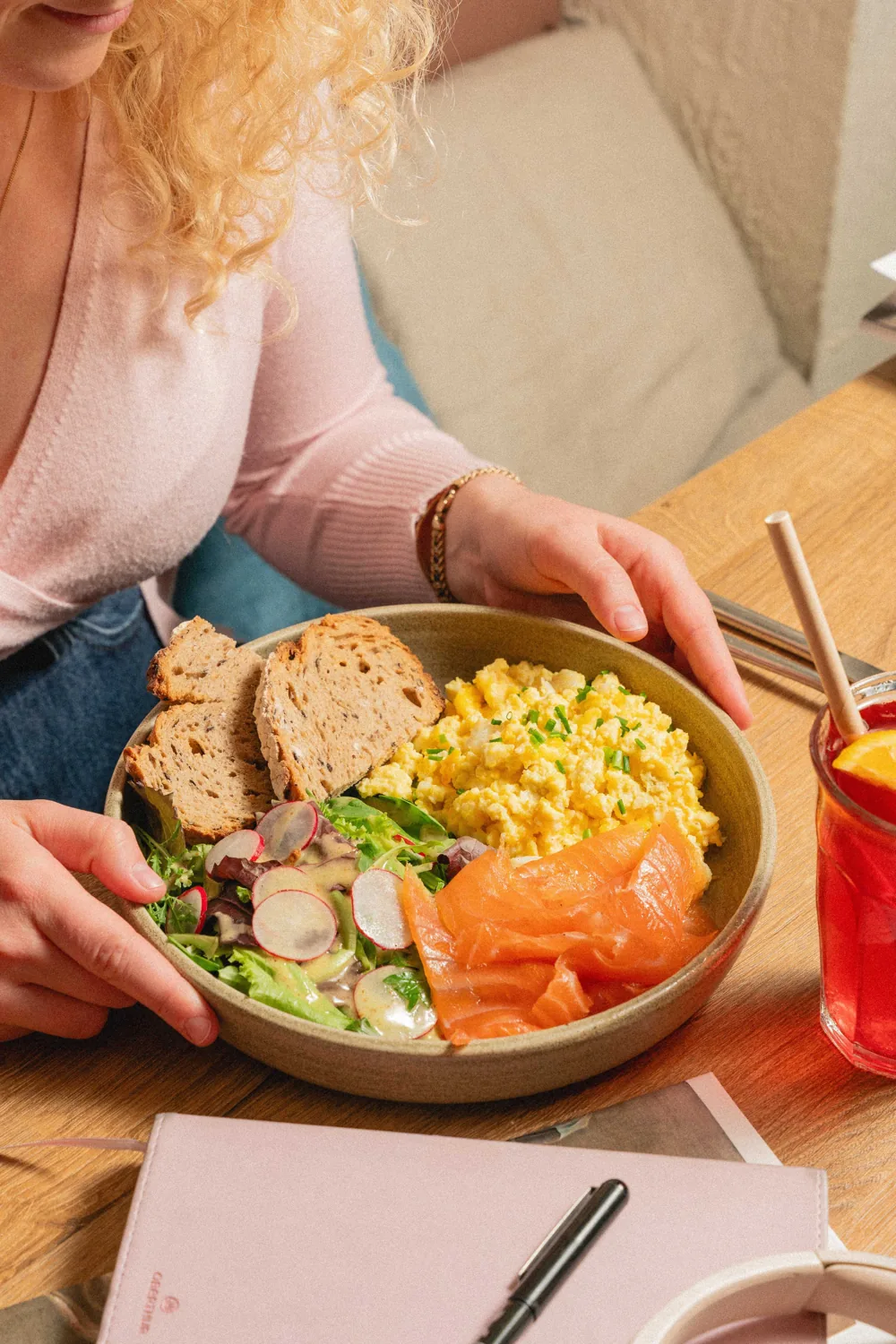
Scrambled eggs divide opinion. Some want them creamy, almost runny, whisked over a bain-marie with a knob of butter. Others prefer a firmer texture, cooked in a pan, in large golden curds. Paris offers both, rarely at the same address.
The creamy, French-style version takes patience. The eggs are cooked over very low heat, stirred constantly, sometimes for ten minutes. The result is smooth, almost like a custard, a uniform pale yellow. The firmer, more Anglo-Saxon version cooks quickly over medium-high heat. It forms curds, those small clusters of cooked egg that give texture to the plate.
✅ Worth remembering
Creamy scrambled eggs don’t reheat well. If your plate takes more than two minutes to arrive after your neighbour’s order, be wary: they were probably prepared in advance and reheated.
Our picks for great scrambled eggs
Marlette rue des Abbesses, in the 18th arrondissement, serves scrambled eggs made to order, paired with toasted bread and a fresh salad. The cooking is careful, the texture even without being too firm. No reservations at Marlette, except for groups in the afternoon: you drop in to see if there’s room, in keeping with the spontaneous spirit of the neighbourhood.
In the Marais, several coffee shops serve their scrambled eggs extra creamy, whisked with salted butter. They’re served in small cast-iron pots, still steaming, with fresh herbs snipped over them at the last moment. The toasted bread is often thick sourdough, sturdy enough to hold the weight of the egg without falling apart.
On the Left Bank, around the 6th and 7th arrondissements, brunches lean more towards the firmer version, served in generous portions with bacon, sausages, roasted tomatoes. The Anglo-Saxon influence shows on the plate: everything arrives at once, hot, hearty, no fuss.
What gets added, or not, to scrambled eggs
Some places add crème fraîche, milk, even cream cheese to thicken the texture. Others swear only by pure egg, beaten with a pinch of salt and a knob of butter during cooking. Cream adds smoothness but dilutes the flavour. Milk makes the egg lighter but less rich. Butter alone gives the most honest flavour, one that lets the egg speak for itself.
| 🇫🇷 Creamy version (French) | 🇬🇧 Firm version (Anglo-Saxon) |
|---|---|
| Slow cooking over a bain-marie, custard-like texture, pale yellow, eaten with a spoon, takes 8 to 12 minutes | Quick cooking in a pan, visible curds, bright yellow, eaten with a fork, ready in 3 to 5 minutes |
Fresh herbs, chives, tarragon, flat-leaf parsley, are cut at the last moment and sprinkled on just before serving. Cooked into the egg, they blacken and turn bitter. Cheese, grated Comté, fresh goat cheese, crumbled feta, is added off the heat, so it melts without going stringy.
🌅 Soft-boiled and jammy eggs: the forgotten stars of Parisian brunch
Why they’re so rarely found
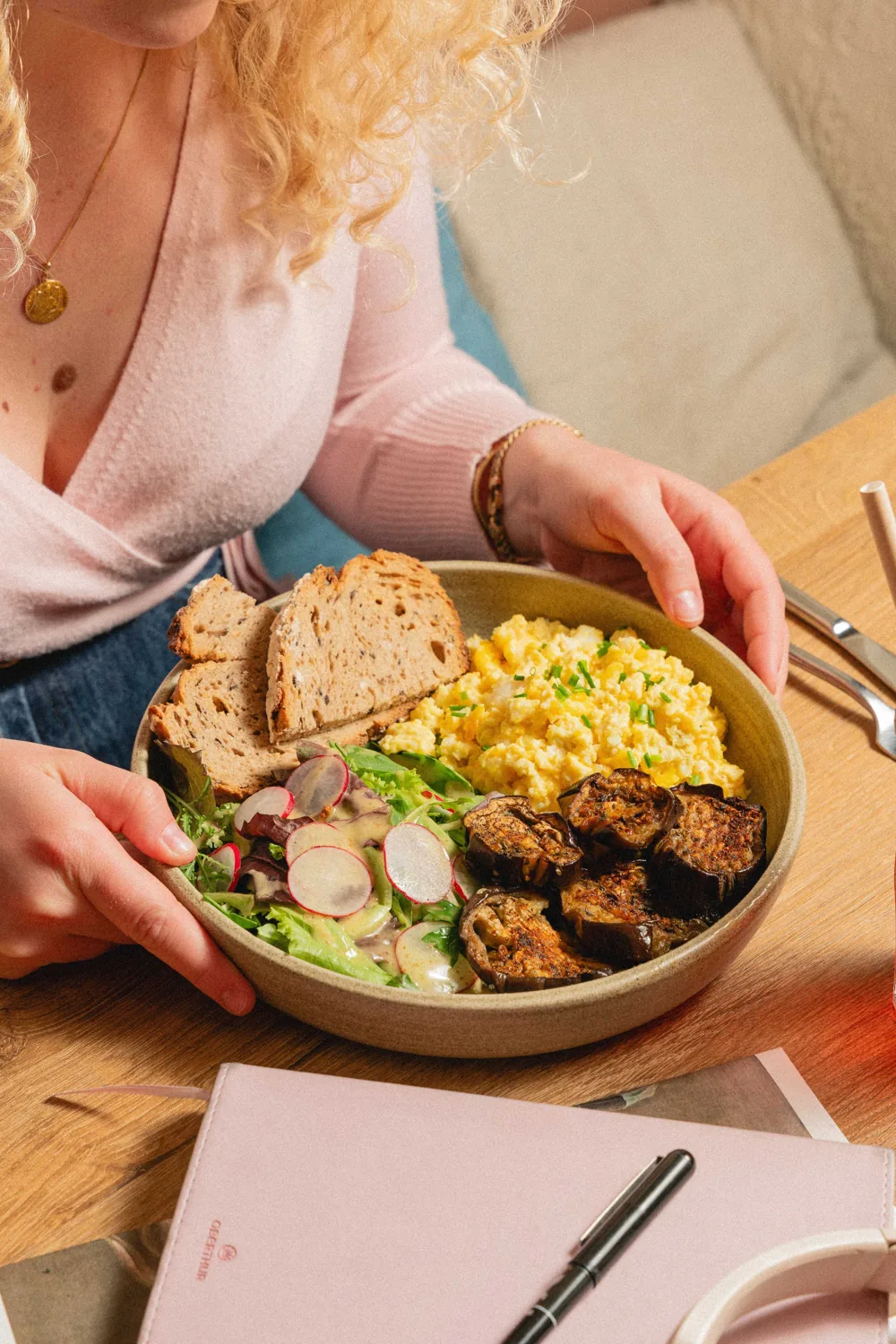
A soft-boiled egg requires split-second timing. Three minutes in boiling water for a medium-sized egg straight from the fridge. Thirty seconds too long, and the yolk sets. Thirty seconds too short, and the white stays translucent. In a brunch kitchen, where orders come in one after another, this timing is a real headache. As a result, few places offer it.
The jammy egg, six minutes of cooking, shelled, served warm, poses the same problem, only more so. It has to be cooled immediately in ice water to stop the cooking, shelled without breaking, then warmed just before serving. Lots of steps, lots of risk. The rare places that master it turn it into a point of pride.
⚠️ Keep in mind
A soft-boiled egg should be eaten within five minutes of cooking. If you’re served one in a cold egg cup, it’s probably been waiting. The egg cup should feel warm to the touch.
The places that dare to serve soft-boiled eggs
In the 9th arrondissement, some places serve soft-boiled eggs with salted butter soldiers and fleur de sel from Île de Ré. The idea is simple: dip, season lightly, savour. No sauce, no frills. The egg must be extra-fresh, an egg more than ten days old doesn’t hold up properly when soft-boiled, the white stays runny even after three minutes of cooking.
A few bistros in the 10th and 11th arrondissements serve jammy eggs on a bed of warm lentil salad, with crispy bacon bits. When you cut into the egg, the yolk blends with the lentils, creating a natural sauce. It’s hearty, simple, comforting. The kind of dish you won’t find everywhere, precisely because it demands precision.
How to spot them on a menu
A well thought-out soft-boiled egg comes announced with its accompaniments: homemade soldiers, churned butter, Guérande salt. If the menu simply says “soft-boiled egg” without specifying size or origin, it’s often a standard egg cooked by guesswork. A jammy egg, on the other hand, is always described as part of a composed dish, salad, velouté, toast, since on its own, it doesn’t hold up on the plate.
- Organic soft-boiled egg, sourdough soldiers, salted Normandy butter: a sign of a place that cares about detail
- Jammy egg on warm Puy green lentil salad: controlled cooking, sourced ingredients
- Plain soft-boiled egg: generic, no guarantee of quality
- 6-minute egg on mushroom velouté: often a well-executed jammy egg, since the velouté hides small shelling flaws
☕ Egg brunch at Marlette: simplicity and fresh ingredients
Rue des Martyrs and rue des Abbesses: two addresses, one philosophy
Marlette champions the art of the simple, well-cooked egg, served without fuss. No hollandaise, no elaborate assembly. Poached or scrambled eggs, made to order, paired with toasted bread and a seasonal salad. The egg is freshly cooked, you can tell from the steam rising off the plate, from the yolk that trembles under the fork.
Both Parisian addresses, 51 rue des Martyrs in the 9th and 45 rue des Abbesses in the 18th, run on the same model. No reservations at Marlette, except for groups in the afternoon. You push open the door, look for a free table, sit down if luck is on your side. This spontaneity is part of the charm: no reservation stress, no race against the clock.
💡 Our tip
At Abbesses, you can also order freshly made pancakes. On rue des Martyrs, the menu focuses on seasonal savoury dishes and organic pastry preparations, cookies, fudge cakes, brownies, made on Île de Ré.
What sets a Marlette egg apart
No frills. The egg is cooked in a small open kitchen, visible from the dining room. You can hear the butter sizzling, watch the server carry over a plate that’s still steaming. The cooking is honest: a poached egg should tremble, a scrambled egg should be even. If it isn’t, it gets made again. This attention to detail shows in the little things, the temperature of the plate, the freshness of the toasted bread, the salad that hasn’t been sitting in a cold room for three hours.
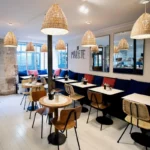
Marlette champions a philosophy of slowing down. No aggressive table turnover, no pressure to free up the table. You settle in, take your time, chat. The coffee is good, cappuccino, latte, flat white, and the wellness drinks like Ube latte, Matcha latte or Chai latte pair nicely with a Sunday brunch. You’ll come across neighbourhood regulars, couples with their weekend ritual, groups of friends stopping by to laugh and unwind.
Booking or trying your luck
At Marlette, there are no reservations for a regular table: just come by and the team will find a table. The only exception is group bookings, welcomed in the afternoon only (3pm-5pm on weekdays, 3pm-6pm on weekends), through our group booking form. It’s a deliberate choice, meant to preserve the spontaneous spirit of the neighbourhood. You drop by, take a look, sit down if a table frees up. On sunny weekends, it’s best to arrive around 10am or after 2pm to avoid the queue.
In the afternoon, the room breathes a little easier, conversations carry, there’s space to settle in for book clubs, birthdays or team gatherings.
🗺️ Neighbourhood by neighbourhood: our go-to spots for brunch eggs
The 9th arrondissement: rue des Martyrs and surroundings
Rue des Martyrs is home to several brunch spots where the egg reigns supreme. Between Marlette and a handful of other places in the area, you’ll find it all: classic Eggs Benedict, creamy scrambled eggs, shakshuka with poached eggs in a spicy tomato sauce. The neighbourhood moves at the pace of its residents, mostly Parisians brunching with neighbours, few stray tourists.
The side streets, rue Condorcet, rue Henri-Monnier, rue Victor-Massé, hide more low-key addresses. Small dining rooms, family-run service, short menus that change with the seasons. You’ll often find farm eggs here, sourced from a producer in Essonne or Seine-et-Marne, with a yolk that leans towards orange and a stronger flavour.
The 18th arrondissement: Montmartre and the Abbesses
Around Place des Abbesses, brunch is an institution. Terraces fill up from 11am on Sundays, queues stretch out in front of the popular spots. Marlette rue des Abbesses is one of those reliable addresses where you know you’ll eat well, no surprises. The eggs are prepared with care, the setting is warm, the service friendly.
Further up in Montmartre, around rue Lepic or rue des Trois-Frères, other places serve poached eggs on avocado toast, scrambled eggs with seasonal mushrooms, omelettes filled with melted cheese. The neighbourhood keeps a village-like feel, where you run into the same faces from one brunch to the next, where servers know regulars by their first name.
The 10-10:30am and 2-3pm slots tend to be quieter. Between 11:30am and 1:30pm, queues are common at popular spots.
If you can see the eggs cooking live, that’s a good sign. If everything comes out through a closed hatch, the eggs were probably prepared in advance.
A poached or scrambled egg should arrive hot, not lukewarm. If the plate is cold to the touch, the egg has been waiting.
The Marais, Bastille and other neighbourhoods
The Marais is packed with trendy spots where brunch aims to be photogenic. Eggs Benedict decorated with edible flowers, scrambled eggs served in designer pots, avocado toast topped with a perfectly centred poached egg. The setting matters as much as the plate. People come as much for the atmosphere as for the food.
Around Bastille and the 11th, brunch is more relaxed. Large shared tables, quick service, generous portions. Eggs here are often served English-style, firmly scrambled, crispy bacon, baked beans, buttered toast. Less sophistication, more comfort.
To discover other great addresses in Paris beyond egg brunch, check out our best restaurant addresses in Paris, which list places where quality ingredients and controlled cooking are a given.
Frequently asked questions
What’s the difference between a poached egg and a jammy egg?
A poached egg cooks directly in simmering water without its shell, for about three minutes. The white sets around the liquid yolk. A jammy egg cooks in its shell for six minutes, then is carefully shelled. The white is fully set, the yolk stays runny. A poached egg is served immediately, a jammy egg can be prepared ahead and reheated.
How can you tell if Eggs Benedict is homemade?
A homemade hollandaise has a velvety texture, slightly thick, a uniform pale yellow colour. It coats the egg without running too quickly. An industrial sauce is more liquid, an artificial bright yellow, and often leaves a metallic taste in the mouth. If the sauce arrives in a separate little dish for you to pour yourself, that’s often a bad sign.
Can you book a table for brunch at Marlette?
Not for a regular table: our cafés don’t take reservations, morning, noon or afternoon. Just come by, and our team will always do its best to find a table quickly. The only exception is group bookings. We welcome group bookings in the afternoon only, from 3pm to 5pm on weekdays and from 3pm to 6pm on weekends, through our group booking form. Booking requests for a small table or outside these hours can’t be accepted.
What are the signs of poorly made scrambled eggs?
Poorly made scrambled eggs are either too dry and grainy (cooked too fast over too high heat), or watery with liquid separating out (too much milk added or cooking too slow). The colour should be an even yellow, with no translucent or brown patches. If the egg smells rubbery or has a spongy texture, it’s been reheated.
Why are soft-boiled eggs rare at Parisian brunch?
A soft-boiled egg requires split-second timing, exactly three minutes, and must be served immediately. In a brunch kitchen where orders come in one after another, this timing is hard to maintain. What’s more, the egg must be extra-fresh for the white to hold properly. Many places prefer to offer poached or scrambled eggs, which are easier to manage during continuous service.
What sides make the most of a good brunch egg?
Quality bread, sourdough, thick country loaf, toasted English muffin, is essential. The butter should be salted or lightly salted, churned if possible. A fresh seasonal salad balances the richness of the egg. Avoid sides that are too heavy (greasy potatoes, excess bacon) which mask the flavour of the egg. Fresh herbs, chives, tarragon, parsley, add freshness without overpowering.
{“@context”:”https://schema.org”,”@type”:”FAQPage”,”mainEntity”:[{“@type”:”Question”,”name”:”What’s the difference between a poached egg and a jammy egg?”,”acceptedAnswer”:{“@type”:”Answer”,”text”:”A poached egg cooks directly in simmering water without its shell, for about three minutes. The white sets around the liquid yolk. A jammy egg cooks in its shell for six minutes, then is carefully shelled. The white is fully set, the yolk stays runny. A poached egg is served immediately, a jammy egg can be prepared ahead and reheated.”}},{“@type”:”Question”,”name”:”How can you tell if Eggs Benedict is homemade?”,”acceptedAnswer”:{“@type”:”Answer”,”text”:”A homemade hollandaise has a velvety texture, slightly thick, a uniform pale yellow colour. It coats the egg without running too quickly. An industrial sauce is more liquid, an artificial bright yellow, and often leaves a metallic taste in the mouth. If the sauce arrives in a separate little dish for you to pour yourself, that’s often a bad sign.”}},{“@type”:”Question”,”name”:”Can you book a table for brunch at Marlette?”,”acceptedAnswer”:{“@type”:”Answer”,”text”:”Not for a regular table: our cafés don’t take reservations, morning, noon or afternoon. Just come by, and our team will always do its best to find a table quickly. The only exception is group bookings. We welcome group bookings in the afternoon only, from 3pm to 5pm on weekdays and from 3pm to 6pm on weekends, through our group booking form (https://www.marlette.fr/en/group-booking/). Booking requests for a small table or outside these hours can’t be accepted.”}},{“@type”:”Question”,”name”:”What are the signs of poorly made scrambled eggs?”,”acceptedAnswer”:{“@type”:”Answer”,”text”:”Poorly made scrambled eggs are either too dry and grainy (cooked too fast over too high heat), or watery with liquid separating out (too much milk added or cooking too slow). The colour should be an even yellow, with no translucent or brown patches. If the egg smells rubbery or has a spongy texture, it’s been reheated.”}},{“@type”:”Question”,”name”:”Why are soft-boiled eggs rare at Parisian brunch?”,”acceptedAnswer”:{“@type”:”Answer”,”text”:”A soft-boiled egg requires split-second timing, exactly three minutes, and must be served immediately. In a brunch kitchen where orders come in one after another, this timing is hard to maintain. What’s more, the egg must be extra-fresh for the white to hold properly. Many places prefer to offer poached or scrambled eggs, which are easier to manage during continuous service.”}},{“@type”:”Question”,”name”:”What sides make the most of a good brunch egg?”,”acceptedAnswer”:{“@type”:”Answer”,”text”:”Quality bread, sourdough, thick country loaf, toasted English muffin, is essential. The butter should be salted or lightly salted, churned if possible. A fresh seasonal salad balances the richness of the egg. Avoid sides that are too heavy (greasy potatoes, excess bacon) which mask the flavour of the egg. Fresh herbs, chives, tarragon, parsley, add freshness without overpowering.”}}]}