

Baked beans for breakfast? Really? The grimace is often the same when mentioning English breakfast to a Parisian. And yet, this generous plate from across the Channel : with its creamy scrambled eggs, golden sausages and famous baked beans : has quietly conquered Parisian tables. Not as an exotic curiosity, but as something obvious: a savory, comforting brunch that fills you up for the day. Far from avocado toasts served as works of art, the English breakfast embraces its hearty, simple, warm character.
The French capital, known for its pastries and sunny terraces, has adopted this tradition from across the Channel. Coffee shops, neighborhood brasseries and even some hidden spots now offer their version of this generous morning meal. Some respect the classic recipe to the letter, others enjoy transforming it by adapting to seasonal produce or Parisian tastes. You’ll find vegetarian English breakfasts, organic ones, served with homemade bread or on crispy toast. What remains constant: the pleasure of taking your time, settling at a table and savoring a meal that keeps you full until evening.
What Makes a True English Breakfast
The traditional English breakfast follows a precise code, passed down through generations in British homes and London pubs. It’s not a plate where you throw everything left in the fridge, each element has its purpose, its balance, its texture. The foundation: eggs (scrambled, fried or poached, depending on preference), spiced pork sausages, crispy smoked bacon, butter-sautéed mushrooms, roasted tomatoes and those famous baked beans, white beans simmered in a slightly sweet tomato sauce.
Often added are black pudding (English blood sausage) for purists, and buttered toast : sometimes grilled, sometimes fried in cooking fat. All accompanied by strong tea (Earl Grey, English Breakfast) or black coffee. What distinguishes the English breakfast from American brunch or continental breakfast is this savory generosity, this complete absence of sweetness outside the beans, and this promise of not needing to eat anything before evening.
✅ The 5 Pillars of an Authentic English Breakfast
Eggs (creamy scrambled or fried), sausages (spiced pork), smoked bacon, baked beans in tomato sauce, roasted mushrooms and tomatoes. The rest (black pudding, fried bread) is a gourmet bonus.
Why English Breakfast Appeals to Parisians
Paris has always loved borrowing what works elsewhere. New York bagels, Japanese ramen, Mexican tacos have all found their place on Parisian tables. The English breakfast follows the same path, carried by a wave of British nostalgia and the desire to step off the beaten path of the croissant-butter routine. Parisians are discovering that breakfast can be hearty without being heavy, savory without being bland, and that there’s an alternative to the sweet brunch formulas dominating Sunday menus.
This morning meal also appeals through its apparent simplicity. No need for complex culinary techniques or exotic ingredients impossible to find: eggs, bacon, sausages, some sautéed vegetables. Yet, well executed, the English breakfast becomes an experience. The eggs must be creamy, the sausages juicy, the bacon crispy without being dry. Every detail counts, and that’s what separates a sloppy plate from a true moment of pleasure.
Another reason: the rhythm. The English breakfast isn’t a rushed meal. You sit down, you order, you wait for the plate to arrive steaming hot. You eat slowly, you dip your toast in the runny egg yolk, you savor the syrupy beans mingling with the mushrooms. It’s a Sunday morning where nobody checks the time, a pause in a city that’s always rushing.
Parisian Spots Doing English Breakfast Like Over There
Paris now has several dozen places to enjoy a proper English breakfast. Some are run by British expats who refuse any compromise on the recipe, others are the work of French chefs fascinated by this culinary tradition. You’ll find authentic pubs in the Marais, modern coffee shops in Belleville, neighborhood brasseries in Batignolles slipping English breakfast onto their Sunday brunch menu.
- The Breakfast Club (rue des Martyrs), run by a Londoner who’s lived in Paris for ten years, this tiny spot takes no reservations and is often full by 10:30am on weekends. The plate respects tradition: Denhay bacon smoked over beechwood, spiced Cumberland sausages, perfectly poached organic eggs, Paris mushrooms sautéed in salted butter, slow-roasted tomatoes and Heinz baked beans imported directly from the UK. Served with Earl Grey or an impeccable flat white.
- The Sunken Chip (rue Oberkampf), modern and quirky version of the English breakfast. Here, they keep the codes (eggs, sausages, bacon) but make everything organic and add a French touch: sourdough country bread instead of industrial toast, oyster mushrooms from the market, heirloom tomatoes candied slowly. The atmosphere is relaxed, raw wood tables, indie-rock playlist.
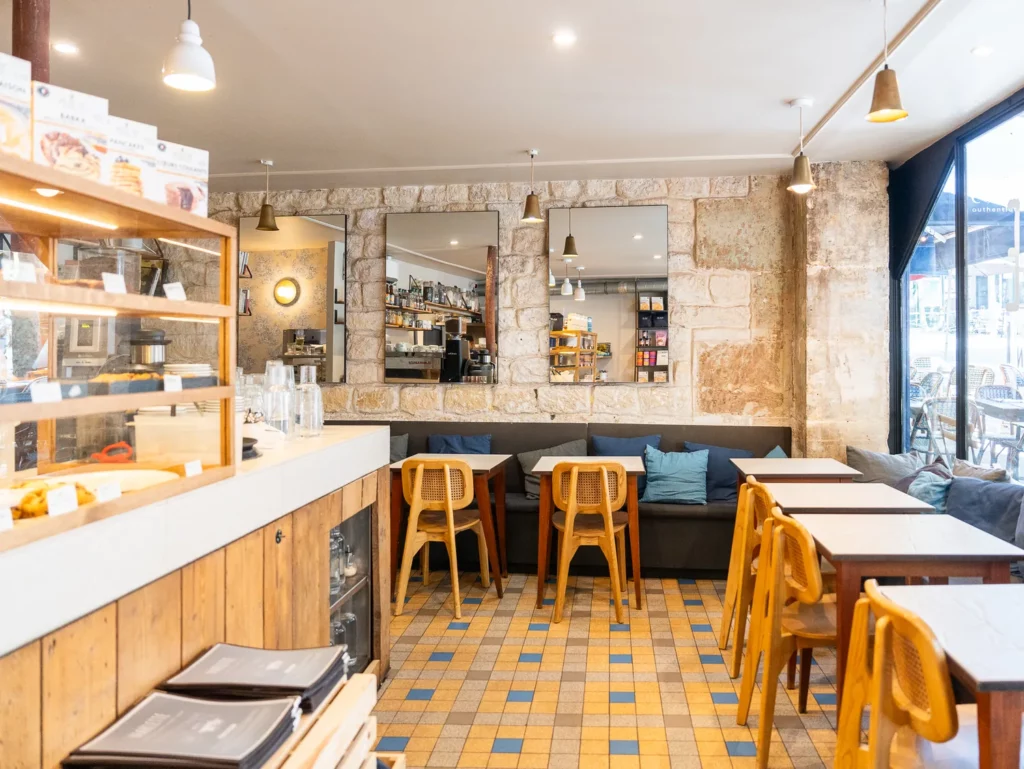
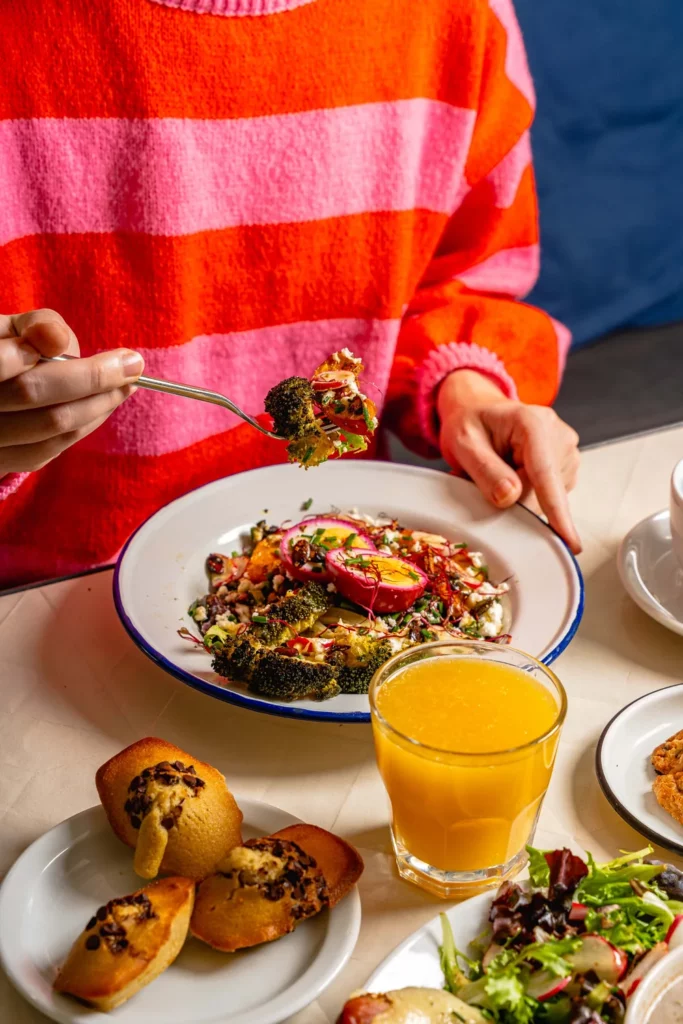
- Marlette (rue des Martyrs and rue des Abbesses), if you’re looking for a Parisian spot celebrating the art of generous breakfast without falling into British cliché, Marlette offers a brunch menu where savory takes pride of place. Freshly prepared scrambled eggs, creamy avocado toast, grilled country bread and seasonal sides compose generous plates recalling the spirit of English breakfast: taking your time, satisfying yourself, enjoying the moment. Both locations (Martyrs and Abbesses) cultivate this philosophy of urban slowdown, far from Parisian frenzy. No reservations, you drop by to see if there’s space. And often, there is.
- Strada Café (rue Monge), this 5th arrondissement coffee shop serves a hearty English breakfast at a gentle price, frequented by Sorbonne students and neighborhood locals. The full plate costs €14 and includes two eggs, two sausages, bacon, mushrooms, tomatoes, beans and grilled bread. No frills, just the essentials done well.
Other spots worth the detour: The Hardware Société (if you accept an Australian-British fusion version), Le Peloton Café (bike-café atmosphere with English breakfast on Sundays only), or Holybelly which, though focused on American brunch, offers a respectful full English option.
Vegetarian and Reinvented Variations
The classic English breakfast is a meat festival. Sausages, bacon, black pudding : hard to escape. Yet, several Parisian spots have taken on the challenge of offering vegetarian or vegan versions without betraying the spirit of the dish. The principle: maintain the generosity, the diversity of textures, and that deep satisfaction of having eaten well.
The most common vegetarian version replaces sausages with legume patties (chickpeas, red lentils) spiced with sage and smoked paprika. Bacon disappears in favor of grilled portobello mushrooms, which bring a meaty texture and slightly smoky taste. Eggs remain, often poached or scrambled with a little cream. Baked beans, roasted tomatoes and toast keep their place of honor. Result: an equally hearty plate, without the meat load.
💡 Our Advice
If you try a vegetarian English breakfast version, check that the plate contains at least 5 distinct elements. Less, and it’s no longer a full breakfast, just eggs with sides. The richness of the dish lies in its variety.
Some chefs go further and completely reinvent the concept. We’re seeing English breakfast à la française appear: Toulouse sausages instead of Cumberland, goat cheese roasted with honey replacing black pudding, homemade sourdough bread rather than industrial toast. Others offer fusion versions: Japanized English breakfast with soy-marinated eggs, sautéed shiitakes and Iberian pork bacon, or Mediterranean version with homemade merguez, candied peppers and chickpeas in tomato sauce.
These creations divide people. Purists cry sacrilege, the curious love it. The essential thing remains preserving the DNA of the dish: a savory, generous, comforting morning meal that keeps you full until evening.
How to Make Your Own English Breakfast at Home
Making an English breakfast at home requires organization, but no advanced culinary skills. The secret: prepare everything in parallel so all elements arrive hot at the same time on the plate. Here’s the method validated by English cooks themselves.
Take all products out of the fridge 20 minutes before starting: eggs, bacon, sausages, sliced mushrooms, halved tomatoes. Preheat the oven to 150°C to keep the first elements warm while you finish the others.
Sausages take the longest. Put them in a cold pan with a drizzle of oil, then turn on medium-low heat. They should cook slowly (12-15 min) turning regularly so they’re golden all over and cooked through without bursting.
In another pan, fry the bacon 3-4 minutes each side until crispy. Set aside in the oven. In the same pan (don’t clean it, the bacon fat flavors the mushrooms), sauté sliced mushrooms with a knob of butter and a pinch of salt.
Cut tomatoes in half, sprinkle with salt, pepper and a drop of olive oil. Bake at 180°C for 10-12 minutes. They should be tender and slightly caramelized.
Baked beans heat up in 3-4 minutes over low heat in a saucepan. If you’re using canned beans (Heinz remains the reference), don’t boil them, just warm them.
Eggs cook last, just before serving. Scrambled: beat them with a spoon of cream, cook over low heat stirring constantly, remove from heat when still slightly runny. Fried: crack them gently into a buttered pan, cover for 2 minutes so the white sets without hardening the yolk.
Plate the dish by grouping elements by type: sausages on one side, bacon on the other, eggs in the center, beans and mushrooms around. Add two slices of buttered grilled bread. Serve immediately with black tea or coffee. A cold English breakfast loses 70% of its appeal.
Where to Buy the Right Products in Paris
Succeeding at a homemade English breakfast depends as much on technique as on product quality. Finding real English bacon, spiced Cumberland sausages or authentic baked beans in Paris requires a bit of research, but it’s doable.
- Marks & Spencer (Champs-Élysées), the British supermarket sells everything you need: smoked back rashers bacon (thick slices including some loin), Cumberland sausages, black pudding, Heinz baked beans, English muffins. It’s the one-stop shop for nostalgic purists.
- The Real McCoy (rue de Grenelle), English grocery importing directly from the UK. You’ll find premium products: Denhay bacon smoked over beechwood, artisanal sausages, condiments (HP sauce, English ketchup), Twinings teas and even quail eggs for refined versions.
- Neighborhood butcherssome Parisian butchers (especially in the Marais or Belleville) now offer French bacon close to the English style. Ask for thick slices of smoked belly, lightly salted. For sausages, opt for plain Toulouse sausages, less spiced than Cumberland but with similar texture.
- Organic marketsSunday organic markets (Raspail, Batignolles) often offer farm eggs, fresh Paris mushrooms and heirloom tomatoes that transform the final plate. Organic isn’t part of the traditional recipe, but it improves the taste.
For white beans, if you can’t find Heinz baked beans, take a can of plain white beans (coco type) and make your own sauce: sauté a diced onion, add a tablespoon of tomato paste, a tablespoon of brown sugar, a dash of cider vinegar, salt, pepper, simmer 10 minutes with drained beans. You’ll get a homemade version very close to the original, less sweet.
English Breakfast vs Classic Brunch: Key Differences
| 🇬🇧 English breakfast | 🥐 Classic Parisian brunch |
|---|---|
| Exclusively savory, except slightly sweet beans. No pastries, no jam, no fresh fruit. | Sweet-savory mix: croissants, French toast, granola, then eggs, avocado toast. Fruit juices, smoothies. |
| Served in the morning (8am-12pm), rarely after noon. It’s a late breakfast, not a midday meal. | Served between 11am and 3pm, often until 4pm on Sundays. It’s an intermediate meal replacing breakfast and lunch. |
| Accompanied by black tea (Earl Grey, English Breakfast) or black coffee. Rarely fruit juice. | Latte, cappuccino, fresh juices, smoothies, sometimes mimosas or bloody marys. |
| Single hearty plate, all elements served together. No composable formula. | Progressive formula: first pastries and hot drinks, then savory dish, sometimes a sweet dessert. |
| Fixed price (€12-18 average in Paris for a full English). No all-you-can-eat formula. | Either à la carte (variable bill), or all-you-can-eat formula (€20-30). More flexible on composition. |
These differences explain why some Parisians prefer English breakfast to traditional brunch. It’s more structured, more predictable, and especially more filling. When you leave a full English at noon, you’re not hungry before 8pm. When you leave a Parisian sweet-savory brunch, you often snack in late afternoon.
Mistakes to Avoid When Ordering or Preparing an English Breakfast
⚠️ Keep in Mind
A failed English breakfast is often a cooking or timing problem. Overcooked eggs, cold sausages, limp bacon : these details ruin the experience. Better a simple dish well executed than an ambitious plate botched.
Mistake #1: cooking all elements at once without planning ahead. Sausages take 15 minutes, eggs 3 minutes. If you start everything together, either the sausages will be raw or the eggs will be rubbery. Respect the cooking order: sausages first, bacon and mushrooms next, tomatoes in the oven in parallel, beans warmed at the end, eggs last of all.
Mistake #2: using American streaky bacon (thin ultra-fatty slices). Traditional English bacon, called back bacon, includes part loin and part fat. It’s thicker, less crispy, meatier. American bacon becomes crunchy and almost disappears when cooked. If that’s all you have, double the quantities.
Mistake #3: forgetting to salt scrambled eggs before cooking. Many people salt eggs once on the plate. Bad idea. Salt should be added to the bowl before beating the eggs, then again lightly at the end of cooking. It completely changes the texture and taste.
Mistake #4: serving raw tomatoes. English breakfast tomatoes must be roasted or grilled, never raw. Raw, they bring acidity and water that make the plate soggy. Roasted, they concentrate their natural sugar and create contrast with the saltiness of bacon and sausages.
Mistake #5: neglecting the bread. Bread isn’t a detail. It serves to mop up egg yolk, balance bites, bring a neutral texture between two rich elements. Industrial soft bread or burnt toast ruins the experience. Choose good toasted bread with butter or, even better, toasted country bread.
When and How to Enjoy English Breakfast in Paris
English breakfast is traditionally consumed in the morning, between 8am and noon. But in Paris, hours differ by location. Some coffee shops serve it all day (until 3pm), others only on weekends in their brunch formula. If you want the authentic experience, aim for arrival between 10am and 11:30am: late enough to be really hungry, early enough that kitchens are still fresh and motivated.
Atmosphere-wise, English breakfast is savored in three different contexts. The first: solo, with a book or newspaper, seated at a quiet café counter. It’s the contemplative moment, when you take your time, where nobody’s waiting for you. The second: as a duo for a hearty brunch, face to face, with that Sunday morning complicity where you share toast and taste from each other’s plate. The third: with friends, around a large table, each with their own plate, in that joyful hubbub of lazy mornings where you remake the world between bites of sausage.
Some Parisian spots also organize English breakfast nightsyes, evenings where they serve this normally morning dish. The idea may seem weird, but it works. Eating eggs and bacon at 9pm has something transgressive and comforting at once. Especially after a long workday, when you get home late and don’t want to cook something complicated.
A tip if you want to avoid crowds: favor weekdays. On Saturdays and Sundays, spots offering generous brunches are often full by 11am. On weekdays, even reputed spots have available tables, service is faster, atmosphere more relaxed. And you fully enjoy your plate without jostling or pressure to free the table.
Frequently Asked Questions
What’s the difference between an English breakfast and an Irish breakfast?
Irish breakfast closely resembles English breakfast, but it systematically contains black pudding (blood sausage) and white pudding (white pudding with oat flakes), as well as soda bread (Irish bread with bicarbonate) instead of classic toast. Irish sausages are also more spiced, with black pepper and herbs. Both dishes share eggs, bacon, mushrooms and tomatoes, but Irish breakfast is generally heartier and richer in pudding.
Can you eat English breakfast in the evening?
Yes, even though it’s not British tradition. Some Parisian cafés offer all-day breakfast (breakfast served all day) and a few spots organize English breakfast evenings, especially in winter. Eating this dish at night provides immediate comfort, almost regressive, and constitutes a complete meal that keeps you full. The essential thing is that ingredients are freshly cooked, not reheated from the morning.
How much does an English breakfast cost in Paris?
Prices vary between €12 and €20 depending on the spot and product quality. Neighborhood coffee shops often offer a complete formula around €14, while more upscale places or hotel brunches reach €18-20. For this price, the plate should include at minimum eggs, sausages, bacon, mushrooms, tomatoes, beans and bread. If one of these elements is missing, the price should drop accordingly.
Is there a vegetarian version of English breakfast?
Yes, many Parisian spots now offer a vegetarian English breakfast. Pork sausages are replaced by vegetable patties (chickpeas, lentils), bacon by grilled portobello mushrooms or smoked eggplant slices. Eggs, baked beans, roasted tomatoes and mushrooms remain unchanged. Some add mashed avocado or grilled halloumi to compensate for the absence of meat. The plate remains hearty and satisfying.
Do you need to book for English breakfast brunch on Sunday?
It depends on the spot. Some Parisian coffee shops take no reservations during brunch hours and work on a first-come, first-served basis : this is notably the case at Marlette, where you drop by to see if there’s space. Other restaurants or brasseries accept reservations for their Sunday brunch. If the spot is often full, favor arrival before 11am or after 1:30pm, the in-between slots being most saturated. On weekdays, reservations are rarely necessary. Tables can be booked from 3 to 5 p.m. at reservation@marlette.fr.
What drinks traditionally accompany an English breakfast?
The classic drink is black tea, served strong with a little milk. The British favor English Breakfast tea (robust blend of Assam, Kenya and Ceylon teas) or Earl Grey (bergamot-scented). Black coffee is accepted, but less traditional. Avoid fruit juices, smoothies or sweet drinks that unbalance the meal. If you really want juice, choose salted and peppered tomato juice, which pairs well with the savory side of the dish.