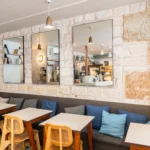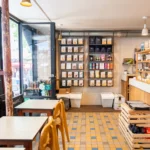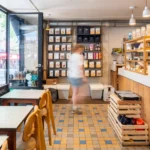


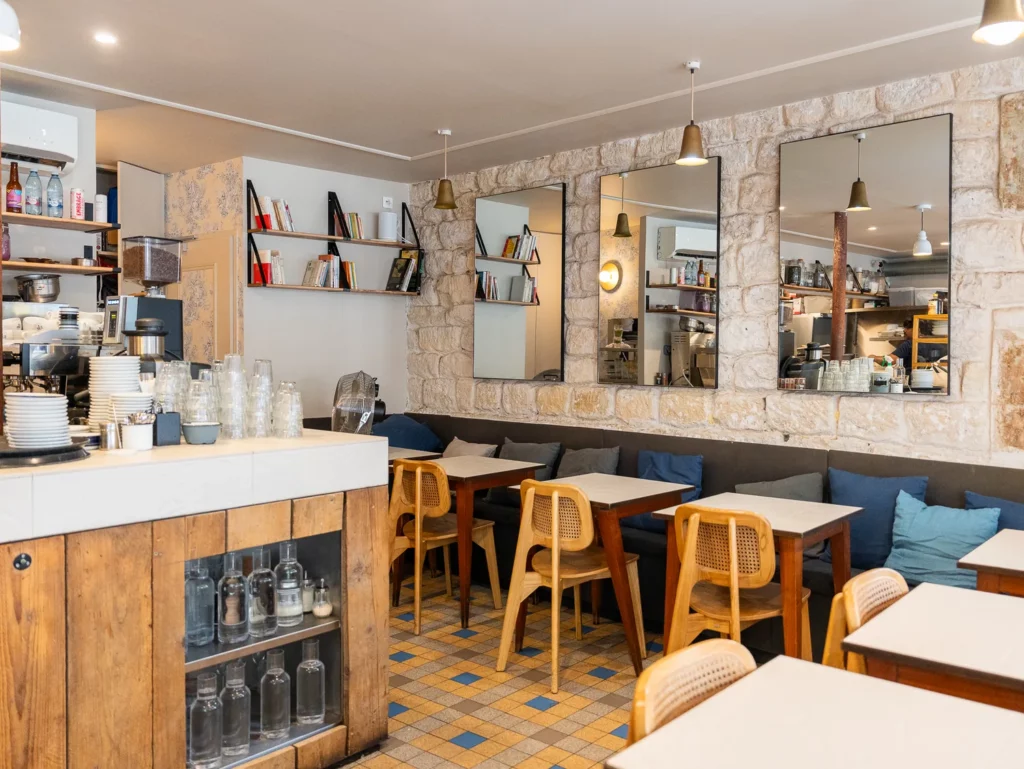
Cover photo: @lapuertaontheroad
Where would you like to be on Sunday morning if you could choose the exact place that suits you? Not an endless brunch where you have to juggle between fifteen people and a playlist that’s too loud. Rather a table for two, scrambled eggs prepared by someone else, and that rare feeling of being able to stretch time without anyone checking their watch. A place that acts as a bubble, without having to book three weeks in advance or cross all of Paris.
Here’s our selection of spots for brunching as a couple in Paris. No Instagrammable but empty places. Real spots that keep their promises: generous plates, intimate atmosphere, and that rare impression that you’re a bit at home.
Why Brunch Remains the Perfect Date for Two
Brunch is the ideal format when you want to take your time. No time pressure, no single dish that’s gone in three bites. You share a savory plate, taste each other’s sweet, order a second coffee without guilt. On Sunday morning, Paris wakes up slowly. Terraces fill up gently, sidewalks are still calm.
For two, brunch becomes a ritual. No need for grand speeches, just a table where you face each other, where you can put down your phone, where conversation takes its time. Some see it as a luxury. We call it a successful Sunday.
💡 Our Advice
Choose a neighborhood spot rather than an ultra-touristy place. You’ll gain in tranquility, service quality, and often value for money.
Neighborhoods Where to Settle Down (and Your Fork)
Paris doesn’t lack spots, but not all neighborhoods are equal on a Sunday morning. Some are already saturated by 11 a.m., others keep that precious calm that makes you want to linger.
Montmartre, Between Cobblestones and White Tablecloths
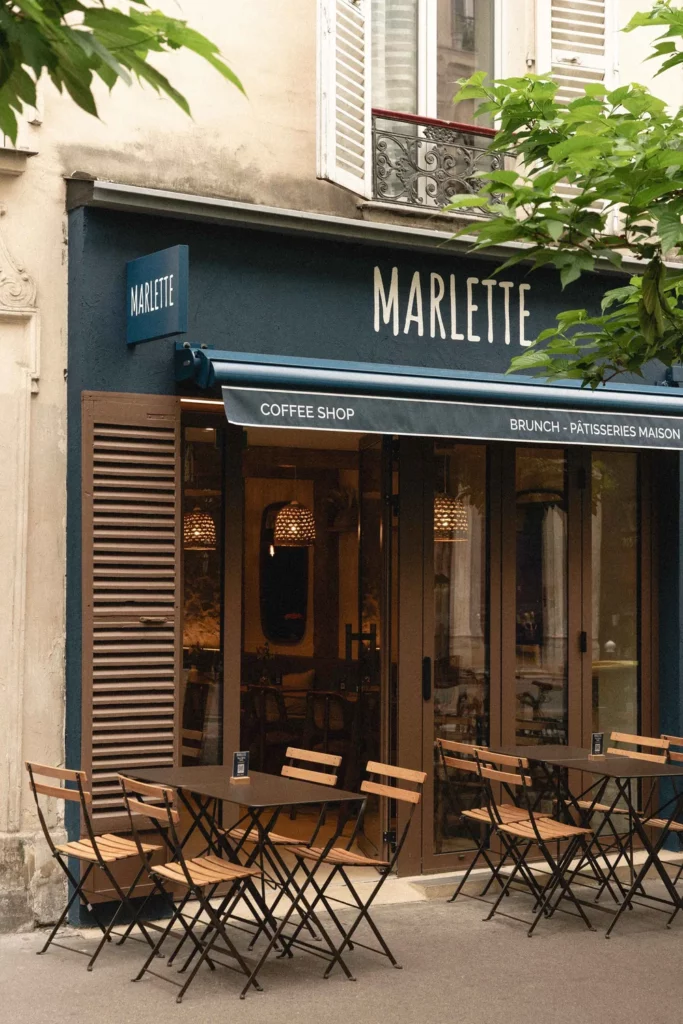
Montmartre remains our favorite for brunching as a couple. The cobbled streets, terraces overlooking the stairs, that particular light bouncing off white facades. The neighborhood has kept its soul, even if tourists climb up to Sacré-Cœur from 9 a.m.
Rue des Abbesses, rue des Martyrs: spots are numerous, but not all equal. We favor cafes that belong to the neighborhood, those where regulars come in their Sunday pajamas, not selfie traps. Marlette, for example, plays the authenticity card: seasonal products, organic pastry preparations made on l’île de Ré, intimate atmosphere without being stuffy. Two locations in the area: 51 rue des Martyrs and 45 rue des Abbesses. No reservations, it’s their policy. You stop by to see if there’s room, and often, there is.
Le Marais, Between Heritage and Generous Plates
Le Marais has this rare mix: listed facades, narrow streets, and a concentration of cafes that know what they’re doing. On Sunday, the neighborhood vibrates differently. Shops are closed, terraces fill up, you pass couples coming out in sneakers and oversized sweaters.
Spots are often more intimate than elsewhere. Small places, tables close but not cramped, short but mastered menu. You find influences from elsewhere, Middle East, Israel, Scandinavia, without falling into clumsy fusion. Coffee is good, portions generous, bill reasonable.
Canal Saint-Martin, the Waterside Option
The canal remains a safe bet when you want to brunch with your feet (almost) in the water. The quays are wide, terraces overlook the barges, you can sit in full sun or in the shade of plane trees depending on the season.
The atmosphere is more relaxed than elsewhere. Fewer white tablecloths, more raw wood tables. Fewer waiters in suits, more young people working there because they love the place. Menus focus on homemade, pressed juices, granolas that don’t come from industrial bags.
✅ To Remember
Each neighborhood has its style. Montmartre for romance, le Marais for diversity, Canal Saint-Martin for a relaxed vibe. It’s up to you to choose according to your Sunday mood.
What We’re Really Looking For in a Brunch for Two
A good romantic brunch isn’t just about perfectly golden pancakes. It’s an atmosphere, service, a menu that keeps its promises. Here’s what matters.
Intimacy Above All
We don’t want to end up stuck next to a table of eight celebrating a birthday. We’re looking for a table a bit apart, a banquette against the wall, a terrace not too exposed to traffic. The best cafes know how to create corners where you feel protected without being isolated.
Lighting plays a big role. Too many neons kill the atmosphere. Too dark, you can’t see what you’re eating. The ideal: natural light coming through large windows, complemented by a few discreet hanging lights. The kind of place where you don’t need to pull out your phone as a flashlight to read the menu.
A Menu That Doesn’t Spread Too Thin
Endless menus are often a sign of average cuisine. Too much choice kills choice. We prefer a short selection: three or four savory options, as many sweet ones, well-chosen drinks. It means the chef masters what he offers, products rotate quickly, you won’t end up with poached eggs prepared three hours in advance.
Well-executed classics are better than clumsy inventions. Creamy scrambled eggs, an avocado toast that doesn’t run everywhere, fluffy pancakes without being doughy. If the menu offers variations, an Ube latte, a Matcha latte, a spiced Chai, it’s even better, as long as it’s not just for show.
Service That Knows How to Be Discreet
The best service is the one you don’t notice. The waiter who arrives at the right time to refill cups, who doesn’t hover over the table every two minutes, who smiles without overdoing it. The one who knows the menu by heart, can advise without insisting, who senses you want to stay longer without pressuring you.
| ✅ What Works | ❌ What Kills the Vibe |
|---|---|
| • Spaced tables • Natural light • Discreet playlist • Attentive but not oppressive service • Seasonal products |
• Tables crammed together • Music too loud • Standardized menu all year round • Rushed or indifferent waiters |
Formulas Worth It (and Those to Avoid)
In Paris, brunch formulas vary from simple to triple the price. Some are generous, others leave you hungry. Here’s how to navigate.
À La Carte Brunch: Total Freedom
You order what you want, when you want. Feel like savory then sweet? No problem. Just a coffee and a pastry? It’s your right. The bill climbs faster than with a set menu, but at least you don’t waste anything.
Spots like Marlette play this card: no imposed menu, just freshly prepared pastry preparations (cookies, fondants, brownies, scones), seasonal dishes, and carefully crafted beverages. You compose according to your cravings, not according to a fixed menu.
Fixed Formula: Practical but Sometimes Frustrating
Starter + main + drink + dessert for a round price. The advantage: you know where you’re going, no bad surprises on the bill. The drawback: you sometimes end up with portions calibrated to the millimeter, industrial orange juice, and a cellophane-wrapped pastry.
If you opt for this format, check the details. Where do the products come from? Is coffee included or extra? Can you choose between several options, or is it a single menu? The best establishments leave some wiggle room.
All-You-Can-Eat Brunch: Watch Out for Traps
On paper, it’s tempting. In practice, it’s often disappointing. Products are rarely fresh, service turns into a giant self-service, and you end up crammed in a noisy room queuing for lukewarm pancakes.
There are a few exceptions, high-end hotels that play the game, but for a romantic brunch, it’s clearly not our recommendation. You came to spend time together, not to stock up.
💡 Our Advice
For a brunch for two, favor à la carte or a short, well-crafted formula. You’ll gain in quality, freshness, and above all pleasure.
Beverages That Make All the Difference
Good coffee is the foundation. But a successful brunch is also knowing how to venture off the beaten path when it comes to drinks.
Specialty Coffee, Non-Negotiable
Gone are the days when we settled for a bitter espresso pulled from an automatic machine. Today, good Parisian cafes work with local roasters, offer various origins, and know how to foam milk without burning it.
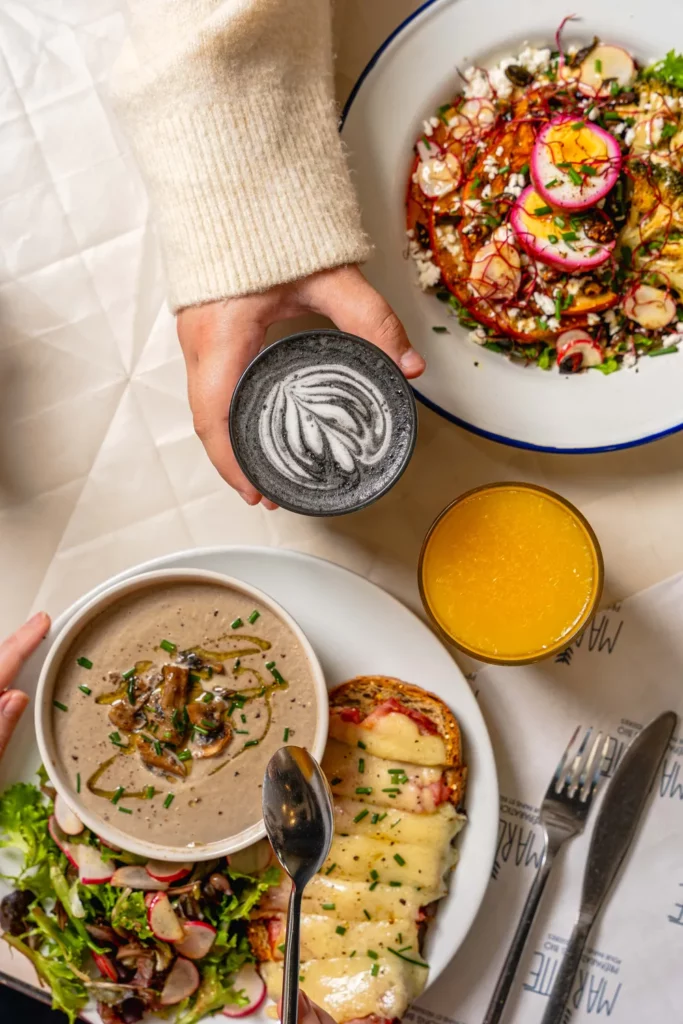
Creamy cappuccino, well-balanced flat white, latte with a heart drawn on the surface: these aren’t just Instagram details. It’s a real taste difference. If the waiter can tell you where the coffee comes from, it’s already a good sign.
Colored Lattes, for Those Who Dare
Ube latte (purple, made with Filipino sweet potato), Matcha latte (green, with Japanese matcha tea), spiced Chai latte: these wellness drinks have invaded Parisian menus. And honestly, when they’re well prepared, they’re worth the detour.
Matcha brings that vegetal and slightly bitter side that wakes you up gently. Ube is softer, almost naturally sweet, with a striking color. Chai is the comfort option: cinnamon, cardamom, ginger, and milk. Perfect for a rainy Sunday.
Fresh Juices, Because We’re Not Only About Coffee
A freshly squeezed orange juice, a green detox juice (cucumber, apple, spinach, lemon), or a homemade smoothie: these options show that a cafe doesn’t just reheat croissants. It requires organization, fresh products, and a real will to do things right.
The Savory Plate: What Separates Good from Mediocre
Brunch is first and foremost about savory. Eggs, avocado toast, composed salads: these classics are everywhere, but rarely well executed.
Eggs, the Barometer of Every Good Cafe
They often say a chef is judged by his eggs. It’s true. Scrambled eggs seem simple: you crack, mix, cook. Except between rubbery eggs and creamy eggs, there’s a world of difference.
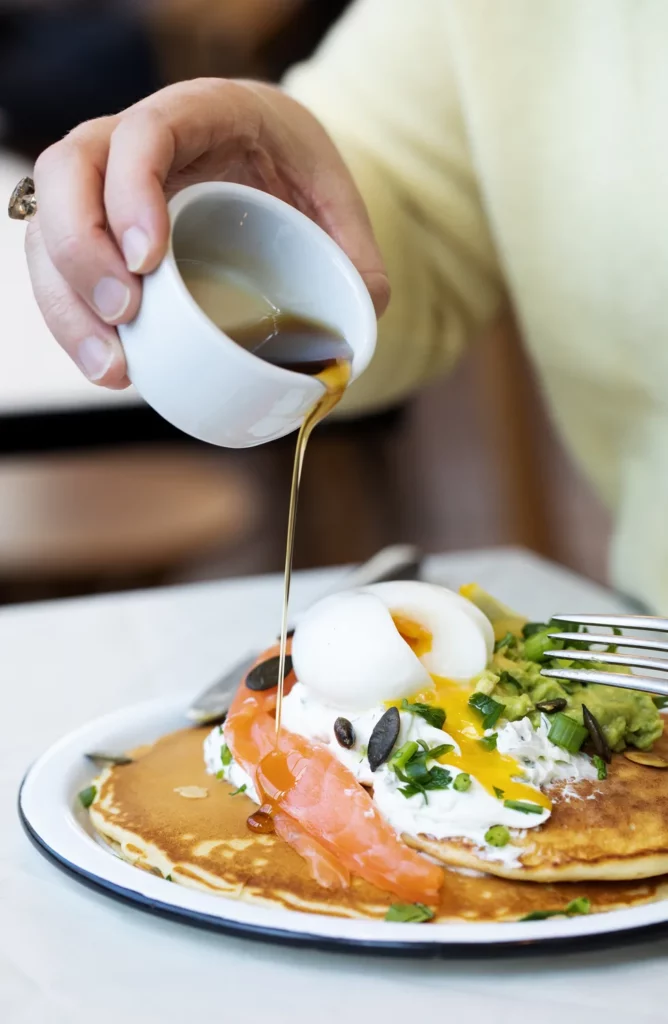
Good cafes cook their eggs over low heat, add a bit of butter or crème fraîche, stir constantly. The result is soft, almost melting. Poached eggs are even more technical: you need simmering water, vinegar, and a sure hand. When the yolk runs when cut, you’ve won.
Soft-boiled eggs, childhood throwback version, also work. With toasted bread soldiers, Guérande salt, and possibly a bit of truffle if you’re feeling festive.
Avocado Toast, Between Cliché and Delight
Yes, avocado toast has become a millennial cliché. But when it’s well done, you understand why it’s a hit. The base: quality bread (sourdough, whole wheat, multigrain), toasted but not burnt. The avocado roughly mashed, not reduced to puree. A drizzle of lemon, a bit of fleur de sel, some seeds (sesame, pumpkin, sunflower).
Advanced versions add a poached egg, crumbled feta, roasted cherry tomatoes, or pickled radishes. But the essential remains the avocado itself: ripe, creamy, not oxidized. If the toast arrives with a neon green or brown avocado, it’s a fail.
Salads and Bowls, for Those Who Want Light
Brunching doesn’t necessarily mean stuffing yourself. Composed salads and balanced bowls have their place. Quinoa, lentils, seasonal vegetables, seeds, tahini sauce or homemade vinaigrette: it’s nourishing without being heavy, and leaves room for dessert.
Watch out for alibi salads: three arugula leaves, two cherry tomatoes and a quarter avocado for 18 euros, we’ll pass. We’re looking for generosity, varied textures, flavors that complement each other.
It’s the first indicator of seriousness. Overcooked eggs = sloppy cooking.
Industrial bread or artisan sourdough? Seasonal or frozen vegetables?
A vinaigrette with character, a smooth hollandaise sauce: that’s where you see the difference.
The Sweet Side, to Finish Beautifully
After savory, we move to sweet. Not out of obligation, but because a brunch without sweetness is like a Sunday without sleeping in.
Homemade Pastries, Marker of Excellence
Croissant, pain au chocolat, scone: these classics are everywhere, but rarely made on-site. The best cafes work with local artisans or prepare their pastries themselves. At Marlette, for example, chocolate chip and sesame cookies, chocolate fondants with fleur de sel from l’île de Ré, or scones are prepared in their production workshop, then delivered fresh to the two Parisian cafes.
When a pastry comes out of the oven that morning, you can tell. The texture is different, the taste more pronounced, the smell fills the room. If you see pastries under plastic domes, run.
Pancakes, Waffles and Crêpes: The Winning Trio
Fluffy pancakes, stacked in a tower, drizzled with maple syrup: it’s comforting, indulgent, a bit regressive. The important thing is that they’re not dry. A good pancake should stay moist inside, slightly golden outside.
Belgian waffles, thick and crispy, pair well with melted chocolate, whipped cream, or simply powdered sugar. Crêpes, French version, are thinner, more delicate. Filled with homemade jam, artisan spread, or just butter and sugar.
Less Classic Options (but Just as Good)
Some cafes offer cinnamon rolls (cinnamon swirls, cream cheese frosting), babkas (marbled brioche of Jewish origin), or ultra-fudgy brownies. These pastries require time, know-how, and a real desire to venture off the beaten path.
Mistakes to Avoid for a Successful Brunch
A romantic brunch can easily go wrong. Here are the classic traps and how to avoid them.
Arriving Too Late (or Too Early)
The ideal window is between 10:30 a.m. and 12:30 p.m. Before that, cafes aren’t yet in their groove, fresh products have just arrived, staff isn’t at full capacity. After 12:30 p.m., it’s chaos: tables fill up, service speeds up, the atmosphere becomes noisy.
If you really want to brunch peacefully, aim for 11 a.m. on a Sunday. Early risers have already left, latecomers aren’t there yet. You’ll have choice of tables, attentive service, and time to savor.
Choosing a Spot Only for the Decor
Instagram has done a lot of harm to Parisian brunch. Entire cafes have been built on aesthetics: pink walls, neon signs, hanging plants, mismatched dishes. The problem is that decor never compensates for mediocre cuisine.
We’re not saying you should choose an ugly place. Just that you need to look beyond the photos. Read reviews, check the menu online, ask regulars. A cafe that puts everything into visuals always ends up disappointing.
Forgetting to Check Hours and Reservation Policy
Not all cafes serve brunch at the same hours. Some stop at 3 p.m., others at 4 p.m., a few offer brunch all day. Check before you go, especially if you live far away.
Regarding reservations, policies vary enormously. Some establishments accept reservations only for groups. Others, like Marlette, take no reservations during brunch hours, deliberately, to preserve the spontaneous spirit. You stop by to see if there’s room, period. If you prefer to secure your table, favor a spot that accepts reservations for groups, but expect to sometimes wait anyway.
⚠️ Keep in Mind
A successful brunch isn’t the most expensive one. It’s the one you want to return to, where you feel good, where you feel like you’ve taken a real break.
The Little Details That Make All the Difference
Beyond the menu and service, it’s the micro-attentions that transform a decent brunch into a memorable experience.
The Discreet but Right Playlist
Nothing worse than music too loud that prevents conversation, or conversely, cathedral silence that makes every conversation audible to the whole room. The best cafes curate their playlists: muted jazz, soothing indie folk, downtempo electro. The volume is set to create an atmosphere without drowning out voices.
Well-Spaced Tables
When tables are crammed together, you lose intimacy. You hear the conversation of the couple next door, you bump into each other when moving, you don’t dare lean toward each other too much. Cafes that respect their customers leave space between tables, even if it means hosting fewer people.
Characterful Tableware
Artisan ceramic plates, mismatched but harmonious cups, matte stainless steel cutlery rather than gilded plastic: these details don’t change the taste, but they contribute to the experience. You sense there’s real thought behind it, not just bulk buying from a generic supplier.
The Little Word from the Waiter Who Knows the House
When the waiter can tell you the origin of the coffee, advise you between two dishes, tell you what was prepared that morning, it makes all the difference. It means he knows his stuff, isn’t reciting a script, loves what he does. And that can’t be faked.
Organizing Your Brunch for Two: Practical Questions
A few tips so everything goes well, from the journey to the bill.
Plan the Budget
In Paris, a brunch for two ranges between 30 and 80 euros, depending on the spot and formula. Count on 15 to 25 euros per person in a neighborhood cafe, 30 to 40 euros in a more upscale place, and up to 50 euros in a palace hotel.
The bill climbs quickly if you order extra drinks (fresh juices, non-alcoholic cocktails, multiple coffees). To avoid bad surprises, check the menu online before coming.
Choose the Right Day
Sunday remains the brunch day. It’s ingrained in the collective unconscious: on Sunday, you wake up late, you wander, you take your time. But if you can free yourself on a Saturday morning, you’ll sometimes have more choice and fewer people.
Some cafes also offer brunch during the week, especially on Wednesday. It’s rarer, but worth checking. You’ll be almost alone, service will be impeccable, and you’ll feel like you’ve stolen a moment out of time.
Plan the Return
After a good brunch, you often want to walk, digest peacefully. Take advantage of it to discover the neighborhood: a stroll along the canal quays, a climb to Sacré-Cœur, wandering through the streets of le Marais. Brunch is also an excuse to rediscover Paris differently.
Frequently Asked Questions
Can you brunch as a couple during the week in Paris?
Yes, some cafes offer brunch during the week, but it’s less common than on weekends. Check hours before going. Wednesday is often a good option, with fewer people and more personalized service.
Do you need to book for a romantic brunch in Paris?
It depends on the establishments. Some accept reservations, others operate only on a “first come, first served” basis. At Marlette, for example, no reservations during brunch hours: it’s their policy to preserve the spontaneous spirit. If you want to secure a table, favor a spot that accepts reservations, especially on Sunday. Tables can be booked from 3 to 5 p.m. at reservation@marlette.fr.
What budget to plan for a brunch for two in Paris?
Count between 30 and 80 euros for two, depending on the spot and formula. A neighborhood cafe runs around 15-25 euros per person, a more upscale place goes up to 30-40 euros, and palace hotels exceed 50 euros per head. Budget a bit more if you order extra drinks.
Which neighborhoods to favor for brunching as a couple in Paris?
Montmartre offers charm and authenticity, le Marais offers diversity and intimacy, Canal Saint-Martin focuses on a relaxed waterside atmosphere. Each neighborhood has its style: it’s up to you to choose according to your mood of the moment.
What drinks to order during a romantic brunch?
Good specialty coffee (cappuccino, flat white) is the foundation. To vary, try a Matcha latte, an Ube latte or a spiced Chai: these wellness drinks bring an original touch. Minute-pressed fresh juices are also an excellent option.
Are pastries served at brunch homemade?
Not always. The best cafes prepare their pastries themselves or work with local artisans. At Marlette, for example, all pastry preparations (cookies, fondants, scones, brownies) are organic and prepared in their workshop on l’île de Ré, then delivered fresh to the Parisian cafes.