




Cover photo: @lapuertaontheroad
We push open the door on a Sunday morning. The scent of vanilla drifts through the room. At the next table, a stack of pancakes arrives, drizzled with maple syrup. The kind of moment where you forget the time.
Paris has dozens of spots serving pancakes. Some prepare them with an ultra fluffy batter, others rely on generous toppings. We selected the places where this American specialty is enjoyed the right way, without artifice, with real ingredients. Here is our roundup of the best spots, neighborhood by neighborhood.
Must-visit spots for perfect pancakes
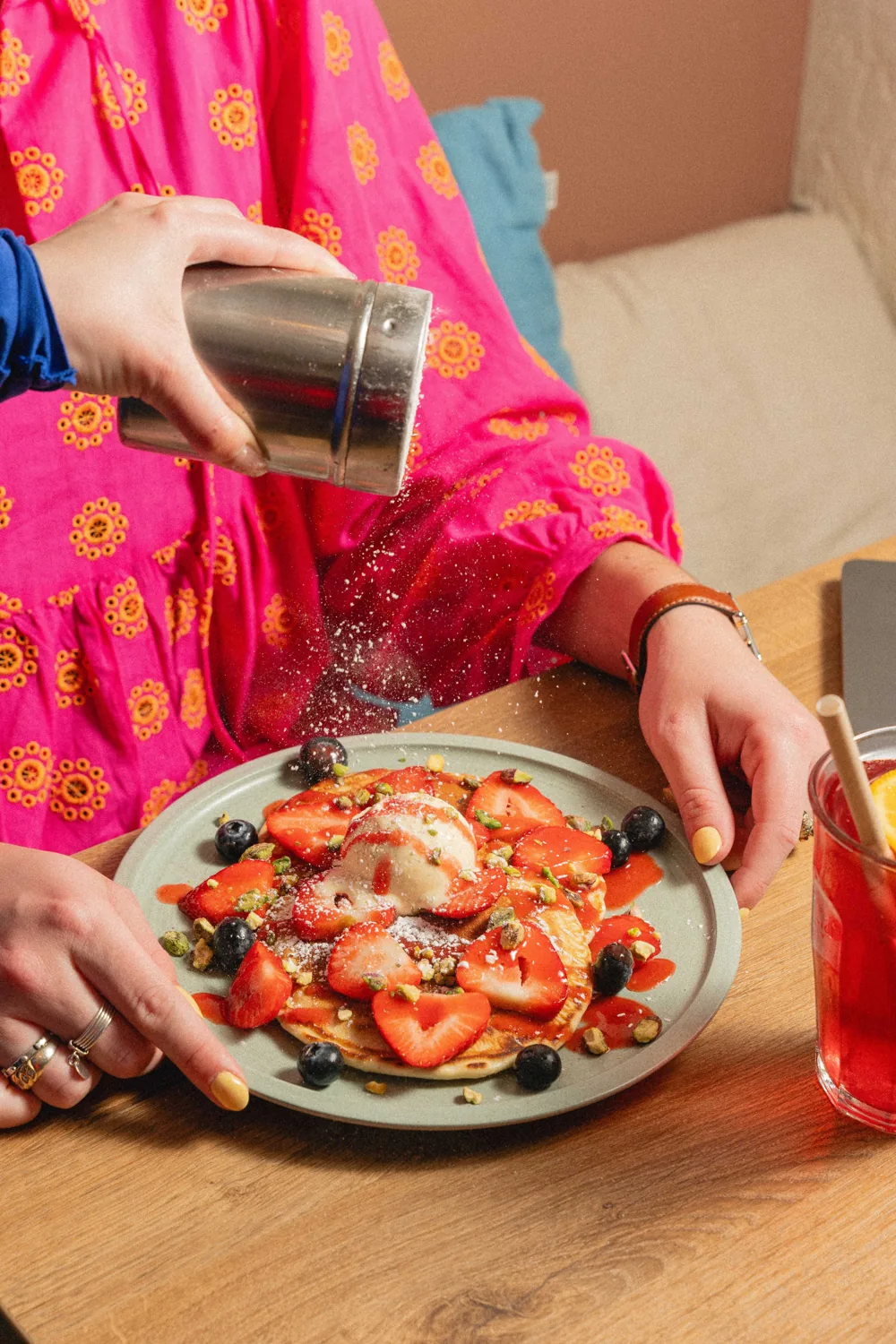
🥞 Marlette: the go-to spot at Abbesses and rue des Martyrs
At Marlette, pancakes are served only at the Abbesses café (45 rue des Abbesses, 75018). No industrial version, no questionable baking powder: the homemade recipe favors simple ingredients, flour, milk, eggs, sugar, butter, and a pan-cooking method that guarantees that fluffy texture without being heavy.
We sit on the terrace or near the window. The stack arrives hot, served with maple syrup, fresh fruit, or a touch of chocolate depending on the mood. Service is quick without being rushed. Regulars in the neighborhood know it: on Sunday mornings, you come by to see if there’s room, Marlette does not take reservations during brunch hours, it’s a deliberate choice. For a group, the 3pm to 6pm slot can be booked at reservation@marlette.fr.
The other Marlette location, on rue des Martyrs (51 rue des Martyrs, 75009), offers a menu centered on organic pastry preparations, cookies, chocolate fondants, scones, but no pancakes. For the classic American version, head to Abbesses.
✅ Key takeaway
Pancakes available only at the Abbesses café. Cooked to order, homemade batter, simple ingredients. No morning reservations, you come by to see if there’s room. Bohemian atmosphere, sunny terrace, attentive service.
☕ The Parisian coffee shops that bet on quality
Paris has a handful of coffee shops where pancakes aren’t just a draw item but a real specialty. You can spot them by their batter made on the spot, their careful cooking, their refusal of industrial shortcuts.
In the Marais, some spots offer enriched versions: ricotta batter for extra lightness, seasonal red fruit topping, homemade whipped cream. Prices run around 12 to 15 euros per serving, with or without a hot drink depending on the place. We favor spots that clearly display the origin of their ingredients, local flour, organic eggs, whole milk rather than skimmed.
The 9th arrondissement, around rue des Martyrs, concentrates several places where brunch runs until 4pm. Some offer “full stack” combos: pancakes, scrambled eggs, crispy bacon, fresh juice. Others go for simplicity: three pancakes, maple syrup, salted butter. Both approaches work, as long as the cooking is right, neither too dry nor too wet in the center.
| 🏠 Classic version | 🌳 Enriched version |
|---|---|
| Simple batter (flour, milk, eggs, sugar, baking powder). Maple syrup + butter topping. Fluffy texture, average thickness. Moderate price (8-12 €). | Enriched batter (ricotta, vanilla, citrus zest). Fresh fruit topping, whipped cream, homemade coulis. Ultra-fluffy texture, generous thickness. Higher price (12-18 €). |
To discover other great Parisian spots for a flawless brunch, we recommend favoring places with a short menu, a sign they master their recipes, and that accept card payments with no minimum.
Understanding what makes a great pancake
🥄 The secrets of a fluffy batter
The texture of a pancake depends on three factors: the ratio of ingredients, the resting time of the batter, and the cooking temperature. Too much flour, and the batter becomes dense. Not enough baking powder, and the pancakes stay flat. A pan that’s too hot, and the surface burns before the center is cooked.
Classic recipes use a simple base: 250 g flour, 30 cl milk, 2 eggs, 30 g sugar, 50 g melted butter, 1 packet baking powder. We mix the dry ingredients on one side, the liquids on the other, then combine without overbeating, a few lumps are no problem. The batter rests for 15 to 30 minutes. This time allows the flour to absorb the liquid and the baking powder to start working.
Some recipes separate the egg whites and whip them into stiff peaks. This gives a lighter, almost soufflé-like batter. Others add a spoonful of yogurt or ricotta to enrich the texture. The choice depends on the desired result: thick and light pancakes, or denser and more melt-in-the-mouth ones.
💡 Our tip
We let the batter rest in the fridge for 20 minutes before cooking. The result: pancakes that rise better in the pan and stay fluffy longer. We avoid overmixing, a smooth batter isn’t necessarily better.
🔥 Cooking: the decisive moment
A lightly oiled nonstick pan, medium heat, a ladleful of batter poured in the center. We wait for bubbles to form on the surface before flipping the pancake. Only once. Not twice, not three times. Cooking takes about 2 minutes on each side.
Butter in the pan isn’t a must. Some prefer a drizzle of neutral oil to prevent the butter from burning. Others use clarified butter, which withstands heat better. The key is maintaining a stable temperature, neither too high nor too low. We adjust by testing the first pancake, which often serves as a “trial run.”
Professionals use a griddle (plancha) that guarantees even heat. At home, we choose a thick pan that spreads heat well. We avoid thin pans that create hot spots and cook unevenly.
Mix the dry ingredients, then the liquids. Combine without overbeating. Let rest 20 minutes in the fridge.
Lightly oil a nonstick pan. Heat over medium heat. Test the temperature with a drop of batter.
Pour a ladleful of batter. Wait for bubbles to appear. Flip only once. Cook 2 minutes on each side.
Stack the pancakes on a warm plate. Top with maple syrup, butter, fresh fruit. Enjoy immediately.
Variations and toppings to break from the usual
The classic pancake accepts all sorts of variations. Some replace part of the white flour with whole wheat flour, others add chocolate chips directly into the batter. There are also gluten-free versions (rice flour, cornstarch) or vegan ones (plant-based milk, egg substitute).
Toppings make the difference. Maple syrup remains the base, but there are many options:
- Fresh or stewed red fruit (strawberries, raspberries, blueberries)
- Peanut butter or homemade spread
- Sliced banana with a touch of cinnamon
- Vanilla whipped cream and lemon zest
- Crispy bacon for a sweet-savory version
- Greek yogurt and lavender honey
Some Parisian spots offer savory pancakes: plain batter, cheese-and-bacon or smoked salmon-and-crème fraîche topping. The line with blinis becomes blurry, but the principle stays the same, a leavened batter, quick cooking, a fluffy result.
⚠️ Keep in mind
Pancakes are ideally eaten within 15 minutes of cooking. Reheated, they lose their fluffy texture. We avoid stacking them for too long, the steam softens the surface. It’s better to keep them warm on a plate covered with a towel, without piling them up.
| ✅ Advantages | ❌ Limitations |
|---|---|
| • Simple recipe, accessible to everyone • Common ingredients (flour, milk, eggs) • Quick preparation (30 min max) • Many possible variations • Enjoyed at breakfast or as a snack |
• Fragile texture, doesn’t keep well • Cooking requires a bit of practice • Sweet toppings = high calorie content • Requires a good-quality nonstick pan |
Online recipes abound. Some promise “ultra fluffy” pancakes in 5 minutes flat. Others insist on letting the batter rest, adding stiffly beaten egg whites, or using buttermilk. Every method has its supporters. The key is to test, adjust, and try again until you find the texture that suits you.
You can also prepare the batter the day before and keep it in the fridge. It keeps for 24 hours with no problem. Before cooking, take it out 10 minutes ahead so it returns to room temperature. Some add a spoonful of milk if it has thickened in the cold.
“A great pancake is a matter of balance: enough baking powder to rise, not too much sugar so it doesn’t burn, just the right resting time so the batter comes together. And above all, attentive cooking, you never take your eyes off the pan.”
Home cooking tip
French crêpes and American pancakes are not in the same league. The former are thin, light, and eaten rolled or folded. The latter are thick, fluffy, and served stacked. Crêpe batter contains less baking powder (sometimes none), more milk, and rests for several hours. Pancake batter rises quickly thanks to baking powder, and is cooked immediately.
There are also hybrids: Japanese pancakes (very thick, almost soufflé-like), Korean pancakes (savory, with vegetables), Dutch pancakes (baked in the oven in a cast-iron skillet). Each culture has adapted the basic recipe. In Paris, we mostly come across the classic American version, served at brunch with bacon and eggs.
Level: 🟢 Beginner · Time: ⏱️ 30 min · Moment: ☀️ Breakfast
Parisian spots keep evolving. Some close, others open. We follow the new places in the 10th, 11th, and 18th arrondissements, neighborhoods where coffee shops keep multiplying. The offering is improving, chefs increasingly understand what customers expect: honest ingredients, well-mastered cooking, no-fuss service.
At Marlette, the philosophy stays simple: we prepare what we’d want to eat ourselves. The Abbesses pancakes follow that logic. No industrial powder, no shortcuts. Just a well-honed recipe, cooked to order, and the desire to do things right. The kind of place you keep coming back to, because it’s good and the welcome is warm.
Frequently asked questions
What is the difference between a pancake and a crêpe?
The pancake is thick and fluffy thanks to baking powder. The French crêpe is thin and light, with little to no leavening. Pancake batter contains more flour and less milk than crêpe batter. Cooking also differs: pancakes are cooked over medium heat in a thick pan, crêpes over high heat in a crêpe pan. Pancakes are served stacked, crêpes rolled or folded. Both are enjoyed at breakfast or as a snack, but the texture and thickness have nothing in common.
How long can pancake batter be kept?
Pancake batter keeps for 24 hours in the fridge in an airtight container. Beyond that, the baking powder loses its effectiveness and the pancakes rise less well. We take the batter out 10 minutes before cooking so it returns to room temperature. If it has thickened, we add a spoonful of milk and mix gently. Already cooked pancakes don’t keep well, they lose their fluffiness as they cool. It’s best to eat them within 15 minutes of cooking.
Why don’t my pancakes rise?
Several possible reasons: the baking powder is expired, the batter was overworked (the air bubbles have disappeared), or the pan is too hot (the surface cooks before the inside rises). We check the baking powder’s expiration date, mix the batter without overdoing it, and adjust the cooking temperature. Letting it rest for 15 to 20 minutes also allows the baking powder to start working. If the batter is too runny, we add a spoonful of flour. Too thick, a spoonful of milk.
Can you make gluten-free pancakes?
Yes, by replacing wheat flour with a blend of gluten-free flours (rice, buckwheat, corn) and adding a binder such as xanthan gum or cornstarch. The texture will be slightly different, less fluffy, sometimes more crumbly. Some use chickpea or chestnut flour to vary the flavors. The proportions stay close to the classic recipe. You can also opt for store-bought gluten-free mixes, but the result is often less satisfying than an adjusted homemade recipe.
Where can you find quality maple syrup in Paris?
Fine food shops, organic stores, and some supermarkets offer pure maple syrup. We favor bottles labeled “100% pure maple syrup” rather than “flavorings” or “syrup-based preparations.” Amber grade offers a good balance between sweetness and character. Dark grade has a stronger taste, ideal for enthusiasts. Maple syrup keeps for several months in the fridge once opened. Some Parisian coffee shops, like Marlette, serve maple syrup with their pancakes.
Can pancakes be made ahead for a brunch?
Pancakes lose their fluffiness as they cool. If you need to prepare a large quantity, it’s best to cook the pancakes just before serving and keep them warm in an oven at 60-70°C, without stacking them. You can also prepare the batter the day before and keep it in the fridge, it keeps for 24 hours. On the day, cook the pancakes as needed. Reheating pancakes in the microwave gives a disappointing result (rubbery texture). In the oven, it’s acceptable but never as good as freshly cooked.
{“@context”:”https://schema.org”,”@type”:”FAQPage”,”mainEntity”:[{“@type”:”Question”,”name”:”What is the difference between a pancake and a crêpe?”,”acceptedAnswer”:{“@type”:”Answer”,”text”:”The pancake is thick and fluffy thanks to baking powder. The French crêpe is thin and light, with little to no leavening. Pancake batter contains more flour and less milk than crêpe batter. Cooking also differs: pancakes are cooked over medium heat in a thick pan, crêpes over high heat in a crêpe pan. Pancakes are served stacked, crêpes rolled or folded. Both are enjoyed at breakfast or as a snack, but the texture and thickness have nothing in common.”}},{“@type”:”Question”,”name”:”How long can pancake batter be kept?”,”acceptedAnswer”:{“@type”:”Answer”,”text”:”Pancake batter keeps for 24 hours in the fridge in an airtight container. Beyond that, the baking powder loses its effectiveness and the pancakes rise less well. We take the batter out 10 minutes before cooking so it returns to room temperature. If it has thickened, we add a spoonful of milk and mix gently. Already cooked pancakes don’t keep well, they lose their fluffiness as they cool. It’s best to eat them within 15 minutes of cooking.”}},{“@type”:”Question”,”name”:”Why don’t my pancakes rise?”,”acceptedAnswer”:{“@type”:”Answer”,”text”:”Several possible reasons: the baking powder is expired, the batter was overworked (the air bubbles have disappeared), or the pan is too hot (the surface cooks before the inside rises). We check the baking powder’s expiration date, mix the batter without overdoing it, and adjust the cooking temperature. Letting it rest for 15 to 20 minutes also allows the baking powder to start working. If the batter is too runny, we add a spoonful of flour. Too thick, a spoonful of milk.”}},{“@type”:”Question”,”name”:”Can you make gluten-free pancakes?”,”acceptedAnswer”:{“@type”:”Answer”,”text”:”Yes, by replacing wheat flour with a blend of gluten-free flours (rice, buckwheat, corn) and adding a binder such as xanthan gum or cornstarch. The texture will be slightly different, less fluffy, sometimes more crumbly. Some use chickpea or chestnut flour to vary the flavors. The proportions stay close to the classic recipe. You can also opt for store-bought gluten-free mixes, but the result is often less satisfying than an adjusted homemade recipe.”}},{“@type”:”Question”,”name”:”Where can you find quality maple syrup in Paris?”,”acceptedAnswer”:{“@type”:”Answer”,”text”:”Fine food shops, organic stores, and some supermarkets offer pure maple syrup. We favor bottles labeled « 100% pure maple syrup » rather than « flavorings » or « syrup-based preparations ». Amber grade offers a good balance between sweetness and character. Dark grade has a stronger taste, ideal for enthusiasts. Maple syrup keeps for several months in the fridge once opened. Some Parisian coffee shops, like Marlette, serve maple syrup with their pancakes.”}},{“@type”:”Question”,”name”:”Can pancakes be made ahead for a brunch?”,”acceptedAnswer”:{“@type”:”Answer”,”text”:”Pancakes lose their fluffiness as they cool. If you need to prepare a large quantity, it’s best to cook the pancakes just before serving and keep them warm in an oven at 60-70 °C, without stacking them. You can also prepare the batter the day before and keep it in the fridge, it keeps for 24 hours. On the day, cook the pancakes as needed. Reheating pancakes in the microwave gives a disappointing result (rubbery texture). In the oven, it’s acceptable but never as good as freshly cooked. { “@context”: “https://schema.org”, “@type”: “FAQPage”, “mainEntity”: [ { “@type”: “Question”, “name”: “What is the difference between a pancake and a crêpe?”, “acceptedAnswer”: { “@type”: “Answer”, “text”: “The pancake is thick and fluffy thanks to baking powder. The French crêpe is thin and light, with little to no leavening. Pancake batter contains more flour and less milk than crêpe batter. Cooking also differs: pancakes are cooked over medium heat in a thick pan, crêpes over high heat in a crêpe pan. Pancakes are served stacked, crêpes rolled or folded. Both are enjoyed at breakfast or as a snack, but the texture and thickness have nothing in common.” } }, { “@type”: “Question”, “name”: “How long can pancake batter be kept?”, “acceptedAnswer”: { “@type”: “Answer”, “text”: “Pancake batter keeps for 24 hours in the fridge in an airtight container. Beyond that, the baking powder loses its effectiveness and the pancakes rise less well. We take the batter out 10 minutes before cooking so it returns to room temperature. If it has thickened, we add a spoonful of milk and mix gently. Already cooked pancakes don’t keep well, they lose their fluffiness as they cool. It’s best to eat them within 15 minutes of cooking.” } }, { “@type”: “Question”, “name”: “Why don’t my pancakes rise?”, “acceptedAnswer”: { “@type”: “Answer”, “text”: “Several possible reasons: the baking powder is expired, the batter was overworked (the air bubbles have disappeared), or the pan is too hot (the surface cooks before the inside rises). We check the baking powder’s expiration date, mix the batter without overdoing it, and adjust the cooking temperature. Letting it rest for 15 to 20 minutes also allows the baking powder to start working. If the batter is too runny, we add a spoonful of flour. Too thick, a spoonful of milk.” } }, { “@type”: “Question”, “name”: “Can you make gluten-free pancakes?”, “acceptedAnswer”: { “@type”: “Answer”, “text”: “Yes, by replacing wheat flour with a blend of gluten-free flours (rice, buckwheat, corn) and adding a binder such as xanthan gum or cornstarch. The texture will be slightly different, less fluffy, sometimes more crumbly. Some use chickpea or chestnut flour to vary the flavors. The proportions stay close to the classic recipe. You can also opt for store-bought gluten-free mixes, but the result is often less satisfying than an adjusted homemade recipe.” } }, { “@type”: “Question”, “name”: “Where can you find quality maple syrup in Paris?”, “acceptedAnswer”: { “@type”: “Answer”, “text”: “Fine food shops, organic stores, and some supermarkets offer pure maple syrup. We favor bottles labeled 100% pure maple syrup rather than flavorings or syrup-based preparations. Amber grade offers a good balance between sweetness and character. Dark grade has a stronger taste, ideal for enthusiasts. Maple syrup keeps for several months in the fridge once opened. Some Parisian coffee shops, like Marlette, serve maple syrup with their pancakes.” } }, { “@type”: “Question”, “name”: “Can pancakes be made ahead for a brunch?”, “acceptedAnswer”: { “@type”: “Answer”, “text”: “Pancakes lose their fluffiness as they cool. If you need to prepare a large quantity, it’s best to cook the pancakes just before serving and keep them warm in an oven at 60-70 °C, without stacking them. You can also prepare the batter the day before and keep it in the fridge, it keeps for 24 hours. On the day, cook the pancakes as needed. Reheating pancakes in the microwave gives a disappointing result (rubbery texture). In the oven, it’s acceptable but never as good as freshly cooked.” } } ] }”}}]}