

We walk up rue des Martyrs on a Saturday morning, an empty basket on our arm. The shop windows unfold one after another: a bakery smelling of warm butter, a greengrocer stacking citrus fruits like a Flemish painting, a cheesemonger where the shopkeeper calls customers by their first name. This 1.5 kilometre thoroughfare crosses two arrondissements, the 9th and the 18th, without ever losing its village soul. No chains, no franchises, just shopkeepers who work with raw ingredients and Parisians who come to do their shopping the way one visits neighbours.
Rue des Martyrs is not a postcard backdrop. It is a living street, one where local residents cross paths every day, where children come home from school nibbling on a pain au chocolat, where the terraces fill up as soon as the sun comes out. Between Pigalle at the bottom and Montmartre at the top, it climbs a gentle slope, offering a full sample of what Paris does best: the art of everyday living, without any pretence.
🏛️ A street whose name carries centuries of history
The origin of the name: Christian martyrs of the 3rd century
The name doesn’t come from a tragic news story or a revolutionary event. Rue des Martyrs pays tribute to Saints Denis, Rustique and Éleuthère, beheaded on the Montmartre hill in the 3rd century. According to legend, Saint Denis picked up his own head and walked all the way to the current site of the Basilica of Saint-Denis. The story is as strange as it is enduring, having crossed the centuries to become anchored in Parisian toponymy. In the Middle Ages, the street first bore the name Chaussée des Martyrs, referring to the path pilgrims took up to the chapel overlooking the hill. It was only in the 18th century that it officially took its current name, as the neighbourhood began to become urbanised.
From farming outskirts to working-class neighbourhood
Until the end of the 18th century, rue des Martyrs separated Paris from the countryside. To the north, fields, vineyards, a few windmills. To the south, the walled city. The first cafés and guinguettes settled at the foot of Montmartre, drawing Parisians in search of fresh air and cheap wine. The atmosphere was village-like, almost rural. Then came the 19th century and its wave of upheavals. Haussmann opened the great boulevards, and the neighbourhood grew denser. Rental buildings sprang up, artists’ studios settled into former barns. The street became a commercial thoroughfare, frequented by workers, minor clerks, and penniless artists. It has kept that social mix ever since: you’re just as likely to cross paths with Parisian executives as with modest families, students as with local retirees.
✅ Key takeaway
Rue des Martyrs crosses two arrondissements (the 9th and the 18th) and links Pigalle to Montmartre. It owes its name to saints martyred in the 3rd century, and has kept its working-class, commercial character since the 19th century. No grand monuments, no museums, just a living, inhabited street, with its neighbourhood shops and its overflowing terraces.
🍞 The shops that make the street’s heart beat
Bakers, cheesemongers, greengrocers: everyday craftsmanship
Rue des Martyrs has a density of artisan food shops found nowhere else in Paris. Here you’ll find bakers kneading their dough at 4am, cheesemongers ageing their tommes in a cellar, greengrocers fetching their vegetables from Rungis before dawn. Arnaud Delmontel, a baker and pastry chef at number 39, won the title of best croissant in Paris in 2007, and his customers still queue for his sourdough breads and seasonal fruit tarts. A few doors up, the Cheese Alain Dubois shop offers more than 200 references, from hard Italian pastas of cheese to farmhouse goat cheeses from Normandy. The owner knows the history of every wheel, the name of the producer, the ideal ageing month. This isn’t nostalgia: it’s know-how passed down, preserved, practised every day.
The greengrocers follow one another: Terra Corsa at number 118, which imports its produce directly from Corsica, and l’Épicerie Verte at number 5, which champions organic produce from small growers in the Île-de-France region. The stalls spill onto the pavement, crates pile up, customers feel the tomatoes, weigh the melons in their hands, ask for advice on a fish-and-vegetable pairing. The atmosphere is noisy, lively. This isn’t the silent supermarket where no one talks to anyone. Here, people chat, compare, recommend. Commerce is a social bond before it is a transaction.
Cafés and gourmet addresses: the art of slowing down
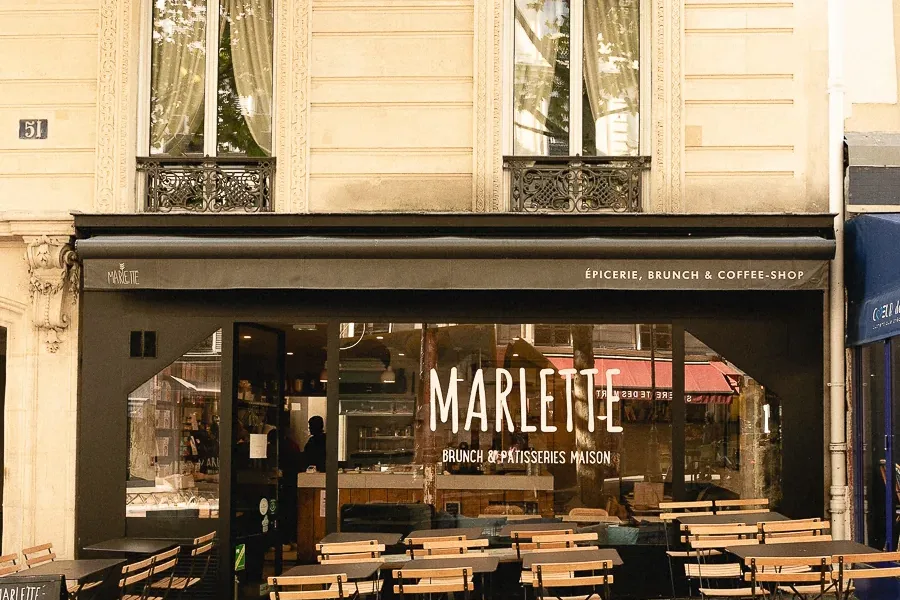
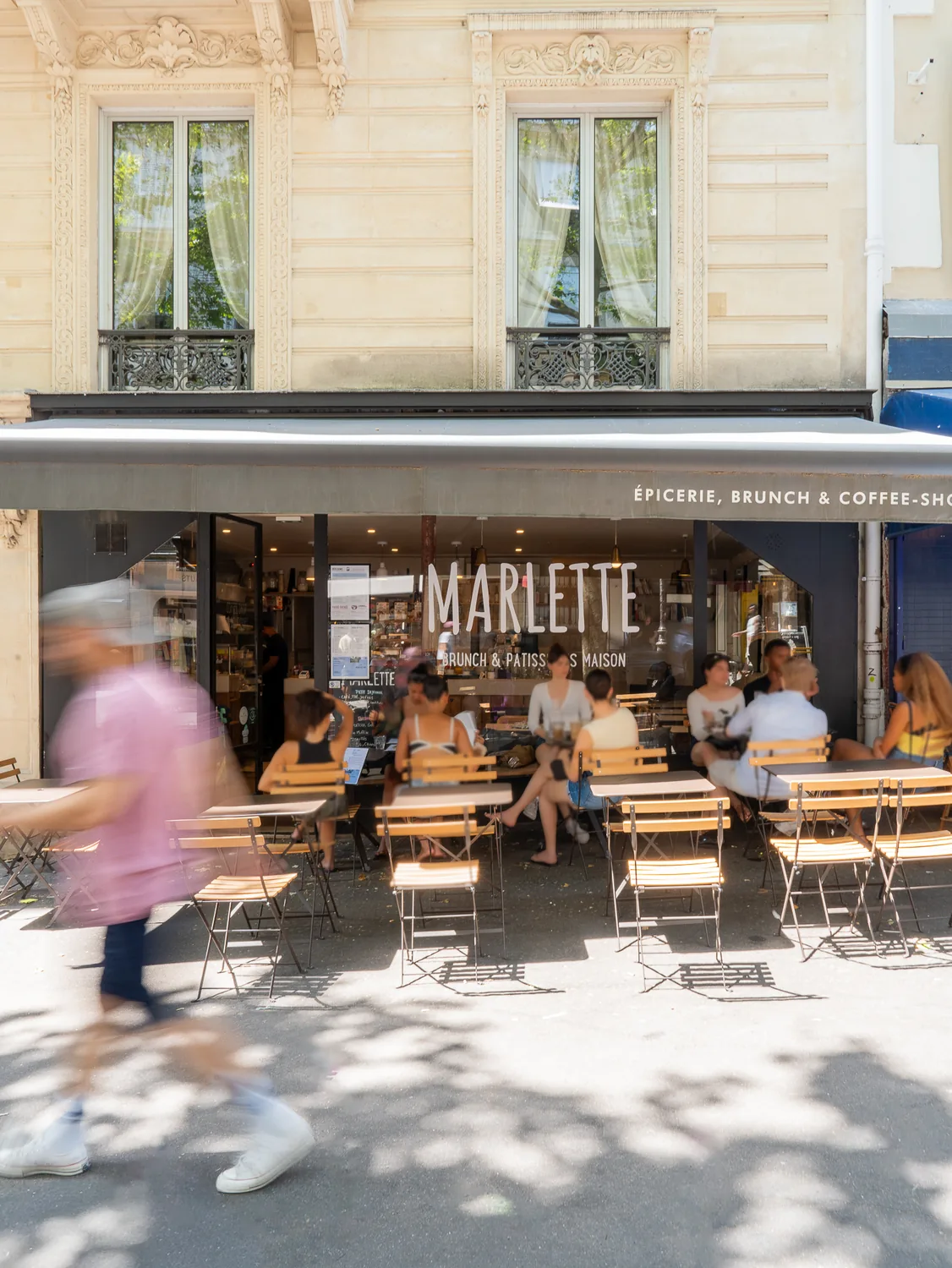
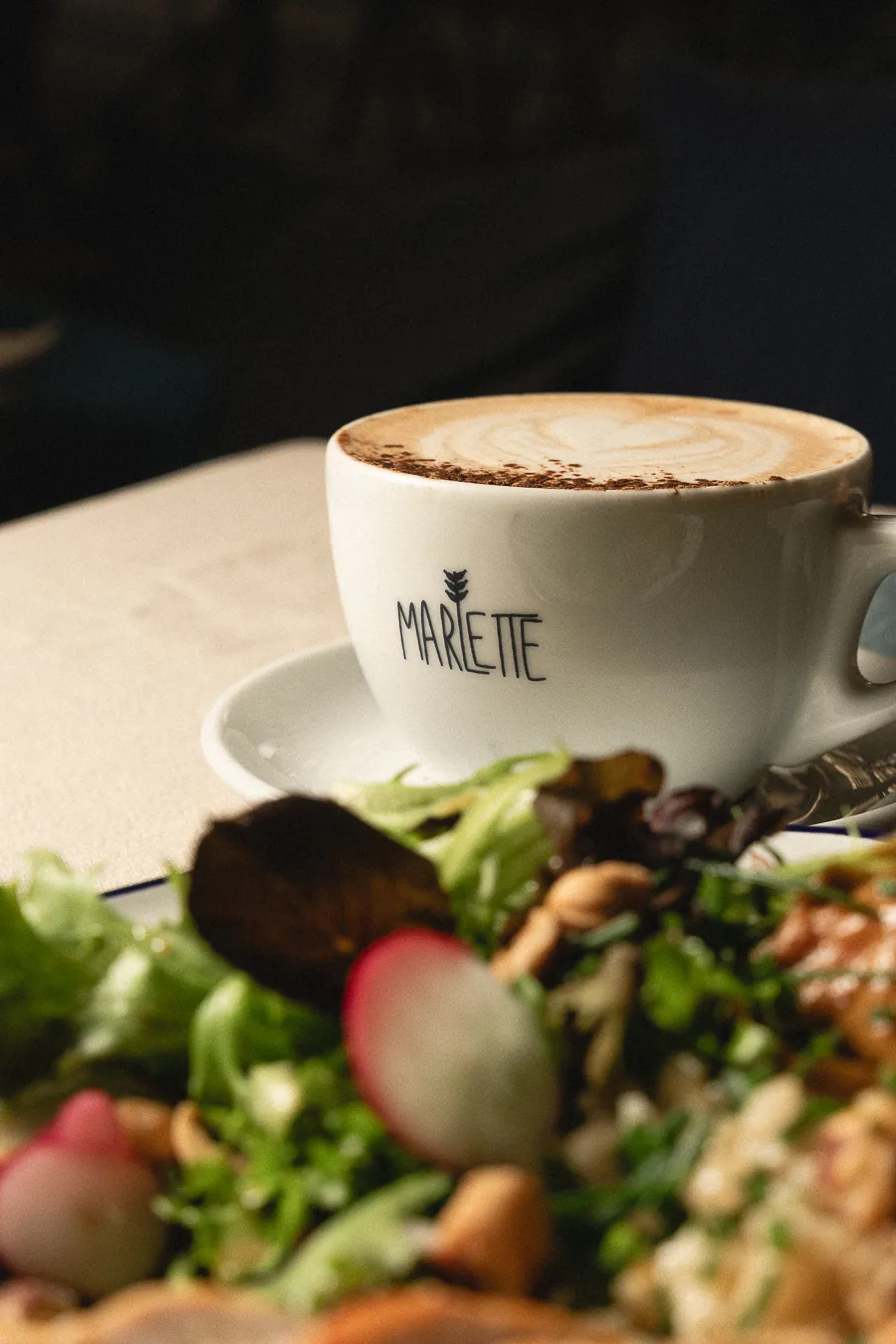
The cafés on rue des Martyrs don’t resemble the touristy brasseries of the grand boulevards. They are neighbourhood spots, where regulars have their table and where the staff know everyone’s first name. Marlette, at 51 rue des Martyrs, embodies this slow coffee philosophy: you come here to slow down, to catch your breath, to savour a carefully prepared cappuccino and a homemade cookie, soft and comforting. The atmosphere is warm, never rushed. No laptops between 11:30am and 2:30pm, no race against the clock. Just the pleasure of sitting down, chatting, watching the street go by. The organic pastry preparations, chocolate-sesame or chocolate-walnut chip cookies, chocolate fondant with fleur de sel from Île de Ré, pecan brownies, scones, pancakes, are made in-house at our Île de Ré workshop, without preservatives or industrial shortcuts. This is the authenticity customers come looking for. To discover other addresses that share this philosophy, browse our inspiration and discovery guides.
A few doors down, La Chambre aux Confitures makes its jam jars in the back room. Le Grenier à Pain, at number 38, offers generous open sandwiches and sandwiches filled with local produce. La Réserve, a natural wine cellar at number 59, hosts tastings on Saturday afternoons. Each address has its own identity, its own stance, its own loyal clientele. You don’t come to rue des Martyrs to consume quickly, you come to take your time, to talk to the shopkeeper, to leave with a product whose origin you know.
💡 Our tip
Walk up the street on a Saturday morning, between 10am and midday. That’s when shopkeepers are in full swing, when local customers do their shopping, when the terraces fill up. Bring a basket: it’s impossible to leave empty-handed after passing so many good things.
Designer boutiques and bookshops: the neighbourhood’s bohemian spirit
Rue des Martyrs isn’t just a food street. It also houses designer boutiques, vintage shops, and concept stores that champion textile or decorative craftsmanship far from mass-market retail circuits. At Spree, number 16, you’ll find clothes from young French and European designers, unique vintage finds, and accessories made in small batches. L’Empreinte, at number 56, sells jewellery by independent artists, hand-thrown ceramics, and homemade stationery items. La Librairie des Abbesses, slightly set back on rue Yvonne-Le-Tac, offers a sharp selection of contemporary literature and hosts meetings with authors. These addresses don’t try to please everyone: they embrace an aesthetic stance, a vision of commerce as a cultural act. And it works, because local residents want to support this kind of initiative. No standardised shop windows, no identical collections from one city to the next: just the singular, the handmade, the daring.
🌳 The Parisian atmosphere that charms locals and visitors alike
Between Pigalle and Montmartre: two worlds, one street
Rue des Martyrs crosses two worlds over 1.5 kilometres. At the bottom, on the Pigalle side (9th arrondissement), the atmosphere is urban, dense, cosmopolitan. Haussmann-era buildings crowd together, and the side streets buzz with nightlife. This is the Paris of theatres, cabarets, neon lights flickering after 10pm. Then the street begins to climb. The scenery changes. The façades get lower, the pavements widen, trees appear. You enter Montmartre, the 18th arrondissement, with its air of a hilltop village. Terraces multiply, passers-by slow down. At the top of the street, you’re just a few minutes from Place des Abbesses and the Sacré-Cœur basilica. This duality is what gives the thoroughfare its charm: it connects two different Parises without ever betraying either one. Residents of the 9th climb up towards Montmartre to breathe, while those of the 18th head down towards Pigalle to enjoy the buzz. And everyone crosses paths on rue des Martyrs.
A living, inhabited street, far from tourist clichés
Rue des Martyrs doesn’t feature in the classic tourist guides. It has no listed monument, no explanatory plaque, no marked trail. That’s exactly what gives it its value: people actually live here, they don’t just pretend to. Local residents do their shopping here, have their morning coffee here, cross paths with their neighbours here. The tourists who discover it are looking for exactly that: the Paris of Parisians, not the one made of paid attractions. They want to see how people really inhabit this city, how they make a neighbourhood their own, how they create connections in a metropolis of 2 million inhabitants. Rue des Martyrs meets that expectation without overplaying it. No folklore, no staging: just a street that works, where shops open early and close late, where terraces overflow at the first ray of sunshine, where children drag their feet on the way home from school. To explore other Parisian neighbourhoods with this same authentic eye, check out our gourmet neighbourhood guides in Paris.
Start at the bottom of the street, on the 9th arrondissement side. The urban atmosphere, the shop windows following one after another, the buzz of the pavements. This is the ideal starting point to head up towards Montmartre.
Let yourself be guided by the shop windows, the smells, the conversations spilling from the terraces. Step into a bakery, taste a cheese at the cheesemonger’s, buy three tomatoes from the greengrocer. The street deserves to be earned: it isn’t meant to be consumed in a rush.
Arrive at the top of the street, on the Abbesses side. Sit down on a terrace, order a coffee, watch people go by. You’ve just crossed two arrondissements, two atmospheres, and a condensed version of what Paris does best: the art of everyday living.
Weekends on rue des Martyrs: when the neighbourhood comes alive
On Saturdays and Sundays, rue des Martyrs changes rhythm. Terraces fill up from 10am. Groups of friends settle in for a brunch that lasts until 2pm. Couples share a chocolate fondant and a cappuccino at Marlette, seated by the window to watch passers-by go by. Families push strollers up the street, stop at the greengrocer’s to buy strawberries, and leave with a country loaf under their arm. The atmosphere is relaxed, almost summery, even in the depths of winter when the sun breaks through. No race against the clock, no metro to catch. Just the pleasure of taking your time, lingering, sitting on a bench with a book. This ability to slow down in the very heart of Paris is something local residents fiercely defend. They know rue des Martyrs stays alive because it hasn’t given in to fast-food chains, standardised franchises, or rents that drive out independent shopkeepers. Every shop that closes is heartbreaking. Every new artisan opening is a collective victory.
| ✅ What gives the street its soul | ❌ What you won’t find here |
|---|---|
| • Artisan shops run by passionate people • Terraces where regulars have their own table • Neighbourhood atmosphere, social diversity • Local produce, organic for some, always carefully crafted |
• Fast-food chains • Souvenir shops for tourists • Listed monuments or museums • Grand Haussmann-style boulevards (this is a human-scale street) |
Frequently Asked Questions
Why is the rue des Martyrs named after martyrs?
Rue des Martyrs pays tribute to Saints Denis, Rustique and Éleuthère, Christian martyrs beheaded on the Montmartre hill in the 3rd century. Legend has it that Saint Denis picked up his own head and walked to the current site of the Basilica of Saint-Denis. In the Middle Ages, the street was known as Chaussée des Martyrs, the path pilgrims took up to the chapel on Montmartre. The street took its definitive name in the 18th century, as the neighbourhood became urbanised.
What are the best artisan shops on rue des Martyrs?
Rue des Martyrs is home to an exceptional concentration of artisan shops. Among the must-visits: Arnaud Delmontel (baker and pastry chef at number 39), Cheese Alain Dubois (a cheese shop with more than 200 references), Terra Corsa (a greengrocer specialising in Corsican produce at number 118), Marlette (a slow coffee coffee shop at number 51), La Chambre aux Confitures (artisan jams), and La Réserve (a natural wine cellar at number 59). Each address champions a craft passed down through generations and quality products.
How do you get to rue des Martyrs by metro?
Rue des Martyrs is accessible via several metro stations. At the bottom of the street (9th arrondissement side): Pigalle (lines 2 and 12) or Saint-Georges (line 12). At the top of the street (Montmartre side, 18th arrondissement): Abbesses (line 12) or Blanche (line 2). The street climbs gently from Pigalle up to Montmartre, over about 1.5 kilometres. Allow 20 minutes on foot to walk it at a leisurely pace.
What is the best time to discover rue des Martyrs?
Saturday morning between 10am and midday is the ideal time to discover rue des Martyrs. The shops are in full swing, local residents are doing their shopping, and the terraces fill up. The atmosphere is lively and authentic. Sunday morning offers a more relaxed atmosphere, with brunches stretching into the early afternoon. On weekdays, the street is quieter but just as charming, with regulars stopping for their morning coffee at their favourite shops.
Is rue des Martyrs touristy or authentic?
Rue des Martyrs remains an authentic, lived-in and lively neighbourhood street. It doesn’t feature in the classic tourist circuits and has no listed monuments. The shops are run by independent craftspeople, and the customers are mostly residents of the 9th and 18th arrondissements. The tourists who discover it are precisely looking for this local Paris, far from paid attractions and clichés. This preserved authenticity is what makes the street so valuable.
Can you have brunch on rue des Martyrs at the weekend?
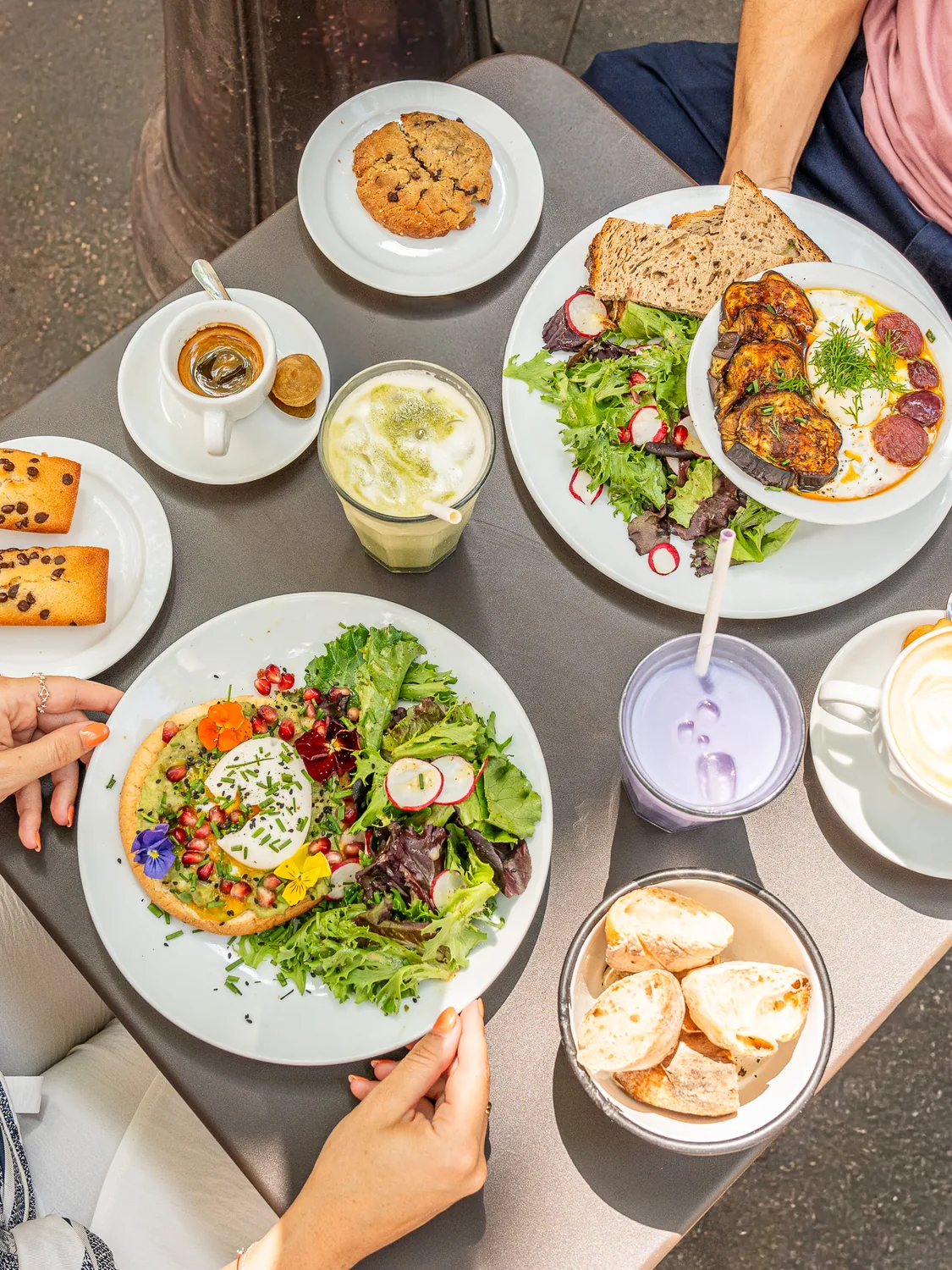
Yes, several addresses offer weekend brunch on rue des Martyrs. At Marlette, number 51, brunch is a Saturday and Sunday ritual, with organic pastry preparations made in-house (cookies, chocolate fondant, brownies, scones, pancakes at Abbesses), seasonal dishes, avocado toasts, scrambled eggs, and wellness drinks such as Ube latte, Matcha latte or Chai latte. The slow coffee philosophy invites you to take your time, without pressure. During brunch hours, there are no reservations: just come and see if there’s room.
{“@context”:”https://schema.org”,”@type”:”FAQPage”,”mainEntity”:[{“@type”:”Question”,”name”:”Why is the rue des Martyrs named after martyrs?”,”acceptedAnswer”:{“@type”:”Answer”,”text”:”Rue des Martyrs pays tribute to Saints Denis, Rustique and Éleuthère, Christian martyrs beheaded on the Montmartre hill in the 3rd century. Legend has it that Saint Denis picked up his own head and walked to the current site of the Basilica of Saint-Denis. In the Middle Ages, the street was known as Chaussée des Martyrs, the path pilgrims took up to the chapel on Montmartre. The street took its definitive name in the 18th century, as the neighbourhood became urbanised.”}},{“@type”:”Question”,”name”:”What are the best artisan shops on rue des Martyrs?”,”acceptedAnswer”:{“@type”:”Answer”,”text”:”Rue des Martyrs is home to an exceptional concentration of artisan shops. Among the must-visits: Arnaud Delmontel (baker and pastry chef at number 39), Cheese Alain Dubois (a cheese shop with more than 200 references), Terra Corsa (a greengrocer specialising in Corsican produce at number 118), Marlette (a slow coffee coffee shop at number 51), La Chambre aux Confitures (artisan jams), and La Réserve (a natural wine cellar at number 59). Each address champions a craft passed down through generations and quality products.”}},{“@type”:”Question”,”name”:”How do you get to rue des Martyrs by metro?”,”acceptedAnswer”:{“@type”:”Answer”,”text”:”Rue des Martyrs is accessible via several metro stations. At the bottom of the street (9th arrondissement side): Pigalle (lines 2 and 12) or Saint-Georges (line 12). At the top of the street (Montmartre side, 18th arrondissement): Abbesses (line 12) or Blanche (line 2). The street climbs gently from Pigalle up to Montmartre, over about 1.5 kilometres. Allow 20 minutes on foot to walk it at a leisurely pace.”}},{“@type”:”Question”,”name”:”What is the best time to discover rue des Martyrs?”,”acceptedAnswer”:{“@type”:”Answer”,”text”:”Saturday morning between 10am and midday is the ideal time to discover rue des Martyrs. The shops are in full swing, local residents are doing their shopping, and the terraces fill up. The atmosphere is lively and authentic. Sunday morning offers a more relaxed atmosphere, with brunches stretching into the early afternoon. On weekdays, the street is quieter but just as charming, with regulars stopping for their morning coffee at their favourite shops.”}},{“@type”:”Question”,”name”:”Is rue des Martyrs touristy or authentic?”,”acceptedAnswer”:{“@type”:”Answer”,”text”:”Rue des Martyrs remains an authentic, lived-in and lively neighbourhood street. It doesn’t feature in the classic tourist circuits and has no listed monuments. The shops are run by independent craftspeople, and the customers are mostly residents of the 9th and 18th arrondissements. The tourists who discover it are precisely looking for this local Paris, far from paid attractions and clichés. This preserved authenticity is what makes the street so valuable.”}},{“@type”:”Question”,”name”:”Can you have brunch on rue des Martyrs at the weekend?”,”acceptedAnswer”:{“@type”:”Answer”,”text”:”Yes, several addresses offer weekend brunch on rue des Martyrs. At Marlette, number 51, brunch is a Saturday and Sunday ritual, with organic pastry preparations made in-house (cookies, chocolate fondant, brownies, scones, pancakes at Abbesses), seasonal dishes, avocado toasts, scrambled eggs, and wellness drinks such as Ube latte, Matcha latte or Chai latte. The slow coffee philosophy invites you to take your time, without pressure. During brunch hours, there are no reservations: just come and see if there’s room. { “@context”: “https://schema.org”, “@type”: “FAQPage”, “mainEntity”: [ { “@type”: “Question”, “name”: “Why is the rue des Martyrs named after martyrs?”, “acceptedAnswer”: { “@type”: “Answer”, “text”: “Rue des Martyrs pays tribute to Saints Denis, Rustique and Éleuthère, Christian martyrs beheaded on the Montmartre hill in the 3rd century. Legend has it that Saint Denis picked up his own head and walked to the current site of the Basilica of Saint-Denis. In the Middle Ages, the street was known as Chaussée des Martyrs, the path pilgrims took up to the chapel on Montmartre. The street took its definitive name in the 18th century, as the neighbourhood became urbanised.” } }, { “@type”: “Question”, “name”: “What are the best artisan shops on rue des Martyrs?”, “acceptedAnswer”: { “@type”: “Answer”, “text”: “Rue des Martyrs is home to an exceptional concentration of artisan shops. Among the must-visits: Arnaud Delmontel (bakery and pastry shop at number 39), Cheese Alain Dubois (a cheese shop with more than 200 references), Terra Corsa (a greengrocer specialising in Corsican produce at number 118), Marlette (a slow coffee coffee shop at number 51), La Chambre aux Confitures (artisan jams), and La Réserve (a natural wine cellar at number 59). Each address champions a craft passed down through generations and quality products.” } }, { “@type”: “Question”, “name”: “How do you get to rue des Martyrs by metro?”, “acceptedAnswer”: { “@type”: “Answer”, “text”: “Rue des Martyrs is accessible via several metro stations. At the bottom of the street (9th arrondissement side): Pigalle (lines 2 and 12) or Saint-Georges (line 12). At the top of the street (Montmartre side, 18th arrondissement): Abbesses (line 12) or Blanche (line 2). The street climbs gently from Pigalle up to Montmartre, over about 1.5 kilometres. Allow 20 minutes on foot to walk it at a leisurely pace.” } }, { “@type”: “Question”, “name”: “What is the best time to discover rue des Martyrs?”, “acceptedAnswer”: { “@type”: “Answer”, “text”: “Saturday morning between 10am and midday is the ideal time to discover rue des Martyrs. The shops are in full swing, local residents are doing their shopping, and the terraces fill up. The atmosphere is lively and authentic. Sunday morning offers a more relaxed atmosphere, with brunches stretching into the early afternoon. On weekdays, the street is quieter but just as charming, with regulars stopping for their morning coffee at their favourite shops.” } }, { “@type”: “Question”, “name”: “Is rue des Martyrs touristy or authentic?”, “acceptedAnswer”: { “@type”: “Answer”, “text”: “Rue des Martyrs remains an authentic, lived-in and lively neighbourhood street. It doesn’t feature in the classic tourist circuits and has no listed monuments. The shops are run by independent craftspeople, and the customers are mostly residents of the 9th and 18th arrondissements. The tourists who discover it are precisely looking for this local Paris, far from paid attractions and clichés. This preserved authenticity is what makes the street so valuable.” } }, { “@type”: “Question”, “name”: “Can you have brunch on rue des Martyrs at the weekend?”, “acceptedAnswer”: { “@type”: “Answer”, “text”: “Yes, several addresses offer weekend brunch on rue des Martyrs. At Marlette, number 51, brunch is a Saturday and Sunday ritual, with organic pastry preparations made in-house (cookies, chocolate fondant, brownies, scones, pancakes at Abbesses), seasonal dishes, avocado toasts, scrambled eggs, and wellness drinks such as Ube latte, Matcha latte or Chai latte. The slow coffee philosophy invites you to take your time, without pressure. During brunch hours, there are no reservations: just come and see if there’s room.” } } ] }”}}]}