

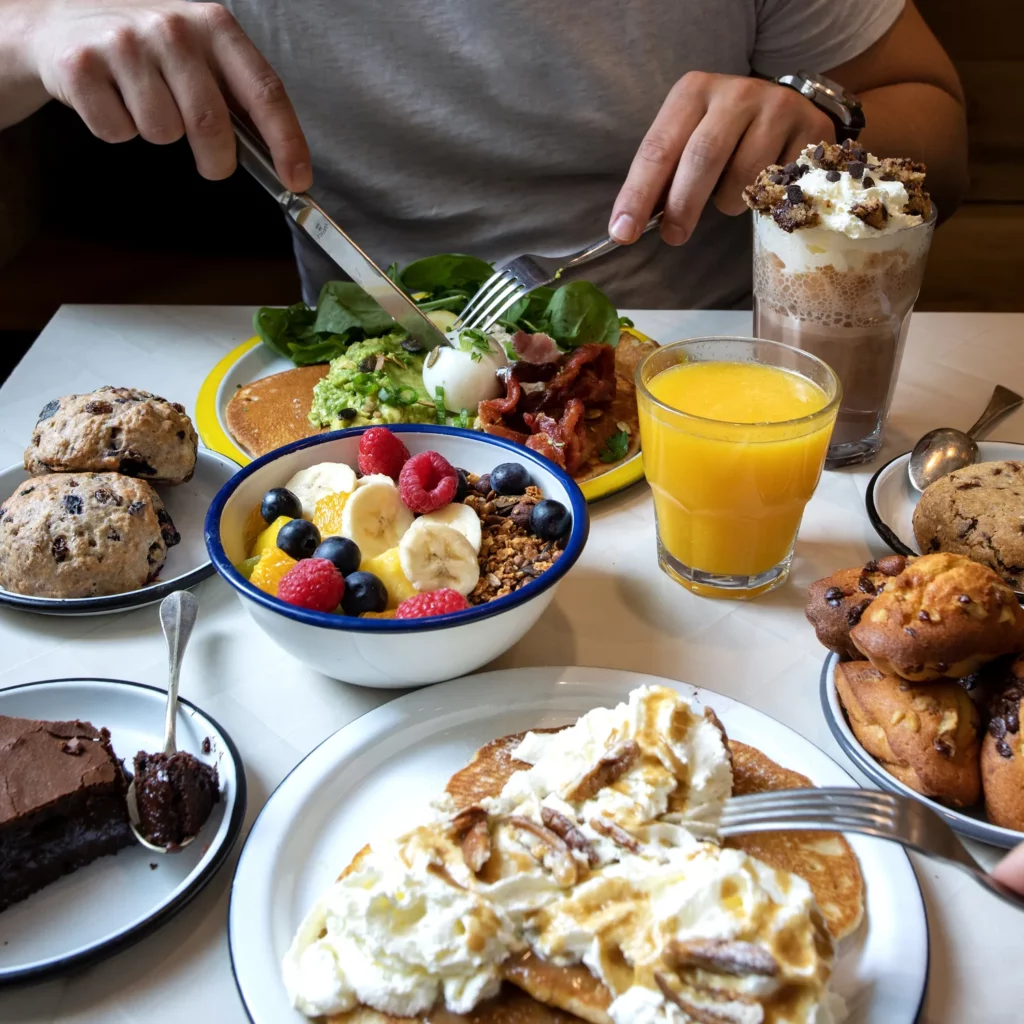
11 AM, that floating moment when you haven’t really had breakfast but aren’t quite ready for lunch yet. You want scrambled eggs, good coffee, fresh fruit, bread that smells of sourdough. And above all: to know what you’re eating. No ingredient list as long as your arm, no industrial white sugar sticking to your teeth.
Organic brunch in Paris was long limited to three addresses and an hour-long wait. Today, the city has understood that we want to eat well without feeling like we’re doing penance. Cafés where scones are made with whole wheat flour, where juice is freshly pressed, where the server knows the name of the egg producer. Let us show you around.
Why Choosing an Organic Brunch Changes Everything
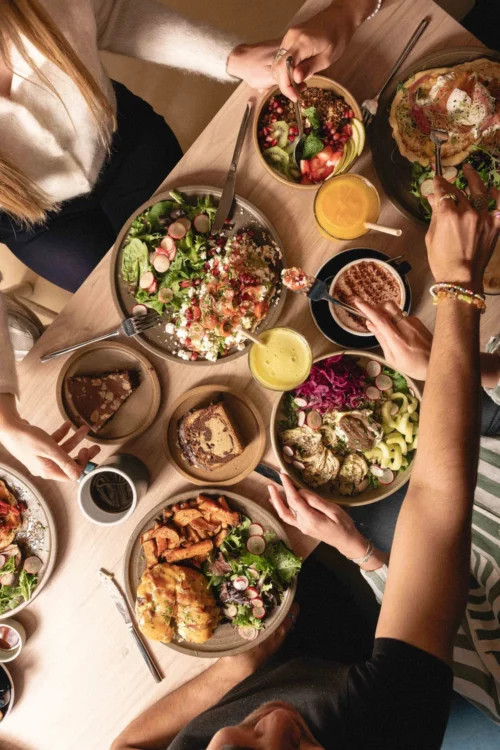
What’s Really on Your Plate
When you order a cookie at a regular café, you’re often eating refined sugar, hydrogenated fats, preservatives with names that look like postal codes. At an organic brunch, the flour comes from a mill that still turns, the butter smells like butter, the sugar keeps its caramel color. It’s a difference you taste from the first bite.
Organic baking mixes — like those found at certain Parisian cafés that prepare them in-house — use ingredients you can count on one hand. No endless list. Just flour, butter, eggs, cane sugar. And time.
✅ Remember
Organic at brunch means fewer additives, more flavor, and knowing where ingredients come from. Not a religion, just common sense.
The Price: Investment or Rip-off?
An organic brunch in Paris costs between 18 and 28 euros. A regular brunch ranges from 15 to 22 euros. Three euros difference for eggs from free-range chickens, natural sourdough bread, seasonal fruit. No need to sell a kidney.
What you’re paying for is also the work: scones kneaded in the morning, juices pressed to order, pancakes made without chemical leavening. Big brunch chains buy everything frozen and reheat it. Organic spots bake, knead, press. The difference shows on the plate, hits the nose, tastes on the fork.
🎯 The Essentials of a Successful Organic Brunch
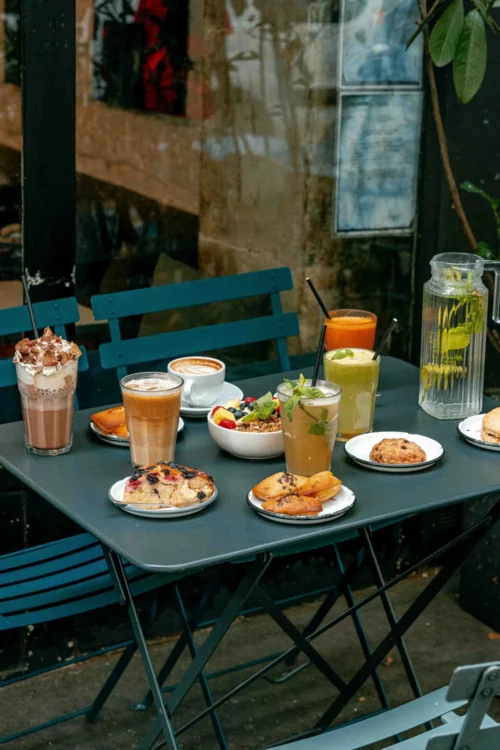
Eggs: The Foundation of Everything
Impossible to brunch without eggs. Scrambled, soft-boiled, poached, in an omelet. The secret to a good organic egg? It’s dark yellow, almost orange. It has flavor. You cook it slowly, don’t drown it in butter, let it speak for itself.
In Paris, several spots serve creamy scrambled eggs that don’t resemble a dry sponge. They’re cooked in a bain-marie, stirred with a wooden spoon, served with toasted bread and a drizzle of olive oil. Some cafés in the 9th arrondissement pair them with crushed avocado and fleur de sel from Île de Ré.
- Scrambled eggs: slowly cooked, creamy texture, never dry
- Soft-boiled eggs: firm shell, runny yolk, whole wheat bread soldiers
- Omelet: filled with seasonal vegetables, never too thick
Bread and Homemade Preparations
A brunch without good bread is like coffee without coffee. Organic bread is recognizable by its thick crust, airy crumb, wheat flavor. It keeps for three days without going soft. It smells of sourdough, not industrial yeast.
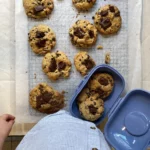
Organic baked goods — cookies, scones, chocolate fondants — follow the same logic. Less sugar, more flavor. Short recipes where every ingredient counts. The chocolate chip and sesame cookie, for example, combines the crunch of seeds with the smoothness of dark chocolate. No need for preservatives when you bake every morning.
💡 Our Tip
Test the scones: if they’re tender inside and crispy outside, without tasting of baking soda, you’re in the right place. A failed scone is either a rock or a soggy sponge.
Fresh Fruit and Juices
Fruit in an organic brunch doesn’t come from a can in syrup. It’s seasonal, cut that morning, served plain or in a salad. In winter: apples, pears, citrus. In spring: strawberries, rhubarb. In summer: apricots, peaches, raspberries. In autumn: figs, plums, grapes.
Fresh juices are pressed to order. Blood orange in winter, pink grapefruit in spring, watermelon in summer. No bottled pasteurized juice that lost its vitamins three months earlier in a warehouse. Organic juice pressed on the spot is the one still foaming in the glass.
Where to Have Organic Brunch in Paris: Our Selection

The 9th Arrondissement, Rue des Martyrs
Rue des Martyrs concentrates several spots where you can brunch without breaking the bank or waiting two hours. The neighborhood has kept its village spirit, residents know each other, servers remember your name after two visits.
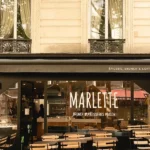
At 51 rue des Martyrs, a café serves homemade organic preparations: cookies, chocolate fondants, scones. The avocado toast is creamy without being greasy, the scrambled eggs melt on the tongue, the specialty coffee comes from Parisian roasters. No reservations possible — you push the door, sit down if a table opens up. That’s the house principle: keeping the spontaneous spirit of Sunday morning when nobody plans ahead.
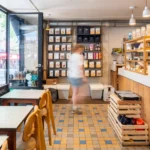
Local neighborhood residents come to read the paper at the counter, groups of friends settle by the window, couples take the small table in back. The place breathes, light enters through large windows, you hear the sound of the coffee machine and conversations blending together.
On Sundays, come before 11 AM or after 1:30 PM to avoid the queue. On weekdays, tables free up more easily.
Homemade baked goods (cookies, scones, fondant) sell out quickly. Ask for them as soon as you arrive.
Matcha latte, chai latte, ube latte: alternatives to regular coffee, prepared with care and organic milk.
Montmartre, Rue des Abbesses
Rue des Abbesses keeps its perched village charm. Less touristy than Place du Tertre, more authentic than the boulevards below. Cafés sprout up like mushrooms, but not all are equal.
At 45 rue des Abbesses, another café in the same spirit offers fluffy pancakes — only at this location — and a seasonal menu. Salads are generous, sandwiches made to order, the chocolate fondant hides a melting heart with fleur de sel. Here too, no reservations. You come, wait a few minutes if needed, sit down. The team is small, friendly, efficient without being rushed.
The place attracts weekend couples who brunch as a ritual, groups of friends occupying the large table, mothers with children who appreciate the relaxed atmosphere and kid-friendly portions. The terrace, when weather’s nice, fills up by 10 AM.
How to Choose Your Spot According to Your Mood
Not all organic brunches are alike. Some focus on savory (avocado toast, scrambled eggs, focaccia), others on sweet (pancakes, scones, waffles). Identifying your mood helps choose the right spot.
| 🥑 More Savory | 🥞 More Sweet |
|---|---|
| Avocado toast, scrambled eggs, focaccia, seasonal salads. For those who consider brunch a real meal, not a disguised snack. | Fluffy pancakes, homemade scones, chocolate fondant, cinnamon rolls. For those who own starting the day with something sweet. |
Both options can coexist at the table: one orders eggs, the other a giant cookie. That’s the brunch principle: impose nothing, allow everything.
☕ Drinks That Accompany an Organic Brunch
Specialty Coffee
Forget burnt chain coffee. Specialty coffee is roasted light, reveals fruity or chocolatey notes, is drunk without sugar. It comes from small producers, is prepared with care, served at the right temperature.
A good cappuccino is a balanced espresso topped with micro-foamed milk. Not a cup of bland foam with three drops of coffee at the bottom. Latte art (the design in the foam) isn’t just Instagram: it proves the milk was properly emulsified, at the right temperature, with the right texture.
- Cappuccino: espresso + micro-foamed milk, 1/3 coffee 2/3 milk ratio
- Flat white: espresso + velvety milk, less foam than a cappuccino
- Latte: mild coffee, lots of milk, ideal for those who don’t like bitterness
Coffee Alternatives
Not everyone drinks coffee. Some prefer tea, others seek original drinks. Parisian organic spots have understood the need to vary the menu.
Matcha latte blends Japanese green tea powder with smooth milk. It contains caffeine but releases its effect more slowly than coffee. No energy spike followed by a crash. Chai latte combines black tea, spices (cinnamon, cardamom, ginger) and milk. Comforting in winter, lighter than hot chocolate.
Ube latte — a purple drink made from Philippine purple yam — wins with its color and mild, slightly sweet taste. These three drinks come in organic versions when the café chooses organic milk and quality powders.
€3
average difference between bottled juice and freshly pressed juice
Fresh Juices and Their True Value
A freshly pressed orange juice still contains its vitamins, enzymes, flavor. A bottled juice bought at the supermarket has been pasteurized (heated to high temperature), filtered, sometimes reconstituted from concentrate. It lost the essential along the way.
Organic cafés that press juices to order charge between 5 and 7 euros per glass. It’s expensive for juice, but it’s the price of three organic oranges pressed in front of you. No added water, no sugar, no preservatives. Just fruit.
Preparing Your Organic Brunch at Home
Easy Recipes to Get Started
No need to go out to have organic brunch. With a few simple ingredients, you can cook at home a meal that awakens the taste buds without breaking the budget.
Scrambled eggs cook slowly in a saucepan, over low heat, stirring constantly. Add a knob of butter at the end, salt, pepper. Three minutes flat. Toast gets rubbed with garlic, drizzled with olive oil, topped with crushed cherry tomatoes. Five minutes.
Pancakes are made with flour, an egg, milk, a pinch of sugar. Cook them in a pan, stack them, drizzle with maple syrup. Ten minutes. Fresh fruit gets cut, mixed, served in a bowl. Two minutes.
“Homemade brunch is rediscovering the pleasure of cooking without pressure. No need for complicated recipes: just good products and time for yourself.”
— French slow food philosophy
Organic Ingredients to Keep in Your Pantry
A well-equipped kitchen for organic brunch contains a few essentials. No need to fill three cupboards: just the basics, in good quality.
- Organic whole wheat flour: for pancakes, scones, homemade bread
- Organic eggs: from free-range chickens, with nice orange yolks
- Seasonal fruit: from the market, not the supermarket, cheaper and tastier
- Organic butter: for cooking, baking, toast
- Honey or maple syrup: to sweeten naturally without white sugar
- Specialty coffee beans: ground just before, not pre-ground in vacuum packs
These ingredients cost more upfront but last a long time. A 1 kg bag of whole wheat flour makes about ten batches of pancakes. A 500 g jar of honey sweetens three months of breakfast.
Where to Find Good Products in Paris
Parisian markets offer organic fruits and vegetables cheaper than specialty stores. Marché Bastille (Thursday and Sunday), Marché Raspail (Tuesday and Friday morning, organic only), Marché des Batignolles (Saturday) are full of Île-de-France producers selling direct.
Neighborhood organic grocers — Biocoop, Naturalia, La Vie Claire — offer a wide choice of flours, cereals, dried fruits. Prices are higher than regular supermarkets, but quality follows. Some offer bulk: you fill your containers, pay by weight, avoid unnecessary packaging.
✅ Remember
Buying organic and local doesn’t necessarily cost more if you favor seasonal products, avoid waste, and cook yourself rather than buying processed foods.
Frequently Asked Questions
What’s the difference between an organic brunch and a regular brunch?
An organic brunch uses ingredients from organic farming: whole wheat flour, eggs from free-range chickens, fruit without pesticides, unrefined cane sugar. Preparations are often homemade, without preservatives or additives. The taste is more pronounced, products more traceable. A regular brunch may contain industrial ingredients, refined sugars, hydrogenated fats and a list of additives as long as your arm.
How much does an organic brunch cost in Paris?
An organic brunch in Paris costs between 18 and 28 euros depending on the location and formula chosen. This price generally includes a hot drink, eggs prepared to order, organic bread, homemade baked goods and fresh fruit. Some cafés offer an à la carte formula allowing you to compose your brunch to suit your budget.
Can you have organic brunch without reserving in Paris?
Yes, several Parisian spots operate without reservations to preserve the spontaneous spirit of brunch. This is particularly the case for certain cafés in the 9th and 18th arrondissements. The principle: you push the door, wait a few minutes if needed, sit down as soon as a table opens up. To avoid waiting, it’s best to come before 11 AM or after 1:30 PM on weekends.
What drinks to order with an organic brunch?
Specialty coffee (cappuccino, flat white, latte) remains the safe choice. For variety, try matcha latte (Japanese green tea and milk), chai latte (spiced black tea) or ube latte (Philippine purple yam). Freshly pressed juices — orange, pink grapefruit, watermelon depending on the season — retain their vitamins and flavor. Avoid pasteurized bottled juices that lost the essential along the way.
How to prepare an organic brunch at home without complicating things?
Start with the basics: slowly cooked scrambled eggs (3 minutes), toast rubbed with garlic and oiled (2 minutes), cut fresh fruit (2 minutes). Add homemade pancakes (flour, egg, milk, 10 minutes cooking). Favor seasonal organic ingredients bought at the market: cheaper, tastier. No need for complicated recipes, just good products and a bit of time for yourself.
Where to buy organic products for brunch in Paris?
Parisian markets (Bastille, Raspail, Batignolles) offer organic fruits and vegetables directly from Île-de-France producers, often cheaper than in stores. Neighborhood organic grocers (Biocoop, Naturalia, La Vie Claire) offer flours, cereals and dried fruits in bulk to avoid packaging. Favor seasonal products: cheaper, tastier, and grown locally in France.