


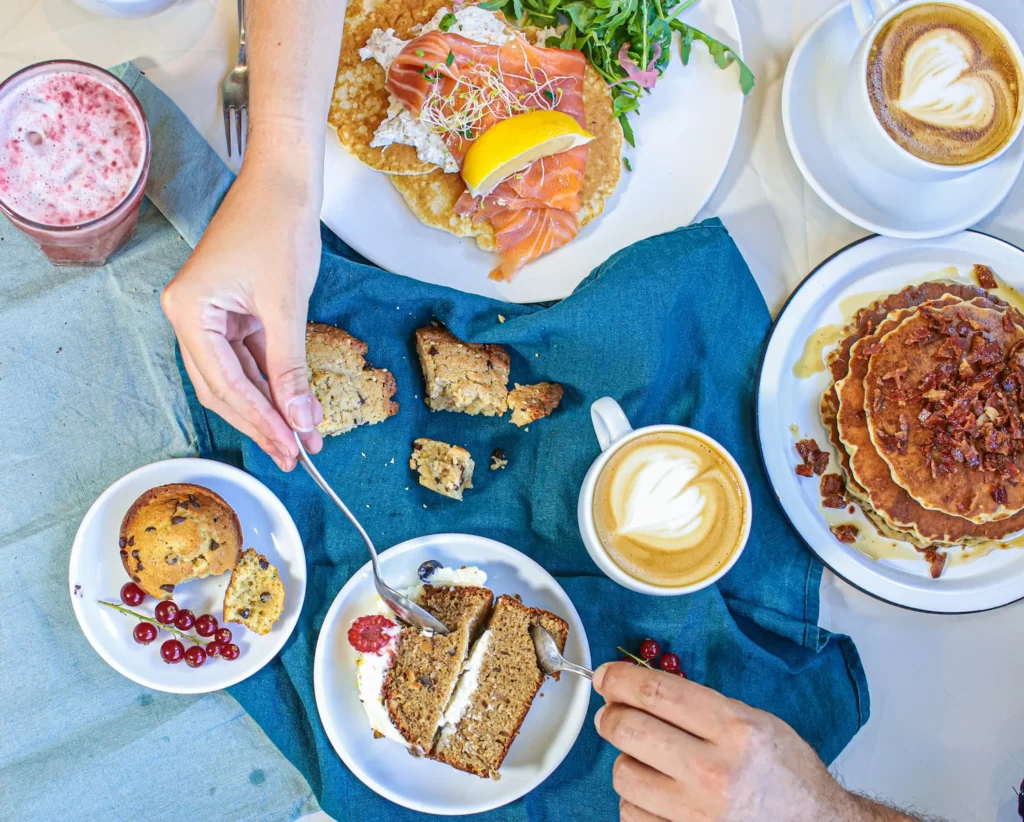
There’s that moment around 7:30 in the morning when you hear bare feet on the floorboards. The child emerges, hair tousled, still drowsy with sleep. And then, that first glance they cast at the breakfast table decides everything: enthusiasm or difficult negotiation. Composing a breakfast for children isn’t about sticking three foods on a plate and praying they eat. It’s creating a gentle, indulgent ritual where body and palate wake up together.
Marlette champions a morning art that never chooses between pleasure and quality. Our organic baking mixes — cookies, pancakes, scones — are born on Île de Ré with a simple conviction: you can delight children without compromising on ingredients. Here are our ideas for composing a kids-friendly breakfast, between comforting textures and easy recipes to prepare.
🥞 The Foundations of a Balanced Breakfast for Children
Why Favor a Complete Breakfast
A child doesn’t start their day like an adult. Their brain consumes up to 50% of their body’s total energy — compared to 20% for us. This first meal isn’t optional. It lays the foundation for their concentration at school, their mood, their ability to last until lunch without a mid-morning crash.
A complete breakfast brings together four pillars: carbohydrates for immediate energy (bread, cereals, oats), protein for satiety (milk, cheese, egg), fruit for vitamins, and a bit of quality fat (butter, almond butter). When these four components are present, you avoid mid-morning cravings and calls from the teacher reporting that the child is falling asleep in class.
✅ To Remember
Combining complex carbohydrates + protein + fresh fruit from morning allows the child to last 3 to 4 hours without hunger. The brains of 3-12 year-olds consume enormously — breakfast is non-negotiable.
Common Mistakes (and How to Avoid Them)
First trap: multicolored industrial cereals that promise vitamins and joy. Turn the box over. 30 to 40% added sugars, artificial flavors, a glycemic index that sends blood sugar soaring before letting it crash an hour later. The child is hungry at 10am, demands a snack, and we enter a spiral of grazing.
Second pitfall: a bowl of chocolate milk + industrial pastry. Two sources of fast sugars, zero protein, zero fiber. The child’s body receives a glucose shot, then collapses. We prefer whole-grain bread spread with almond butter accompanied by fresh fruit. Or homemade pancakes with fromage blanc and seasonal fruit — like the ones we serve at Abbesses, prepared with simple ingredients, no additives.
Adapting Portions According to Age
A 3-year-old doesn’t have the same needs as a 12-year-old preteen. Between 3 and 6 years, a bread portion equals half a slice, a dairy product corresponds to a small pot of fromage blanc (100 g), fruit to half an apple. Between 7 and 10 years, we move to a full slice, a 150 ml bowl of milk, a whole fruit. After 10 years, needs increase: two slices, a large bowl of milk or two yogurts, a whole fruit plus a handful of dried fruit.
The classic mistake: serving the same portions as an adult. Result, the child doesn’t finish, feels guilty, and we throw away half. Better to start small and serve more if needed.
| Age | Bread/cereal portion | Dairy | Fruit |
|---|---|---|---|
| 3-6 years | 1/2 slice or 30g cereal | 100 ml milk or 1 yogurt | 1/2 fruit |
| 7-10 years | 1 slice or 40g cereal | 150 ml milk or 1 yogurt | 1 whole fruit |
| 11+ years | 2 slices or 50g cereal | 200 ml milk or 2 yogurts | 1 fruit + dried fruit |
🍪 Ideas for Delicious and Quick Breakfasts
Revisited Toast
Forget the systematic butter-and-jam toast. Whole-grain (or multi-grain) bread provides fiber that slows sugar absorption. We spread it with whole almond butter — protein, magnesium, good fat. On top, a few banana slices or raspberries crushed with a fork. The child gets crunch, creaminess, natural sweetness, and lasts until noon.
Savory variation for older children: fresh cheese + grated cucumber + a pinch of salt. Or ricotta + halved cherry tomatoes. Children love building their toast themselves — leave the ingredients on the table and entrust them with assembly.
💡 Our Tip
Prepare homemade almond butter the day before: blend 200 g whole almonds for 8 minutes in a food processor until you get a smooth paste. Add a pinch of salt and a teaspoon of honey. Keeps 2 weeks in the fridge. Children often prefer it to industrial versions.
Homemade Pancakes and Waffles
Pancakes aren’t reserved for Sunday. With our organic pancake mixes, you mix 100 g powder + 1 egg + 100 ml milk, and four minutes later you’re serving a fluffy stack. Top with fromage blanc, fresh fruit (strawberries, blueberries, kiwi), a drizzle of honey or maple syrup. The protein from the egg and fromage blanc balances the carbohydrates from the flour — the child heads to school with lasting energy.
Waffles work on the same principle. You can cook a batch on Sunday, freeze them, and reheat them in the toaster on rushed mornings. Served with homemade apple compote (apples + cinnamon, nothing else) and a glass of milk, they become a complete breakfast in five minutes.
Cereal and Yogurt Bowls
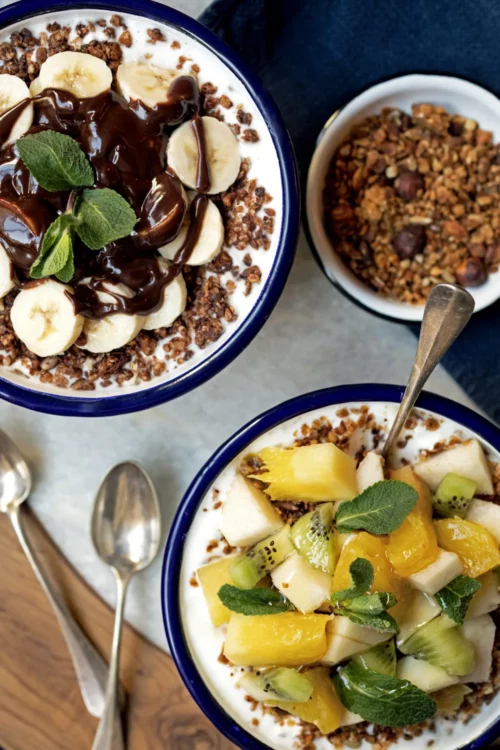
The bowl is the art of composing in layers. Base: plain fromage blanc or Greek yogurt (protein). Second layer: oat flakes (30 g for a 7-year-old child) soaked overnight in almond milk — overnight oats that swell and become creamy. Third layer: fresh seasonal fruit (strawberries in spring, peaches in summer, grated apples in autumn). Finish: a tablespoon of seeds (chia, flax, sunflower), a few dark chocolate shavings (70%).
The child sees the colorful strata, plunges in their spoon, mixes everything. Texture, colors, varied flavors — the brain receives satiety signals faster than with a uniform mush.
The night before: mix 30 g oat flakes + 80 ml plant milk in a jar. Refrigerate.
Add 2 spoons of fromage blanc, cut fresh fruit, a handful of dried fruit.
Let the child choose their topping: honey, cinnamon, chocolate chips, pumpkin seeds.
Eggs in All Their Forms
An egg provides 6 g of high-quality protein, all essential amino acids, vitamins B12 and D. Scrambled with a little milk and grated cheese, it becomes creamy and soft. Soft-boiled with whole-grain bread soldiers, it transforms breakfast into a game (dip, crack, eat). As a vegetable omelet (grated zucchini, cherry tomatoes), it becomes a complete dish.
Children love the melting texture of slowly cooked scrambled egg. We serve it with a slice of toasted bread and a few cherry tomatoes — five minutes of preparation, ideal protein intake to last all morning.
🍓 Incorporating Fresh Fruit Daily
Why Fruits Are Essential
Fruits provide vitamins (C for immunity, A for vision), fiber that regulates digestion, and antioxidants. But above all, they educate children’s palates to the taste of natural sugar — the kind that doesn’t cause addiction or blood sugar spikes. A child accustomed to fresh fruit from morning demands fewer sweets in the afternoon.
The trick: vary textures. A crunchy apple isn’t eaten like a soft banana or blueberries that burst in the mouth. Alternate whole fruits, homemade compotes without added sugar, thick smoothies eaten with a spoon.
How to Make Them Attractive
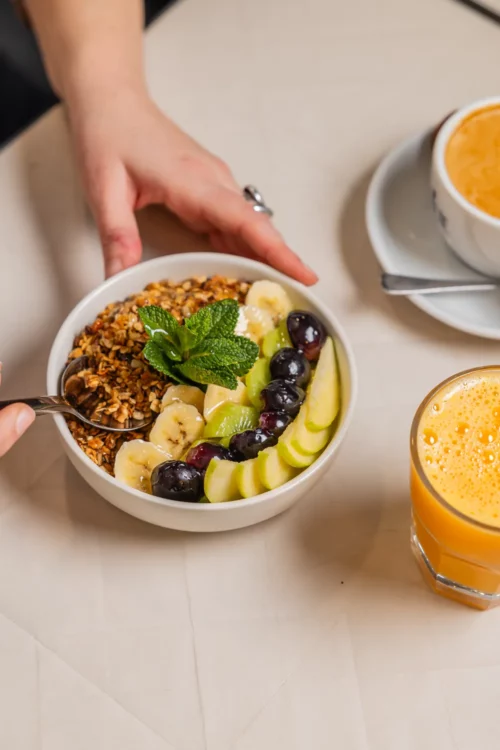
A child doesn’t eat “a recommended portion of fruit.” They eat a funny skewer, a plate with amusing shapes, a pink smoothie that looks like a milkshake. Cut fruit into sticks, spear them on wooden picks with cheese cubes in between. Arrange strawberries, kiwi and banana in a face shape on the plate. Blend banana + strawberries + yogurt + ice cubes to get a pink smoothie bowl they decorate themselves with seeds and fruit pieces.
Frozen fruits are your allies out of season. Raspberries, mango, blueberries retain their vitamins and allow you to prepare smooth smoothies even in winter. Blend 100 g frozen fruit + 1 banana + 150 ml plant milk — three minutes flat.
5 portions
of fruits and vegetables per day for a child — including at least 2 at breakfast
Express Fruit Recipes
Minute compote: cut an apple into cubes, add 2 spoons of water and a pinch of cinnamon, microwave 3 minutes on maximum power. Mash with a fork. Serve warm on fromage blanc or pancakes.
Express banana bread: mash 2 very ripe bananas, mix with 1 egg, 100 g oat flakes blended into powder, 1 spoon honey, 1 spoon oil. Bake 25 minutes at 180°C. You get a moist cake, naturally sweetened, that keeps 4 days.
Minute fruit salad: orange cut into supremes + diced apple + a few grapes + lemon juice. The lemon’s acidity prevents oxidation and enhances flavors. Children love dipping cookies in it — our plain scones, for example, pair perfectly with citrus acidity.
🥛 Dairy Products and Plant-Based Alternatives

Milk, Yogurts and Cheese: How to Choose
Cow’s milk provides calcium (300 mg for a 250 ml glass), protein (8 g), vitamin D. But some children digest it poorly, or don’t like the taste. Plain yogurts are an excellent alternative: lactic ferments pre-digest some of the lactose, they go down easier. Fromage blanc with 3% fat offers 8 g protein per 100 g — ideal to accompany fruit or top a piece of toast.
We favor plain products, without flavors or added sugars. An industrial fruit yogurt often contains 15 g sugar — as much as a soda. Better a plain yogurt + cut fresh fruit + a spoon of honey if needed.
Plant Milks: Advantages and Limits
Almond, oat, soy, hazelnut milk — plant-based alternatives are appealing. Caution: they don’t replace cow’s milk nutritionally. Almond milk contains 1 g protein per 100 ml (versus 3.5 g for cow’s milk), little calcium unless fortified. Soy milk is the most protein-rich (3 g per 100 ml), but its taste doesn’t please all children.
If you opt for plant milk, choose it fortified with calcium and vitamin D, and ensure you provide protein elsewhere: egg, nut butter, cheese. Homemade plant milks (soak 100 g almonds 12h, blend with 500 ml water, strain) are more economical but not fortified — they work as a supplement, not an exclusive substitute.
| Type | ✅ Advantages | ❌ Limits |
|---|---|---|
| Cow’s milk | Protein, natural calcium, vitamin D | Possible lactose intolerance |
| Plain yogurt | Probiotics, easier digestion | Less calcium than a glass of milk |
| Almond milk | Light, mild taste, lactose-free | Low in protein unless fortified |
| Soy milk | Protein comparable to animal milk | Pronounced taste, possible allergens |
Cheeses to Favor in the Morning
A piece of cheese (20 g Emmental, a slice of Comté) provides calcium and protein. Children like cheese in cubes they spear with toothpicks, or grated on a lightly toasted slice of whole-grain bread. Fresh cheese like Saint-Môret or Kiri spreads easily, pleases little ones, and pairs well with fruits (pear, grape).
We avoid ultra-processed processed cheeses that contain melting salts and additives. Real cheese has a short ingredient list: milk, ferments, salt, rennet.
🍽️ Organizing Breakfast on Weekdays
Planning Ahead to Save Time
Sunday evening, prepare five jars of overnight oats — oat flakes + plant milk + chia seeds in glass jars. In the morning, just add fresh fruit and topping. Bake a batch of savory vegetable muffins (zucchini, grated carrots, eggs, whole-wheat flour): they keep 3 days in the fridge, 2 months in the freezer.
Cut fruits and vegetables in advance: cucumber sticks, apple slices in lemon water to prevent oxidation. Prepare portions of almond butter in small jars — the child spreads it themselves without making a mess everywhere.
💡 Our Tip
Involve the child on weekends: they choose their fruits for the week, you prepare the overnight oats jars together. In the morning, they know exactly what they’re going to eat, no negotiation, no stress. And they’re proud to have participated.
Grab-and-Go Breakfast for Rushed Mornings
Some mornings, we leave late. Slip into an insulated bag: a pancake folded in half filled with fresh cheese and jam, a whole fruit (banana, apple), a compote pouch, a small brick of milk. The child eats in the car or upon arriving at school. It’s not ideal — we prefer a real seated moment — but it’s infinitely better than nothing.
Homemade energy balls are perfect for these chaotic mornings: blend 100 g pitted dates + 50 g oat flakes + 2 spoons almond butter + 1 spoon cocoa. Form into balls. Keeps 10 days in the fridge. Two balls + a fruit + a glass of milk = complete breakfast in 30 seconds.
Establishing a Soothing Ritual
Breakfast isn’t just about nutrients. It’s the first moment of the day when we come together. No screens, no TV on in the background. We put on a gentle playlist, light a candle in winter, open the window to let in light. The child sits down, breathes, eats without pressure.
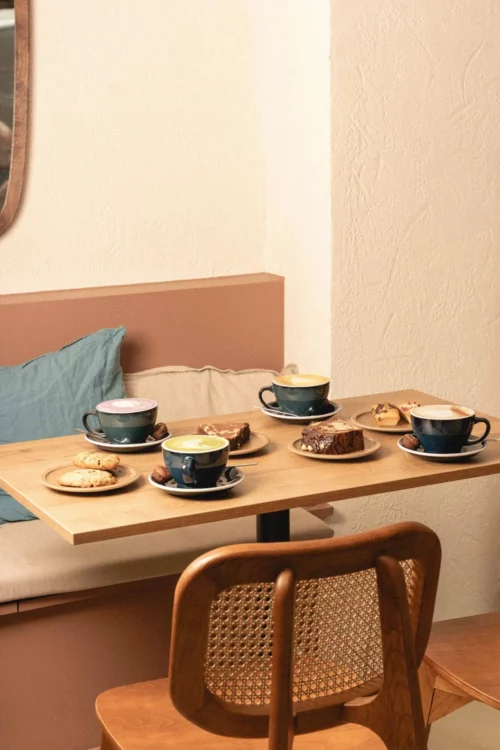
At Marlette, we defend this philosophy of joyful slowness. Our coffee shops aren’t fast-food joints — they’re places where time stretches, where you savor a warm scone fresh from the oven, a carefully prepared coffee. At home, recreate this atmosphere: a pretty tablecloth, real napkins, a plate that invites. Morning becomes a moment we look forward to, not one we endure.
« Children’s breakfast reflects our relationship with time: when we take 10 minutes to sit together, we tell them these moments matter. »
— Marlette, philosophy of slowness
Managing Refusals and Fussiness
A child who refuses to eat in the morning isn’t necessarily being difficult. Perhaps they wake up without hunger, their stomach takes time to start up, or portions are too large. Offer small amounts: half a slice, three strawberries, half a glass of milk. Often, the child finishes and asks for more — whereas a large plate would have discouraged them from the start.
Another approach: let them compose their plate. Place on the table bread, butter, jam, cut fruit, cheese cubes. They choose, build their toast, feel empowered. Studies show children eat 30% more when they’ve participated in preparing or composing the meal.
And if really nothing works? A smoothie. Banana + milk + peanut butter + a date = 250 ml complete drink, easy to swallow even without appetite. With a fun straw, it goes down smoothly.
Frequently Asked Questions
What to do if my child refuses to eat in the morning?
Start with very small portions so as not to discourage them. Offer a smoothie or drinkable yogurt if they’re not hungry upon waking. Wake them 10 minutes earlier so their stomach has time to wake up. Involve them in preparation: choosing their fruit, spreading their bread. Finally, avoid any pressure — a stressed child eats even less.
Are commercial cereals suitable for children?
Most contain 30 to 40% added sugars and additives. Favor plain oat flakes, muesli without added sugar, or whole-grain cereals with less than 10 g sugar per 100 g. Always check the ingredient list: it should be short. You can also prepare homemade granola with oat flakes, honey, dried fruit and seeds — you control exactly what the package contains.
Can you give eggs to a child every day?
Yes, one egg per day poses no problem for a healthy child. Nutritional recommendations have evolved: dietary cholesterol (present in the yolk) doesn’t impact blood cholesterol in the majority of people. An egg provides quality protein, vitamins B12 and D, iron, and especially choline essential for brain development. Simply vary cooking methods: soft-boiled, scrambled, omelet.
How far in advance can you prepare a breakfast?
Overnight oats are prepared the night before for the next day. Pancakes, waffles and muffins keep 3 days in the refrigerator in an airtight container, or 2 months in the freezer. Energy balls keep 10 days chilled. Cut fruits should be consumed within 24h to preserve vitamins and freshness. Bread freezes by the slice — pop one in the toaster in the morning. With a little weekend organization, you save 15 minutes each weekday morning.
Should you give fruit juice or a whole fruit?
Whole fruit is always preferable. It contains fiber that slows sugar absorption and provides satiety. Orange juice, even fresh, delivers fructose without these fibers — the glycemic impact is higher. If your child loves juice, offer half a glass of freshly squeezed juice accompanied by a whole fruit, or blend the whole fruit (smoothie) to retain the fiber. And limit to one glass per day maximum.
What alternatives to white sugar to sweeten breakfast?
Honey (from 1 year old), pure maple syrup, blended date paste, or a mashed banana in yogurt provide sweetness with micronutrients absent from white sugar. Unrefined whole cane sugar retains minerals and vitamins. But whatever the sweetener, moderation remains key: no more than a teaspoon per portion. The ideal is to accustom the child to the natural taste of foods — plain yogurt + fresh fruit rather than sweetened yogurt.