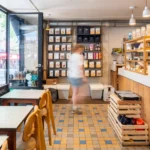


There is that late-afternoon light settling across the neighbourhood tables. The smell of warm butter drifting from an open kitchen. The chef’s voice rising from the pass. Paris is not short of restaurants — there are several thousand of them. But the good ones, the ones you return to without needing a reason, the ones that make you lose track of time, are rarer.
So we made the rounds. Not the tour of the starred places where you book three months ahead (though we do slip a few in). More the kind of addresses you press into a friend’s hand when they’re passing through. Neighbourhood bistros where the cooking speaks for itself, quiet tables where the chef knows your name, places you come to as much for what’s on the plate as for everything happening around it: the hum of service, the waitress holding your corner table, the city carrying on beyond the glass.
🍽️ Neighbourhood bistros that never lie

The real bistro — the one that doesn’t change its menu every week
A Parisian bistro that truly holds up is first and foremost a place that owns its identity. No fusion pivot every six months. A chalkboard that follows the seasons, a chef who knows his producers, a stable team. The kind of address where you know you’ll eat well even without checking social media first.
In the 9th arrondissement, on a quiet street corner, some bistros still serve devilled eggs that actually mean something. No showmanship — just hand-whisked mayonnaise and fresh eggs. It might sound ordinary. It never is when it’s done right.
💡 Our tip
To discover the true face of a Parisian neighbourhood, settle into a bistro midweek around 1pm. That’s where you’ll find the regulars — the ones who come for the food, not the Instagram shot. Watch what they order; it’s usually the house speciality.
Those Montmartre tables that feel like home
Montmartre keeps its secrets close. Between the tourist traps and the pitfalls around Sacré-Cœur, a handful of restaurants still serve honest cooking. Rue des Abbesses, rue Lepic, sometimes rue des Martyrs — the real find is usually tucked down a perpendicular side street.
You’ll find tables where you can open your laptop in the morning (except between 11:30 and 14:30, obviously), drink a specialty coffee, then come back in the evening for a glass of natural wine and plates to share. Hybrid places, somewhere between a coffee shop and a neighbourhood restaurant, that have understood Paris no longer lives in neat, watertight compartments.
If you’re looking for somewhere to brunch without a reservation or any pressure, some Parisian coffee shops also offer seasonal lunch menus, with that careful attention to ingredients that makes all the difference.
The Marais and its quietly kept addresses
The Marais has become a playground for concept restaurants. But between the burger spots and the juice bars, you can still find bistros from another era — ones where the zinc counter dates from 1920, where the owner is on first-name terms with you by your second visit, where the daily special is announced by word of mouth.
Rue des Archives, rue Vieille-du-Temple, sometimes rue de Bretagne on the northern side: that’s where the hidden gems are. Restaurants run by chefs who trained in starred houses before coming back to what matters — a single ingredient, a careful technique, a plate that holds together.
✅ Worth remembering
The best Parisian bistros aren’t always the most visible ones. Look for understated façades, handwritten chalkboards, rooms that fill up by 12:15 with people from the neighbourhood. That’s usually the sign of cooking with real soul.
🌟 A few starred restaurants worth the journey (and the bill)

Astrance, or the art of surprise
Pascal Barbot built Astrance as a manifesto: no menu, no choices, just absolute trust. You sit down, service begins, and you discover what the chef has decided for you that day. It’s unsettling at first. Then you let go.
The plates arrive — small, precise, sometimes baffling. A vegetable you don’t recognise, a pairing that catches you off guard, a technique you would never attempt at home. Astrance isn’t trying to impress. It’s trying to reveal something about cooking. Three Michelin stars, a reservation that’s hard to come by (very hard), but a moment that stays with you.
Wood, light and red tablecloths
There are a handful of starred restaurants in Paris where you can still show up in jeans. Places that have held on to a certain ease despite their accolades. Pale wood on the walls, natural light pouring through tall windows, tablecloths that aren’t necessarily white — sometimes red, sometimes simply absent.
These restaurants have understood that you can serve demanding cuisine without imposing a dress code. The chef steps out of the kitchen between services, pulls up a chair at your table for five minutes, asks if everything is all right. No ceremony. Just a genuine desire to do things well and share that with you.
| 🍷 Gastronomic restaurant | 🥖 Neighbourhood bistro |
|---|---|
| Reservation 2–3 months ahead • Set menu or short à la carte • Multi-course service • Budget €80–200 • Smart dress appreciated | Walk-ins welcome • Daily chalkboard • Quick service on weekdays • Budget €15–40 • Relaxed atmosphere |
The young chefs reinventing the menu
A new generation has taken over the stoves. Chefs in their thirties, trained in great houses, opening their first restaurant with a clear vision: seasonal produce, real vegetables, generous plates without pretension. No manifesto. Just cooking that speaks for itself.
You find them all over Paris. Often in neighbourhoods on the margins — the 10th, the 11th, sometimes the 19th or 20th. Rooms of twenty to thirty covers, an open kitchen, a tight team. The chef also does front of house. His partner runs the room. Their business partner looks after the wine list. It holds together on very little and a great deal of conviction.
127,000
That’s the number of restaurants listed across France — Paris alone accounts for several thousand of them
🗺️ Paris by neighbourhood: where to eat depending on where you are

Left Bank: Saint-Germain and the Latin Quarter
The Left Bank holds on to a certain slightly faded elegance. Historic brasseries rub shoulders with newer, more discreet addresses. Rue de Seine, rue Grégoire-de-Tours, rue des Canettes — the good restaurant often hides on the first floor of a Haussmann building.
The cooking here oscillates between the classic and the contemporary. Bourgeois dishes reimagined, fine ingredients handled simply. The setting counts as much as the plate: ornate ceiling mouldings, aged mirrors, red velvet banquettes. Places where you can spend three hours at the table without anyone hurrying you along.
The Golden Triangle and its exceptional tables
Between Avenue Montaigne, the Champs-Élysées and Avenue George-V, Paris plays the luxury card. Starred establishments line up one after another; the grand hotels shelter restaurants run by chefs with well-known names.
This is the Paris of special occasions. Birthdays, marriage proposals, decisive business dinners. The food is admirable, naturally. But you also come for the setting, the flawlessly calibrated service, that sense of stepping into a different world for the length of a meal. The prices follow suit. Expect €150 to €300 per person, sometimes more.
East Paris and its affordable discoveries
The 11th, the 20th, a stretch of the 10th: these neighbourhoods have seen dozens of new addresses bloom over the past ten years. Restaurants run by young people looking for lower rents and a less predictable clientele.
You eat reinterpreted world cuisine — modern Vietnamese, Italian without the folklore, fusion Japanese — inventive vegetable-led plates, wood-fired grills. The interiors are raw: polished concrete, reclaimed wood, mismatched chairs. The atmosphere is loud and easy-going. You can come in trainers and leave at 11pm on a Tuesday.
“A good Parisian restaurant is the one you go back to without even thinking about it. You wake up on a Saturday morning and you already know that’s where you want to be.”
— A regular from the 9th arrondissement
The pedestrianised streets and their hidden terraces
Since the city pedestrianised certain streets, terraces have sprung up where no one expected them. Rue Montorgueil, rue des Martyrs (northern end), a few covered passages — these corners of Paris have rediscovered a neighbourhood life of their own.
The restaurants that have taken advantage of it brought tables and chairs out at the first sign of sunshine. You lunch in the sun on a weekday, have a drink in the evening watching the parade of passers-by. In summer, these terraces become the neighbourhood’s shared living room. In winter, you move inside — but the spirit remains.
Choose your area first — some neighbourhoods have a strong culinary identity. The Marais for small creative tables, Saint-Germain for classic brasseries, the 11th for emerging addresses.
A restaurant that fills up at noon with locals is rarely a bad choice. See whether the waiters know their customers — it’s a sign of consistency and therefore of reliable quality.
A menu that changes regularly (daily or weekly) signals a chef working with the seasons and whatever’s just come in. If the same menu has been running for three years, be wary.
🍷 How to really choose a good restaurant in Paris

The handwritten chalkboard and the daily special
There’s that black board hanging near the entrance, written in chalk. Three starters, four mains, two desserts. It changes every day or thereabouts. It’s the sign that the chef shops at the market in the morning and builds from there. Not the other way round.
The daily special is a useful indicator. When a restaurant offers a beef bourguignon or a blanquette de veau in the middle of July, you have to wonder. Seasonal cooking isn’t a declaration — it’s a practice. A chef who follows the producers’ calendar will always be more inspired than one running a fixed menu on repeat.
The sound of the room and the energy of the service
A good restaurant has a particular sound. The murmur of conversations, the clink of glasses, the back-and-forth between kitchen and floor. There’s a music to a service that’s working. You recognise it the moment you push the door open.
The team matters as much as the chef. A smiling waitress who knows the menu inside out, a sommelier who advises without condescension, a young runner who clears quietly — all these details make the difference. You can have the best chef in Paris, but if the service is cold or clumsy, the whole experience falls flat.
⚠️ Worth bearing in mind
Be wary of restaurants with dozens of dishes on the menu. An overly long list often signals assembly-line cooking or frozen ingredients. A good chef would rather make five dishes perfectly than twenty passably.
Wines by the glass and the drinks list
The wine list says a great deal about a restaurant. It doesn’t need to be the length of a directory. But it should be coherent with the cooking. A bistro serving robust, earthy dishes alongside only grand crus at €80 a bottle doesn’t quite add up.
Wines by the glass are a useful test. Offering three or four references — red, white, rosé, sometimes a natural wine — lets guests taste without overspending. And it shows the restaurant is thinking about those who come alone or don’t want to work through a full bottle.
Walk-ins and handling the wait
Some of the best Parisian bistros take no reservations. Deliberately. They prefer to keep that spirit of spontaneity: you walk past, you try your luck, you wait a little if you need to. It can be frustrating. But it also ensures a natural flow and a room full of people who are genuinely there to eat, not just to tick a box.
When you’re asked to wait, watch how the restaurant handles it. Are you offered a drink at the bar? Given an honest estimate of how long? Or left standing in a corner without so much as a glance? The way a restaurant treats those who are waiting tells you a great deal about its spirit.
| ✅ Good signs | ❌ Warning signs |
|---|---|
| • Chalkboard that changes often • Room full of regulars • Chef who steps out of the kitchen • Seasonal produce front and centre • Short, precise menu |
• Menu of 50 dishes • Laminated photos • Waiters who don’t know the menu • Same menu all year round • Touts at the entrance |
The coffee test and settling the bill
One small detail: the coffee at the end of the meal. If it’s good — truly good, not merely drinkable — the restaurant has carried its care all the way to the finish. Too many places let this moment slip. They serve a lukewarm industrial coffee in a chipped cup. A shame, because it’s often the last impression that stays with you.
The bill too. Not just the amount (though that matters), but the way it arrives. Some restaurants slip it discreetly to you at the end of the meal. Others make you ask three times. And then there are those who add a mysterious “service included” line, which has been illegal since 1987. These small details count.
Frequently asked questions
How do you choose a good restaurant in Paris without getting caught out?
Start by checking whether the chalkboard changes regularly — that’s the sign of seasonal cooking. Look at the room: if it’s full of neighbourhood regulars on a weekday, that’s a good sign. Be wary of menus that are too long (more than 20 dishes), which often hide frozen ingredients. Avoid restaurants with touts at the door or laminated photos in the window. Finally, read recent reviews online, but cross-reference them with your instincts: a full room at 1pm on a Tuesday never lies.
What budget should you allow for a good meal in a Parisian bistro?
In an honest neighbourhood bistro, allow between €15 and €25 for a daily special at lunch, €30 to €45 for a full meal (starter, main, dessert) in the evening. Add a decent bottle of wine and the total comes to around €50 to €70 per person. Starred restaurants naturally ask for more: from €80 to €150 for a lunch menu, €150 to €300 (sometimes more) for a gastronomic dinner. These prices don’t always include wine or service.
Do you have to book in advance at Parisian restaurants?
It depends on the type of address. Gastronomic and starred restaurants often require a booking several weeks or even months in advance. Many neighbourhood bistros, on the other hand, operate without reservations — by choice, to preserve a spontaneous atmosphere. You may need to wait 15 to 30 minutes in the evening, but it’s manageable. At lunch on a weekday, arriving before 12:30 or after 13:30 usually means no wait. If in doubt, call mid-morning to find out whether the restaurant takes bookings.
Which Parisian neighbourhoods are best for discovering good restaurants?
Montmartre (9th and 18th arrondissements) is full of genuine bistros and quality coffee shops. The Marais (3rd and 4th) blends historic addresses with creative tables. The 11th arrondissement has a young, inventive culinary scene, often at accessible prices. Saint-Germain-des-Prés (6th) keeps its classic brasseries and a few quietly kept gems. Finally, the 10th and 20th are seeing a wave of emerging addresses led by young chefs in search of affordable rents. Each neighbourhood has its own identity — choose the atmosphere that suits you.
What’s the difference between a Parisian bistro and a gastronomic restaurant?
The bistro is built on simple, generous, seasonal cooking, with quick service and a relaxed atmosphere. You often come without a reservation, the chalkboard changes daily, and prices stay accessible (€15–40 per person). The gastronomic restaurant offers more technical cooking, often with a set menu or a short à la carte, meticulous multi-course service, and an overall experience where the setting counts as much as the plate. Prices climb (€80–300 per person), booking is essential, and smart dress is appreciated. Both have their place — it all depends on the occasion.
Can you eat well in Paris away from the tourist spots?
Absolutely. The best Parisian restaurants often hide on side streets, far from the main thoroughfares. Look for addresses frequented by local residents: if you see people from the neighbourhood eating there every day, it’s rarely a trap. Avoid the ultra-touristy zones around Sacré-Cœur, the Eiffel Tower and the Champs-Élysées, where quality is often sacrificed to volume. Head instead for residential neighbourhoods (9th, 11th, 18th away from the tourist trail, 10th, 20th) where restaurants have to earn the loyalty of a demanding local crowd.
{
“@context”: “https://schema.org”,
“@type”: “FAQPage”,
“mainEntity”: [
{
“@type”: “Question”,
“name”: “How do you choose a good restaurant in Paris without getting caught out?”,
“acceptedAnswer”: {
“@type”: “Answer”,
“text”: “Start by checking whether the chalkboard changes regularly — that’s the sign of seasonal cooking. Look at the room: if it’s full of neighbourhood regulars on a weekday, that’s a good sign. Be wary of menus that are too long (more than 20 dishes), which often hide frozen ingredients. Avoid restaurants with touts at the door or laminated photos in the window. Finally, read recent reviews online, but cross-reference them with your instincts: a full room at 1pm on a Tuesday never lies.”
}
},
{
“@type”: “Question”,
“name”: “What budget should you allow for a good meal in a Parisian bistro?”,
“acceptedAnswer”: {
“@type”: “Answer”,
“text”: “In an honest neighbourhood bistro, allow between €15 and €25 for a daily special at lunch, €30 to €45 for a full meal (starter, main, dessert) in the evening. Add a decent bottle of wine and the total comes to around €50 to €70 per person. Starred restaurants naturally ask for more: from €80 to €150 for a lunch menu, €150 to €300 (sometimes more) for a gastronomic dinner. These prices don’t always include wine or service.”
}
},
{
“@type”: “Question”,
“name”: “Do you have to book in advance at Parisian restaurants?”,
“acceptedAnswer”: {
“@type”: “Answer”,
“text”: “It depends on the type of address. Gastronomic and starred restaurants often require a booking several weeks or even months in advance. Many neighbourhood bistros, on the other hand, operate without reservations — by choice, to preserve a spontaneous atmosphere. You may need to wait 15 to 30 minutes in the evening, but it’s manageable. At lunch on a weekday, arriving before 12:30 or after 13:30 usually means no wait. If in doubt, call mid-morning to find out whether the restaurant takes bookings.”
}
},
{
“@type”: “Question”,
“name”: “Which Parisian neighbourhoods are best for discovering good restaurants?”,
“acceptedAnswer”: {
“@type”: “Answer”,
“text”: “Montmartre (9th and 18th arrondissements) is full of genuine bistros and quality coffee shops. The Marais (3rd and 4th) blends historic addresses with creative tables. The 11th arrondissement has a young, inventive culinary scene, often at accessible prices. Saint-Germain-des-Prés (6th) keeps its classic brasseries and a few quietly kept gems. Finally, the 10th and 20th are seeing a wave of emerging addresses led by young chefs in search of affordable rents. Each neighbourhood has its own identity — choose the atmosphere that suits you.”
}
},
{
“@type”: “Question”,
“name”: “What’s the difference between a Parisian bistro and a gastronomic restaurant?”,
“acceptedAnswer”: {
“@type”: “Answer”,
“text”: “The bistro is built on simple, generous, seasonal cooking, with quick service and a relaxed atmosphere. You often come without a reservation, the chalkboard changes daily, and prices stay accessible (€15–40 per person). The gastronomic restaurant offers more technical cooking, often with a set menu or a short à la carte, meticulous multi-course service, and an overall experience where the setting counts as much as the plate. Prices climb (€80–300 per person), booking is essential, and smart dress is appreciated. Both have their place — it all depends on the occasion.”
}
},
{
“@type”: “Question”,
“name”: “Can you eat well in Paris away from the tourist spots?”,
“acceptedAnswer”: {
“@type”: “Answer”,
“text”: “Absolutely. The best Parisian restaurants often hide on side streets, far from the main thoroughfares. Look for addresses frequented by local residents: if you see people from the neighbourhood eating there every day, it’s rarely a trap. Avoid the ultra-touristy zones around Sacré-Cœur, the Eiffel Tower and the Champs-Élysées, where quality is often sacrificed to volume. Head instead for residential neighbourhoods (9th, 11th, 18th away from the tourist trail, 10th, 20th) where restaurants have to earn the loyalty of a demanding local crowd.”
}
}
]
}