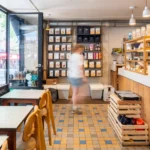


There is a particular quality of morning light on the Montmartre hill, when the tourists are still asleep. The regulars push open the doors of their favourite spots — the ones that appear in no guidebook. No flashy shopfront, no fifty-dish menu — just a table where they know your name, a coffee served exactly right, and that rare feeling of having nowhere to be.
Paris is full of neighbourhoods where the pleasure of eating takes on a different shape. Far from laminated menus and suited waiters, certain streets shelter pocket-sized bistros, coffee shops where time slows down, restaurants that would rather do three dishes beautifully than offer an endless list. This guide takes you to these pockets of joyful resistance — where eating remains a simple, good thing.
🗺️ The 9th arrondissement: between Martyrs and Saint-Georges, the quiet belly of Paris

Rue des Martyrs, the neighbourhood’s living artery
Rue des Martyrs cuts through the 9th arrondissement like one long edible stroll. No concept stores here, no chains — just shops run by people who actually work. The cheesemonger ages his tommes in the cellar below. The fishmonger opens at six in the morning. And between two shopfronts, bistros where you lunch at the zinc counter, standing up, a glass of white in hand.
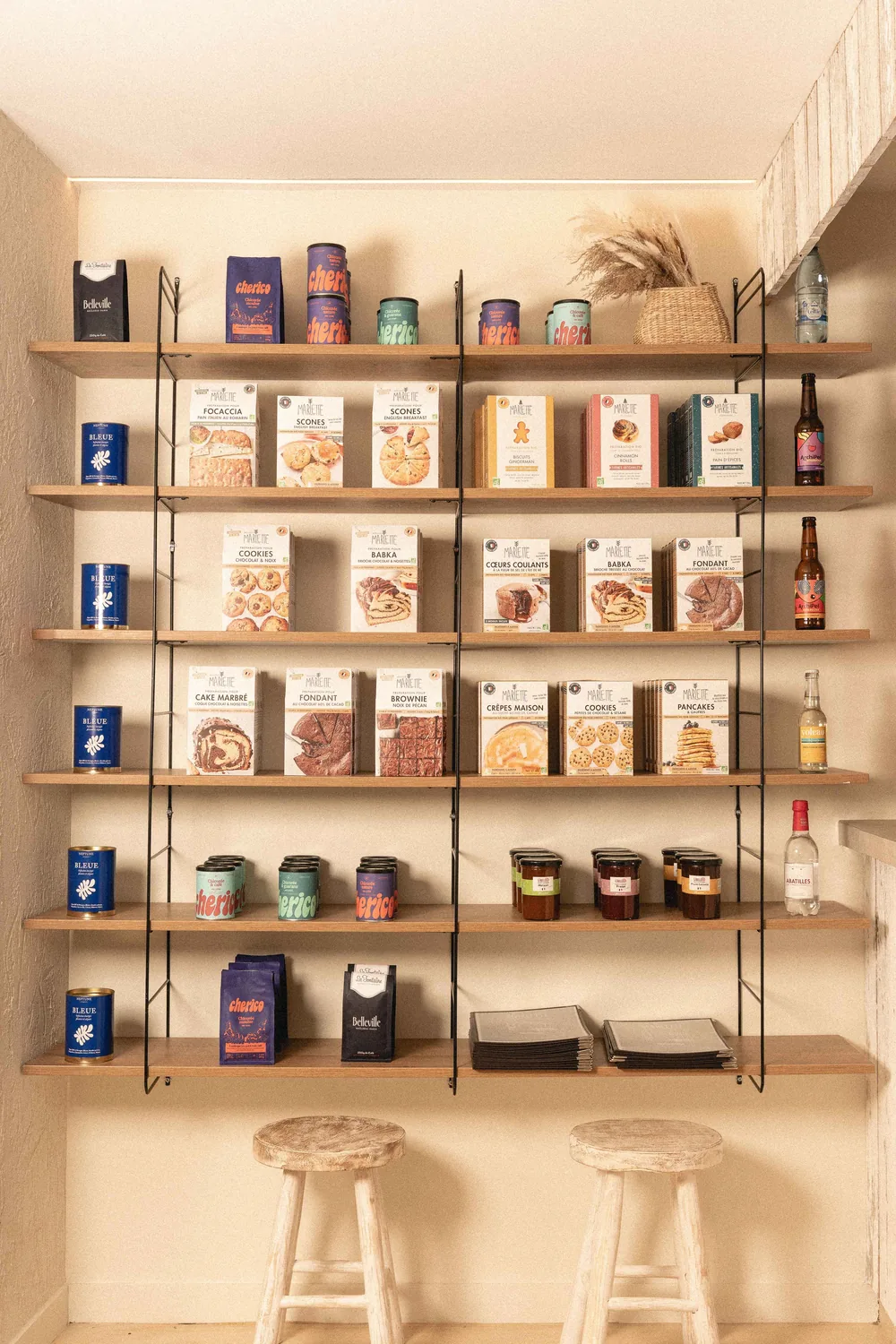
At Marlette, at 51 rue des Martyrs, we serve what others promise but rarely deliver: organic baking mixes (chocolate chip and sesame cookies, chocolate fondant with fleur de sel from the Île de Ré, scones fresh from the oven), a specialty coffee that wakes you up without aggression, and that neighbourhood atmosphere where nobody is playing a part. The locals come for the avocado toast at lunch or a matcha latte on the terrace. On Saturday mornings, you share a table with strangers who become counter neighbours. No reservations — that’s deliberate. You push the door, you find a seat, you breathe.
💡 Our advice
Walk the length of rue des Martyrs on a Wednesday morning. Stop at the baker who still makes his bread on the premises, have a coffee with us, push on to the marché Saint-Georges if you have the time. It’s not a visit — it’s a wander.
The pocket bistros of the carré Saint-Georges
Around place Saint-Georges, you find those discreet restaurants — the ones with no Instagram page but a faithful clientele. The kind of place where the owner clears your plates himself, where the menu fits on a chalkboard, where the daily special changes with what came in that morning. Seasonal cooking, no fuss, a bill that won’t make you wince. You go back because the food is good, not because it’s having a moment.
The great thing about this part of town: it remains accessible. You cross paths with office workers from the neighbourhood stopping in for lunch, retirees who have taken their morning coffee at the same table for fifteen years, parents with children who know that here, nobody will bat an eyelid if a kid knocks over their glass. Paris as it should always be: no entry code, no dress code, just people eating together.
The best neighbourhood bistros are full by 12:30. Turning up at noon on the dot means securing a table without the scramble.
Get lost in the side streets. The best addresses are often the ones you stumble on by taking a wrong turn.
The cheesemonger, the wine merchant, the local bookseller: they know the good tables better than any algorithm.
🌿 Montmartre and the Abbesses: bohemian Paris, still hungry

The hill: between clichés and genuine gems
Montmartre suffers from its own reputation. Too many tourists, too many selfie traps, too many menus in twelve languages. Yet step away from place du Tertre and you find the real village — where residents do their shopping, where restaurants serve honest food, where you can brunch on a Sunday without crossing a Japanese tour group.
At Marlette Abbesses, at 45 rue des Abbesses, we opened in 2025 with a simple idea: to carry the spirit of the Martyrs into another iconic neighbourhood. Same philosophy, same exacting standards on our products (our organic baking mixes still come from the Île de Ré, made by our own hands), and the same deliberate choice not to take reservations — keeping that spontaneity of just dropping by to see if there’s a spot. Here we serve pancakes — a treat reserved for the Abbesses — alongside the same wellness drinks as at the Martyrs: Ube latte, Chai latte, fresh juices. The terrace opens onto the street, the windows stay open. Abbesses métro is two minutes away.
| ✅ What we love | ❌ What we avoid |
|---|---|
| • The hilly streets where nobody goes • The hidden little squares (Émile-Goudeau, Dalida) • Bistros with no illuminated sign • Places open all year round |
• Place du Tertre after 10am • Restaurants with laminated photos • “Typically Parisian” crêperies • Anything flying an oversized French flag |
Abbesses: the good Montmartre, the one of quiet mornings
Rue des Abbesses is the artery that connects the métro to the hill. Less steep than the others, it concentrates the essentials of daily life: bakery, greengrocer, bookshop, pharmacy. And a handful of places to eat well without spending a fortune or eating badly. In the morning, before the groups descend, it is still the Paris of the 1990s: you buy your baguette, you drink a coffee standing up, you chat for three minutes with the florist.
To discover the neighbourhood differently, nothing beats an improvised food walk. Start with breakfast at ours (specialty coffee + still-warm chocolate fondant), head up towards the Sacré-Cœur via the steps of rue Chappe (nearly deserted), come back down via rue Lepic (the one from the film Amélie, but for real), and finish with lunch at one of the bistros on rue des Trois-Frères. Four hours of wandering, no cars, one hundred percent neighbourhood.
✅ Worth remembering
Montmartre is entirely liveable if you come early (before 10am) or late (after 7pm). In between, stick to the streets that run perpendicular to the main tourist routes — that’s where the real neighbourhood life happens.
🍽️ How to choose your neighbourhood restaurant: the criteria that matter

The menu: short or long — that is the question
A restaurant offering eighty dishes is lying somewhere. Either it freezes, reheats, or buys from industrial suppliers. The best neighbourhood tables list five to eight dishes at most. Not out of snobbery — out of honesty. You simply cannot cook fresh when you’re juggling twenty different ingredients every day.
At Marlette, we apply this same logic: our savoury menu changes with the seasons (seasonal dishes, salads, avocado toast, scrambled eggs, soft-boiled eggs, sandwiches), and our baking mixes follow a slow rhythm. No sprawling menu — just what we know how to do from A to Z, from flour to plate. We refuse to add options “because everyone does it.” If a customer asks for a dish we don’t truly master, we say so, plainly.
The atmosphere: children welcome or not?
Paris was long hostile to families in its restaurants. Too much noise, too much disorder, not chic enough. Happily, a new generation of restaurants and cafés accepts that children exist and that they too have a right to eat out.
Both our addresses are kid-friendly without being canteens. We serve children the same way we serve adults: with care, without condescension. No “kids’ menu” with nuggets and chips — we adapt our dishes (scrambled eggs, pancakes at the Abbesses, cookies). Parents appreciate being able to relax without guilt. On Sunday mornings, whole families arrive, settle the little ones onto the banquettes, and spend two hours at the table. Nobody watches the clock.
“A good neighbourhood restaurant is one where the waiter remembers that you take your coffee without sugar. No loyalty card needed — just human memory.”
— A Martyrs regular since 2015
The price: eating well without breaking the bank
Paris has a reputation as an outrageously expensive city. That’s true for tourist restaurants, and false for neighbourhood bistros. You can still have a decent lunch for 15–20 euros: a daily special, a coffee, a glass of wine. The secret? Flee the main boulevards, follow the side streets, look for handwritten chalkboards.
Our prices are designed so you can come several times a week, not once a month. A full brunch (savoury + sweet + drink) comes to around 20 euros. A quick lunch (sandwich + coffee): 12 euros. An afternoon treat (fondant + Matcha latte): 9 euros. The idea is that Marlette becomes your everyday address, not a special occasion you save up for.
15€
average budget for a quality neighbourhood lunch in Paris
🥐 Beyond the restaurant: coffee shops, bakeries and market halls
Coffee shops, the new urban sanctuaries
The Parisian coffee shop has nothing in common with American chains. No cardboard cups here, no unlimited wifi turning the place into an open-plan office. You come for the coffee — a real one, made by someone who understands extraction — and for the atmosphere. Natural light, wooden tables, windows open onto the street. Places where you can read a book undisturbed, or talk for an hour without being hurried along.
Both our cafés embody this philosophy of slowing down. No laptops between 11:30am and 2:30pm, nor at weekends — those hours belong to people who come to eat and talk. The rest of the time, settle in, order a Chai latte, take out your notebook. We won’t ask you to leave because you’ve only ordered one drink. That’s what slow coffee is: taking your time, without having to explain yourself.
For more inspiration and discoveries around Paris, browse our themed guides — where we share our neighbourhood favourites, our preferred walks, and a few secret addresses that locals pass on to one another.
Food markets: living Paris, on a Saturday morning
Paris’s markets endure. Despite supermarkets, despite home delivery, they draw thousands of Parisians every week — people who come for their vegetables, their cheese, their fresh fish. Noisy, fragrant, gloriously chaotic. Every age, every walk of life — one of the last genuinely mixed spaces left in the city.
In the 9th, the Anvers market (boulevard de Rochechouart) runs on Wednesdays and Saturdays. Small, untouristy, it has everything you need: greengrocer, cheesemonger, fishmonger, rôtisseur. You do your shopping in twenty minutes and leave with your arms full. In Montmartre, the market on rue Lepic (Tuesday to Sunday) is more spread out — some stalls have been here for thirty years. The regulars have their favourite producers, their rituals: the same bunch of flowers every week, the same Sunday cheese.
- Marché d’Anvers (9th): boulevard de Rochechouart, Wednesday and Saturday mornings. Small, efficient, affordable.
- Marché de la rue Lepic (18th): every day except Monday. The largest in Montmartre, local clientele.
- Marché Saint-Quentin (10th): covered, open every day. Perfect in winter or when it’s raining.
- Marché des Enfants Rouges (3rd): the oldest market in Paris (1615), where you can eat on the spot.
Bakeries: the sourdough test
A good neighbourhood bakery announces itself in three ways: it opens early (6am or 7am), the bread has a real crust (not the soft industrial kind), and the baker still works his dough on the premises. If you can see an oven behind the counter, if the smell of warm flour reaches you from the pavement at six in the morning, if the baguette is cooling on a metal rack — you’re in the right place.
Paris still has dozens of artisan bakers, often tucked into secondary streets. They make their sourdough bread, knead through the night, shape everything by hand. Their baguette costs 1.20 or 1.30 euros — a little more than the industrial version, infinitely better. You recognise it by the irregular crumb, the creamy interior, that smell of toasted wheat that fills the kitchen when you cut into it.
⚠️ Worth bearing in mind
Parisian bakeries often close one day a week (frequently Wednesday). Check the opening hours before making the trip — or keep a backup address on your phone.
🗺️ Building your own food walk: a practical guide

Start from a neighbourhood, not a list
The classic mistake of the food-loving visitor: noting down ten addresses scattered across Paris and spending the day on the métro. You eat well, but you see nothing. Better to choose one arrondissement, settle in for three or four hours, and discover what’s within walking distance.
A good food walk follows this rhythm: breakfast at a café, a wander through the neighbourhood (streets, shops, squares), lunch at a pocket bistro, something sweet in the afternoon, an apéro on a terrace if the weather obliges. Everything on foot, without stress, looking up as you go. You don’t follow a marked route — you drift, you stop when something catches your eye, you change the plan if a street takes your fancy.
Mixing registers: from refined to rough-and-ready
Paris offers that rare chance: in ten minutes’ walk, you pass from a starred restaurant to a neighbourhood counter bar. One doesn’t exclude the other. You can have a 15-euro lunch in a bistro and take tea in a high-end salon in the afternoon. Alternating between registers is how you discover all the facets of the city.
Both our addresses play that bridging role. We welcome the sixty-year-old woman who comes alone to read her newspaper just as warmly as the couple of thirty-somethings out for a good time, the neighbourhood workers in a hurry at noon, the American tourists wandering lost in Montmartre. No dress code, no starchy tone — just the certainty that everyone is served with the same attention. It has been part of who we are from the very beginning: a belief in an open Paris, where you are not sorted by the card in your wallet.
| 🏃 Quick route (2 hours) | 🚶 Leisurely route (half a day) |
|---|---|
| Express coffee at Marlette → up rue des Martyrs → Anvers market (if market day) → quick lunch at a Saint-Georges bistro → back down via rue Notre-Dame de Lorette | Brunch at Marlette Abbesses → steps of rue Chappe up to the Sacré-Cœur → wander across the Montmartre hill (avoid place du Tertre) → down rue Lepic → afternoon pastry at an artisan bakery → apéro on a terrace at the bottom of the Abbesses |
Leave room for the unexpected
The best restaurant is not always the one you spotted on Instagram. Sometimes it’s the one you push open by chance — because it’s raining, because you’re tired, because the smell reached you from the pavement. The most memorable discoveries rarely come from an algorithm; they arise from a confluence of circumstances, a gut feeling, a tip from a stranger.
Leave a margin in your plans. Schedule fewer addresses, leave breathing room between stops. If a square draws you in, sit down. If a shopfront intrigues you, go inside. If a waiter recommends somewhere three streets away, go. Paris is best discovered slowly, at an angle, without GPS. That’s how you stumble across those tiny bistros where the owner pours you a glass of house wine, those hidden bakeries nobody mentions online, those little squares where children play while their parents drink a coffee. The Paris of the people who live there — the one that appears on no map.
Frequently asked questions
Which Parisian neighbourhoods are the most genuine for eating out?
The 9th arrondissement (rue des Martyrs, Saint-Georges) and Montmartre (Abbesses, rue Lepic) are home to neighbourhood addresses where locals genuinely eat. Avoid the main boulevards and the tourist squares — the best tables are usually on the perpendicular streets, where rents are still manageable and restaurants don’t need to fleece visitors to survive. Walk, look up, trust the discreet shopfronts and handwritten chalkboards.
How do you tell a real Parisian bistro from a tourist trap?
A genuine neighbourhood bistro has a short menu (five to eight dishes at most), handwritten or on a chalkboard. The owner or a loyal member of staff knows the regulars by name. Prices are reasonable (daily special around 12–15 euros), and the atmosphere is local: you hear French being spoken, you see people from the neighbourhood. If the menu exists in six languages with laminated photos, if waiters are calling to you from the pavement — walk on.
Can you brunch in Paris with children without being made to feel unwelcome?
Yes — more and more Parisian cafés and restaurants welcome families without fuss. At Marlette (Martyrs and Abbesses), we adapt our dishes for children (scrambled eggs, pancakes at the Abbesses, cookies) and nobody will make you feel like an inconvenience. Sunday morning is the ideal slot: relaxed atmosphere, unhurried service, and children can chatter away without being asked to whisper. Look for places with a terrace or generous banquette seating.
What budget should you allow for a full food walk in Paris?
Allow between 40 and 60 euros per person for a full day: a generous brunch (20 euros), an afternoon sweet treat (8–10 euros), an apéro on a terrace (12–15 euros). Add a restaurant lunch and budget an extra 20–25 euros. This keeps you eating well at neighbourhood addresses, without scraping the bottom of the barrel or blowing the budget. Markets and artisan bakeries remain very affordable if you’d like to picnic.
Do you need to book at Parisian bistros?
It depends. Well-known bistros are often fully booked, especially in the evening and at weekends — it’s worth calling the day before. Smaller neighbourhood restaurants frequently operate without reservations: you turn up, wait a few minutes if needed, and find a seat. At Marlette, we have deliberately chosen not to take reservations, to preserve that spontaneity of just dropping by to see if there’s a spot. Come before noon or after 2pm to avoid the rush.
Where can you find a good specialty coffee in Paris?
Specialty coffee shops have multiplied across Paris over the past ten years. Look for addresses that display the origin of their beans, offer several brewing methods (filter, espresso, V60), and where the baristas can talk about their coffee without resorting to pompous jargon. At Marlette, we serve specialty coffees (cappuccino, latte, flat white) alongside wellness drinks (Ube latte, Matcha latte, Chai latte). A good coffee announces itself through the care taken with every cup — not through the price on the board.
{
“@context”: “https://schema.org”,
“@type”: “FAQPage”,
“mainEntity”: [
{
“@type”: “Question”,
“name”: “Which Parisian neighbourhoods are the most genuine for eating out?”,
“acceptedAnswer”: {
“@type”: “Answer”,
“text”: “The 9th arrondissement (rue des Martyrs, Saint-Georges) and Montmartre (Abbesses, rue Lepic) are home to neighbourhood addresses where locals genuinely eat. Avoid the main boulevards and the tourist squares — the best tables are usually on the perpendicular streets, where rents are still manageable and restaurants don’t need to fleece visitors to survive. Walk, look up, trust the discreet shopfronts and handwritten chalkboards.”
}
},
{
“@type”: “Question”,
“name”: “How do you tell a real Parisian bistro from a tourist trap?”,
“acceptedAnswer”: {
“@type”: “Answer”,
“text”: “A genuine neighbourhood bistro has a short menu (five to eight dishes at most), handwritten or on a chalkboard. The owner or a loyal member of staff knows the regulars by name. Prices are reasonable (daily special around 12–15 euros), and the atmosphere is local: you hear French being spoken, you see people from the neighbourhood. If the menu exists in six languages with laminated photos, if waiters are calling to you from the pavement — walk on.”
}
},
{
“@type”: “Question”,
“name”: “Can you brunch in Paris with children without being made to feel unwelcome?”,
“acceptedAnswer”: {
“@type”: “Answer”,
“text”: “Yes — more and more Parisian cafés and restaurants welcome families without fuss. At Marlette (Martyrs and Abbesses), we adapt our dishes for children (scrambled eggs, pancakes at the Abbesses, cookies) and nobody will make you feel like an inconvenience. Sunday morning is the ideal slot: relaxed atmosphere, unhurried service, and children can chatter away without being asked to whisper. Look for places with a terrace or generous banquette seating.”
}
},
{
“@type”: “Question”,
“name”: “What budget should you allow for a full food walk in Paris?”,
“acceptedAnswer”: {
“@type”: “Answer”,
“text”: “Allow between 40 and 60 euros per person for a full day: a generous brunch (20 euros), an afternoon sweet treat (8–10 euros), an apéro on a terrace (12–15 euros). Add a restaurant lunch and budget an extra 20–25 euros. This keeps you eating well at neighbourhood addresses, without scraping the bottom of the barrel or blowing the budget. Markets and artisan bakeries remain very affordable if you’d like to picnic.”
}
},
{
“@type”: “Question”,
“name”: “Do you need to book at Parisian bistros?”,
“acceptedAnswer”: {
“@type”: “Answer”,
“text”: “It depends. Well-known bistros are often fully booked, especially in the evening and at weekends — it’s worth calling the day before. Smaller neighbourhood restaurants frequently operate without reservations: you turn up, wait a few minutes if needed, and find a seat. At Marlette, we have deliberately chosen not to take reservations, to preserve that spontaneity of just dropping by to see if there’s a spot. Come before noon or after 2pm to avoid the rush.”
}
},
{
“@type”: “Question”,
“name”: “Where can you find a good specialty coffee in Paris?”,
“acceptedAnswer”: {
“@type”: “Answer”,
“text”: “Specialty coffee shops have multiplied across Paris over the past ten years. Look for addresses that display the origin of their beans, offer several brewing methods (filter, espresso, V60), and where the baristas can talk about their coffee without resorting to pompous jargon. At Marlette, we serve specialty coffees (cappuccino, latte, flat white) alongside wellness drinks (Ube latte, Matcha latte, Chai latte). A good coffee announces itself through the care taken with every cup — not through the price on the board.”
}
}
]
}