

There comes a moment, mid-project, when the team needs something other than a meeting in the glass-walled room on the third floor. Not a seminar with PowerPoint slides and lukewarm coffee pods — just a morning where everyone sits down together, talks without an agenda, where the bread smells of butter and nobody glances at their watch. That’s what a corporate brunch is: bringing people together without forcing it, building connection without speeches, reminding everyone that we work alongside humans who also love to eat.
In Paris, options are plentiful — coffee shops in the Marais, specialist caterers, privatisable venues in the 9th or 10th. But between the addresses that look good on paper and those that actually deliver on their promise of fresh produce and attentive service, there’s a world of difference. We’ve tested, compared, and brunched on your behalf. Here’s what genuinely works when you want to get your team out of the office without getting it wrong.
🎯 Why organise a corporate brunch (and not yet another after-work)

A format that breaks the mould of classic corporate life
A corporate brunch defies expectations. Unlike standing cocktail receptions or formal seated lunches, it sets a slower pace, a less stiff posture. You sit down across from someone you normally pass in the corridor, share a dish, go back for more coffee. The informal setting allows for real conversations — not the ones where you simply repeat what was said in the senior management committee.
HR teams who organise these moments often notice the same thing: silos begin to crack. The accountant talks with the designer, the intern dares to ask the director a question. It’s not magic — it’s simply that the mental tie has been loosened.
The occasions that call for a brunch rather than a simple coffee
No need to wait for the annual conference. A corporate brunch works for:
- Launching a cross-functional project: bringing together people who don’t usually work side by side
- Celebrating a milestone (fundraise, product launch, company anniversary) without falling back on champagne at 6pm
- Onboarding new arrivals: less daunting than a formal dinner, warmer than an office tour
- Understated team building: fostering cohesion without pretending you’re on a survival show
- An offsite strategy session: stepping out of the office shifts the way you see problems
A brunch also works as a signal. It says: “We’re taking the time. We’re not just running.” In a startup culture that glorifies urgency, it’s a quiet act of resistance.
✅ Worth remembering
A corporate brunch doesn’t replace working time — it nourishes it. Teams who take the time to brunch together report stronger cohesion in the weeks that follow. It’s not a luxury; it’s an investment in the collective.
🏠 Our tried-and-tested Parisian addresses for a successful corporate brunch

Marlette, rue des Martyrs and rue des Abbesses
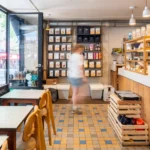
Two coffee shops with a Montmartre spirit, far removed from cold corporate settings. At Marlette, we serve fresh produce prepared in-house: avocado toast, scrambled eggs, seasonal salads, pillowy focaccia. The drinks go well beyond the classic coffee — Ube latte, Matcha latte, Chai latte, fresh juices — with genuine care given to our organic baking mixes (chocolate-sesame chip cookies, chocolate fondant with fleur de sel from the Île de Ré, pecan brownies, scones).
Both addresses welcome teams with a philosophy of slowing down: no pressure, no ticking clock, just attentive service and a space that breathes. Rue des Martyrs (51 rue des Martyrs, 75009) suits groups of 10 to 15, with partial privatisation possible. Rue des Abbesses (45 rue des Abbesses, 75018), the newer of the two, offers a similar atmosphere in the heart of Montmartre.
A word of note: we don’t privatise the space for laptop sessions. Marlette believes that brunching means being present, not connected. At lunchtime (11:30am–2:30pm) and on weekends, laptops are not welcome — a rule that serves the collective well.
💡 Our advice
For a team brunch in Paris, plan your choice of venue at least a week in advance, specifying the number of people, your dietary requirements and your budget. Plan further ahead for groups of more than 10. Worth noting: at Marlette, team meetings and corporate brunches take place in the 3 to 5 p.m. window, the quietest moment of the day, and even more so at weekends. We regularly host strategy committees, team meetings, book clubs and birthdays there. Write to reservation@marlette.fr with the date, the time, the number of guests and the format you have in mind. Outside that window, morning and midday, we don’t take reservations during brunch hours, a deliberate choice to preserve spontaneity.
Other Parisian addresses that deliver the goods
While Marlette embodies our vision of brunch (fresh produce, human service, zero fuss), other Parisian spots are worth the trip depending on your constraints:
- Hollybelly, rue Lucien Sampaix (10th): the reference for American-style brunch — thick pancakes, eggs Benedict, specialty coffee. Canal Saint-Martin atmosphere, startup crowd. Groups up to 12, booking advised.
- Café Oberkampf, rue Neuve-Popincourt (11th): a well-executed classic brunch, pleasant terrace, swift service. A solid choice if you’re after comfort without risk.
- Le Bal Café, impasse de la Défense (18th): a thoughtful vegetarian/veggie-friendly brunch, light-filled setting near Place de Clichy. Ideal for teams who value inclusive options.
- Hardware Société, boulevard Saint-Germain (6th): a hearty brunch, chic industrial décor, varied menu. Can accommodate larger groups (20+), though the atmosphere can get noisy.
These addresses share one thing in common: brunch is their craft, not a loss-leader to fill the room on Sunday. The service handles groups well, the kitchen keeps pace, the produce is fresh. That’s the bare minimum for not spoiling a team moment.
🍽️ Calling on a specialist caterer: when and why

A caterer, for in-house or off-site events
Sometimes, going out simply isn’t possible: a looming deadline, partial remote working, a team spread across locations. A catering service then becomes the solution for organising a brunch without moving 30 people. A good caterer delivers fresh produce, builds a coherent buffet, respects timings, and leaves without a trace.
The criteria for choosing the right provider:
- Guaranteed freshness: produce prepared that morning or the day before, no industrial freezing
- Variety of options: vegetarian, gluten-free, dairy-free — a team is rarely made up of 15 bacon-eaters
- Smooth logistics: crockery provided or compostable, set-up included, timings respected
- Transparent pricing: no mysterious “service charge” line that doubles the bill
Prices for a catered brunch in Paris range from €20 to €40 per person depending on the package (basic continental buffet vs. full brunch with hot dishes and desserts). For 15 people, budget between €300 and €600 excluding premium options.
Continental buffet (pastries, juice, coffee) or full brunch (savoury dishes, desserts, hot drinks). Allow 1.5 to 2 items per person to avoid running short.
Allergies, dietary needs, religious preferences. Send a form in advance — it spares the vegetarian intern from staring helplessly at the ham croissants.
Number of guests, arrival time, access details (door code, floor, lift), whether a fridge is available for storing items in advance. The more specific you are, the fewer unpleasant surprises there will be.
Brunch caterers in Paris: what’s actually out there
The brunch catering market in Paris has professionalised considerably in recent years. A few players stand out:
- Les Bruncheuses: turnkey event brunch packages, fresh produce, polished service. Specialised in corporate clients, they handle groups of 20 to 100 people with ease.
- Potel & Chabot: premium caterer, high-end brunch menu, impeccable service. For events where budget is no constraint (expect €50+ per person).
- Chez Mamie: a “homemade” caterer, less corporate, more artisanal. A good quality-to-price balance, with particular attention paid to local produce.
- Yummi: a platform that aggregates several Parisian caterers, making comparison easy. A practical interface, though with less direct contact with the provider.
A good caterer doesn’t just deliver: they ask questions, check that the venue is suitable, and suggest adjustments. If your contact approves everything without discussion, be wary — you risk receiving a standard basket with no personalisation.
| 🏠 Brunch at a coffee shop | 🍱 Delivered catering |
|---|---|
| Getting out of the office, a change of scenery, an authentic atmosphere, on-site service, less logistics to manage | Flexible timing, no travel required, suited to larger teams, ability to customise the menu, full control of the venue |
⚙️ Organising your corporate brunch: the real logistical questions

A realistic budget: what you actually pay in Paris
Pricing varies according to three parameters: the venue, the number of guests, and the level of service. For a corporate brunch in Paris, here are the ranges observed in 2025:
- Coffee shop (Parisian): €18 to €30 per person depending on the package, drinks included. Group bookings possible, sometimes with a minimum spend.
- Basic delivered catering: €20 to €30 per person (pastries, juice, fruit, coffee). Disposable or compostable crockery included.
- Premium catering with service: €40 to €70 per person (full buffet, hot dishes, desserts, set-up and clear-down). Real crockery, servers on site.
- Privatisation of an offbeat venue: €500 to €2,000 venue hire + €25 to €50 per person for the brunch service. Reserved for more formal events (50+ people).
For a team of 15 people, a well-done brunch costs between €300 and €600. That’s less than a full-day seminar, more than an after-work beers-and-crisps, and infinitely more effective at building genuine connection.
€25
average price per person for a quality team brunch in Paris
Common mistakes (and how to avoid them)
We’ve witnessed a few memorable disasters. Here’s what tends to go wrong:
- Not checking dietary requirements: the team arrives, there’s nothing but ham baguettes. The vegetarian stares at the table; the brunch is ruined before it’s begun.
- Underestimating quantities: one pastry per person is light. Allow 1.5 to 2 savoury items + 1.5 sweet items per head, more if it’s a late-morning brunch (10am–1pm).
- Choosing a venue that’s too noisy: some cafés packed at weekends are simply unworkable for a team conversation. Ask whether a section can be set apart or partially privatised.
- Forgetting the timing: a brunch starts between 9:30am and 11am, rarely later. Beyond that, it’s a disguised lunch. Respect the time window so people actually arrive hungry.
- Improvising the night before: the best venues are booked 1 to 3 weeks in advance, especially for weekends or popular midweek slots (Wednesdays, Thursdays).
If you’re organising in-house with a caterer, think about waste management too. A brunch generates packaging, leftovers, disposables. Plan for sorting bins, a tidy corner for storage, and someone to coordinate the post-brunch clear-up. Nothing worse than a room that looks like a battlefield at 2pm.
“A failed team brunch is one where nobody talks to anyone because the organisation fell apart. A successful brunch is the one people are still talking about three months later.”
— HR Director at a Parisian scale-up, after 5 years of internal events
🛡️ Safety, accessibility, inclusivity: the points we forget too often

Ensuring safe and seamless access for everyone
Organising a corporate brunch also means thinking about those who don’t eat like everyone else, who move differently, or who have invisible constraints. An inclusive event makes no fuss — it welcomes without forcing.
A few basic checks:
- Wheelchair accessibility: does the venue have step-free access or a lift? Are the toilets adapted? For a coffee shop, verify before you head in.
- Allergies and intolerances: gluten, dairy, tree nuts, eggs. Ask in advance, inform the caterer or restaurant, and label the dishes if it’s a buffet.
- Religious or ethical diets: halal, kosher, vegetarian, vegan. Offer at least one complete vegetarian option (not just raw vegetables).
- Food safety: a serious caterer carries public liability insurance and complies with HACCP standards. Ask for this information if the event involves more than 30 people.
These aren’t “nice to have” considerations — they determine whether certain colleagues can actually attend. A brunch where someone has nothing to eat is a brunch that excludes. And exclusion is always visible.
⚠️ Worth bearing in mind
If you’re organising a brunch on your premises with an external caterer, check security protocols: visitor access badges, authorisation to enter outside standard hours, compliance with fire safety procedures. A caterer delivering at 8am needs to be able to access the building without holding up security for 45 minutes.
Data protection and confidentiality at events
Rarely mentioned but crucial: a corporate brunch remains a professional event. If you’re sending invitations via a third-party tool (Eventbrite, Google Forms, or similar), make sure the data collected (names, emails, dietary requirements) is stored securely and in compliance with GDPR.
For a registration website or online form, a few basic reflexes guard against common mistakes:
- Use a service with CAPTCHA verification or equivalent to keep malicious bots from polluting sign-ups
- Don’t share the list of attendees without their explicit consent
- If photos are taken during the event: inform people in advance and allow them to opt out
- Delete data after the event if it’s no longer needed (no reason to keep Julie’s lactose intolerance on file indefinitely)
These precautions may feel heavy-handed, but they avoid unpleasant surprises. A brunch is meant to bring people together — not to gather data on them without their knowledge.
📖 Inspiration and resources to go further

Where to find brunch ideas and real-world feedback
If you want to explore the subject further — discover new addresses, uncover original formats, or simply draw inspiration from other initiatives — a few resources are worth your time:
- Our guides, inspirations and discoveries section: we share our Parisian favourites here — portraits of places, brunch outing ideas by neighbourhood. No sponsorship, just addresses we genuinely love.
- HR forums and company Slack channels: many HR directors and office managers share their experience of internal events. Search “team brunch Paris” in communities like WelcomeToTheJungle, ANDRH, or SlackHQ.
- Instagram and TikTok: Parisian coffee shop accounts often show their group set-ups, brunch packages and behind-the-scenes. It gives a realistic preview before you commit.
- Google Maps reviews: filter for “groups” or “events” in the comments. You’ll quickly see whether a venue handles group bookings well or whether the service buckles the moment there are 10 people.
The idea isn’t to copy a ready-made format, but to pick out what resonates with your company culture. A brunch for a 12-person startup looks nothing like one for an 80-person consultancy.
Building a brunch culture from within
Some companies have made the team brunch a ritual: once a quarter, on a Friday morning, everyone gathers around a buffet or at a neighbourhood café. It’s neither a forced team-building exercise nor a disguised incentive — just a moment that isn’t up for negotiation, fixed in the calendar like any strategic meeting.
Why it works:
- Predictability: people organise themselves, block their diaries, don’t schedule anything else that day
- A shared ritual: it creates a culture, a collective landmark in the year
- Simplicity: no need to reinvent the wheel each time — choose a venue, plan ahead, show up
- A managerial signal: leadership shows it values time spent together, not just deliverables
To establish this kind of ritual, start modestly: one brunch per semester, around ten people, an accessible venue. If it catches on, expand it. If it doesn’t, question the format — perhaps your team prefers lunches or afternoon breaks. The key is to experiment without dogma.
| ✅ What works | ❌ What doesn’t |
|---|---|
| • A regular, predictable frequency • No obligation to attend • A budget allocated and owned by the company • Rotating venues or a fixed ritual, depending on team preference |
• A brunch imposed outside working hours • A format that’s too formal (speeches, presentations) • An unclear budget or a contribution asked of employees |
Frequently asked questions
How much does a corporate brunch for 20 people cost in Paris?
For 20 people, budget between €400 and €1,200 depending on the format. A brunch at a Parisian coffee shop works out at €18–30 per person, so €360–600 in total. A delivered caterer with full service (buffet, hot dishes, desserts, set-up) runs to €40–60 per head, or €800–1,200. Add 10–15% headroom for the unexpected (extra guests, premium drink options). The best value for money remains a brunch at a dedicated venue with a group booking.
Can you privatise a coffee shop for a team brunch on a weekday morning?
Yes, some Parisian coffee shops accept partial privatisation for group brunches in the morning (9am–11:30am), when footfall is calmer. Enquire 2 to 3 weeks in advance with addresses that welcome groups: some require a minimum spend or a deposit. On weekdays, full privatisation is less common — opt for a dedicated space rather than blocking the entire room. Worth noting: at Marlette, we don’t take reservations during brunch hours — it’s a deliberate choice to preserve spontaneity — so for a formal team brunch, you’d be better off looking at coffee shops that offer privatisation.
What produce should you prioritise for a successful catered brunch?
Freshness and variety are everything. On the savoury side: eggs (scrambled, soft-boiled), avocado toast, focaccia, savoury scones, seasonal salads. On the sweet side: freshly baked pastries, cookies, brownies, pancakes, fresh fruit. Always include at least one complete vegetarian option and one gluten-free option for teams of more than 10. Fresh produce makes all the difference — avoid reheated frozen platters. A good caterer delivers that morning or prepares no earlier than the evening before. For drinks: quality coffee (not a budget thermos), fresh juices, and wellness options (matcha, chai) if the budget allows.
How do you handle dietary requirements at a corporate brunch?
Send a form in advance (Google Forms, Typeform) asking about allergies, intolerances and dietary needs. Pass this information to the caterer or venue at least 5 days before. If it’s a buffet, label the dishes (vegetarian, gluten-free, dairy-free, vegan) so people don’t have to ask every time. Always plan for a substantial vegetarian option (not just fruit), a gluten-free option, and a dairy-free one. If someone flags a severe allergy (tree nuts, eggs), double-check with the provider — this is a matter of safety, not comfort.
What’s the difference between a team brunch and a working breakfast?
A working breakfast is functional: coffee, pastries, a meeting. People eat standing or in passing; the agenda takes precedence. A team brunch, on the other hand, gives time its due: everyone sits down, shares dishes, talks without a set agenda. It’s longer (1.5 to 2 hours vs 30–45 minutes), more varied (sweet and savoury vs just pastries), and the goal is to build connection, not to validate decisions. A brunch works for bringing people together, celebrating, onboarding. A breakfast works for aligning quickly before getting on with the day. Both have their place — it’s simply a matter of knowing what you’re after.
Should you plan a separate drinks budget for a corporate brunch?
It depends on the provider. At a coffee shop, drinks are often included in the brunch package (coffee, juice, tea). Check whether premium options (matcha latte, chai, freshly pressed juices) are included or charged as extras. With a caterer, hot drinks (coffee, tea) are generally included, but fresh juices and specific beverages may be billed separately (€2–5 per person). Budget 10–15% of the total for drinks if the quote isn’t clear on this. A brunch without good coffee is like an office without chairs — technically possible, but nobody wants to stay.
{
“@context”: “https://schema.org”,
“@type”: “FAQPage”,
“mainEntity”: [
{
“@type”: “Question”,
“name”: “How much does a corporate brunch for 20 people cost in Paris?”,
“acceptedAnswer”: {
“@type”: “Answer”,
“text”: “For 20 people, budget between €400 and €1,200 depending on the format. A brunch at a Parisian coffee shop works out at €18–30 per person, so €360–600 in total. A delivered caterer with full service (buffet, hot dishes, desserts, set-up) runs to €40–60 per head, or €800–1,200. Add 10–15% headroom for the unexpected (extra guests, premium drink options). The best value for money remains a brunch at a dedicated venue with a group booking.”
}
},
{
“@type”: “Question”,
“name”: “Can you privatise a coffee shop for a team brunch on a weekday morning?”,
“acceptedAnswer”: {
“@type”: “Answer”,
“text”: “Yes, some Parisian coffee shops accept partial privatisation for group brunches in the morning (9am–11:30am), when footfall is calmer. Enquire 2 to 3 weeks in advance with addresses that welcome groups: some require a minimum spend or a deposit. On weekdays, full privatisation is less common — opt for a dedicated space rather than blocking the entire room. Worth noting: at Marlette, we don’t take reservations during brunch hours — it’s a deliberate choice to preserve spontaneity — so for a formal team brunch, you’d be better off looking at coffee shops that offer privatisation.”
}
},
{
“@type”: “Question”,
“name”: “What produce should you prioritise for a successful catered brunch?”,
“acceptedAnswer”: {
“@type”: “Answer”,
“text”: “Freshness and variety are everything. On the savoury side: eggs (scrambled, soft-boiled), avocado toast, focaccia, savoury scones, seasonal salads. On the sweet side: freshly baked pastries, cookies, brownies, pancakes, fresh fruit. Always include at least one complete vegetarian option and one gluten-free option for teams of more than 10. Fresh produce makes all the difference — avoid reheated frozen platters. A good caterer delivers that morning or prepares no earlier than the evening before. For drinks: quality coffee (not a budget thermos), fresh juices, and wellness options (matcha, chai) if the budget allows.”
}
},
{
“@type”: “Question”,
“name”: “How do you handle dietary requirements at a corporate brunch?”,
“acceptedAnswer”: {
“@type”: “Answer”,
“text”: “Send a form in advance (Google Forms, Typeform) asking about allergies, intolerances and dietary needs. Pass this information to the caterer or venue at least 5 days before. If it’s a buffet, label the dishes (vegetarian, gluten-free, dairy-free, vegan) so people don’t have to ask every time. Always plan for a substantial vegetarian option (not just fruit), a gluten-free option, and a dairy-free one. If someone flags a severe allergy (tree nuts, eggs), double-check with the provider — this is a matter of safety, not comfort.”
}
},
{
“@type”: “Question”,
“name”: “What’s the difference between a team brunch and a working breakfast?”,
“acceptedAnswer”: {
“@type”: “Answer”,
“text”: “A working breakfast is functional: coffee, pastries, a meeting. People eat standing or in passing; the agenda takes precedence. A team brunch, on the other hand, gives time its due: everyone sits down, shares dishes, talks without a set agenda. It’s longer (1.5 to 2 hours vs 30–45 minutes), more varied (sweet and savoury vs just pastries), and the goal is to build connection, not to validate decisions. A brunch works for bringing people together, celebrating, onboarding. A breakfast works for aligning quickly before getting on with the day. Both have their place — it’s simply a matter of knowing what you’re after.”
}
},
{
“@type”: “Question”,
“name”: “Should you plan a separate drinks budget for a corporate brunch?”,
“acceptedAnswer”: {
“@type”: “Answer”,
“text”: “It depends on the provider. At a coffee shop, drinks are often included in the brunch package (coffee, juice, tea). Check whether premium options (matcha latte, chai, freshly pressed juices) are included or charged as extras. With a caterer, hot drinks (coffee, tea) are generally included, but fresh juices and specific beverages may be billed separately (€2–5 per person). Budget 10–15% of the total for drinks if the quote isn’t clear on this. A brunch without good coffee is like an office without chairs — technically possible, but nobody wants to stay.”
}
}
]
}